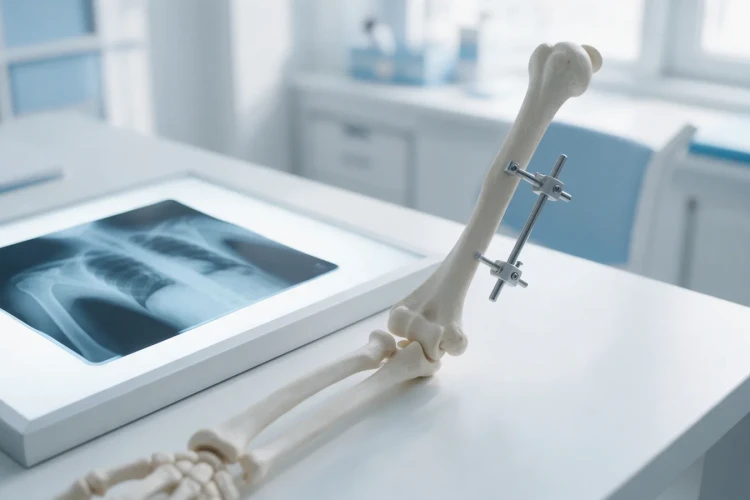
Epiphysiodesis: Balancing Leg Length Differences Through Growth
Epiphysiodesis stops or slows the growth plate of the longer leg so that a leg length difference closes with growth. We explain who it…
Read MoreEpiphysiodesis stops or slows the growth plate of the longer leg so that a leg length difference closes with growth. We explain who it…
Read MoreIn achondroplasia, short arms can make self-care and reaching harder. We explain who might consider humeral lengthening, how the process…
Read MoreCosmetic and medical limb lengthening methods prominently include the Precice (magnetic nail) and Ilizarov (external fixator) techniques.
Read MoreLimb lengthening surgery risks can include serious complications such as infection, nerve damage, and nonunion of the bone.
Read MoreTreatment of leg length discrepancy is personalized based on the patient's age, degree of shortening, and functional expectations.
Read MoreCosmetic heightening procedures carry significant risks, ranging from infections to nerve damage.
Read MoreThe main difference between the LON method vs. Precice lies in the use of an external fixator and the surgical technique.
Read MoreThe Precice 2 nail technique is a modern surgical method that uses magnetic technology to lengthen bones without the need for external…
Read MoreUnilateral limb length discrepancy treatment is not merely a cosmetic correction but a medical necessity to restore functional balance.
Read MorePhysical therapy after limb lengthening surgery is a critical factor for surgical success and requires a disciplined approach.
Read More