
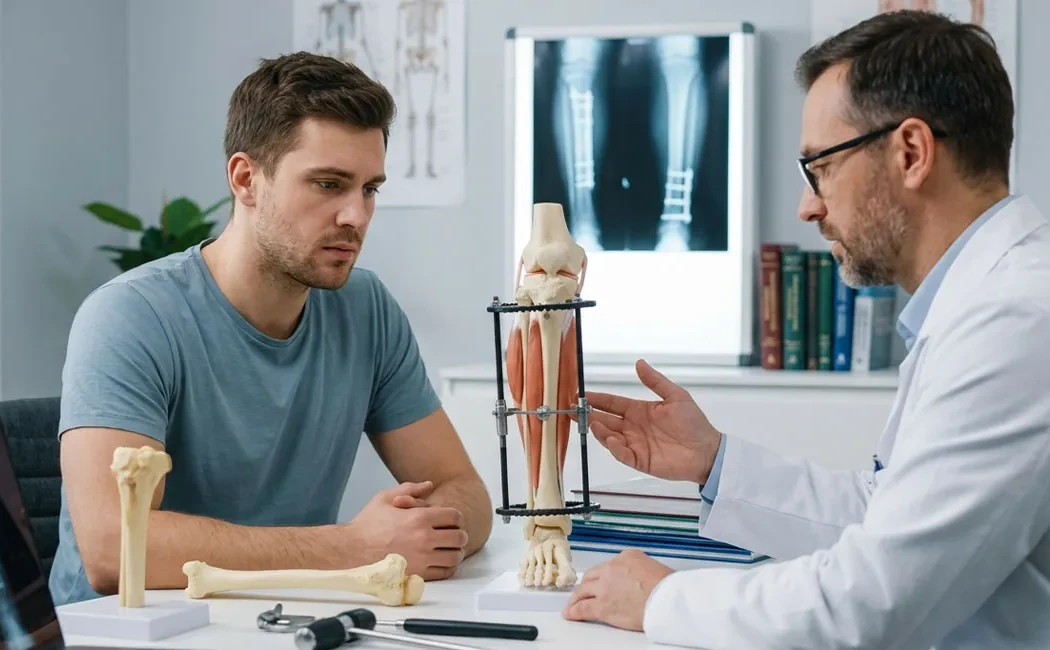
Limb lengthening surgery is a complex procedure often chosen for cosmetic or reconstructive reasons. It involves controlled surgical cutting of bones followed by gradual lengthening using external or internal fixation devices. Before deciding on this procedure, it is essential that patients fully understand the risks of limb lengthening surgery.
Patient safety and long-term functional outcomes are as important as surgical success. Like any surgery, limb lengthening carries potential complications such as infection, nerve injury, and issues with bone healing. This article aims to provide transparent, scientifically grounded information about possible risks, challenges during recovery, and precautions patients should consider.
What Is Limb Lengthening Surgery?
Limb lengthening surgery is a surgical process that uses the body’s natural healing mechanism to extend bones and surrounding soft tissues. It is indicated not only for medical conditions such as limb length discrepancies or dwarfism but also for aesthetic purposes. The procedure involves surgically cutting the bone (osteotomy) and slowly separating the ends with specialized devices to promote new bone growth (distraction osteogenesis).
This procedure shares techniques common with lower extremity deformity surgery. Modern methods include the Ilizarov technique, Holyfix, or fully internal motorized nails. More details and technological insights can be found on our basic information about bone lengthening surgery page.
Major Risks of Limb Lengthening Surgery
Limb lengthening is among the most complex areas of orthopedic surgery, presenting a variety of risks that can vary depending on surgical technique, patient physiology, and postoperative care. Understanding potential complications helps patients make informed decisions.
For a more comprehensive overview, visit our page on complications in limb lengthening surgery.
Infection Risk
Infection is a significant complication in limb lengthening, especially when external fixators are used. Pin-site infections at the sites where external pins enter the skin are common and usually superficial, treatable with antibiotics. If untreated, the infection can extend to the bone causing osteomyelitis, which is far more difficult and prolonged to treat.
Nerve and Vascular Injury
During bone lengthening, nearby nerves and blood vessels are stretched. If the distraction rate exceeds the nerves’ ability to adapt, nerve damage can occur. Symptoms may include numbness, tingling, or muscle weakness (e.g., foot drop). Rarely, vascular injury may happen during surgery. To minimize nerve injury, the lengthening rate must be carefully monitored by the surgeon.
Nonunion and Malunion
Insufficient new bone formation (nonunion) or improper bone healing in a misaligned position (malunion) are risks during the lengthening process. The X-ray images below show examples of normal and abnormal bone healing.
In cases of delayed healing, surgical interventions and their risks may be required; please refer to our nonunion surgery and associated risks resource. Similarly, corrective surgery may be necessary to address malalignment; more details available at malunion corrective surgery.
Joint Stiffness and Limited Range of Motion
Lengthening stretches muscles and tendons, often causing stiffness and reduced mobility in adjacent joints (knee or ankle). Without regular physiotherapy and exercises, permanent joint contractures can develop. Such stiffness may impair walking ability and sometimes necessitate additional surgical procedures.
Recovery Process and Potential Challenges
The postoperative recovery from limb lengthening surgery is as demanding and important as the surgery itself. This period tests the patient's physical and psychological endurance and spans several months.
Patients must be educated about postoperative care in limb lengthening. Pain management plays a crucial role; please see pain control strategies after limb lengthening. Additionally, adherence to post-surgical rehabilitation protocols is vital for functional recovery.
Measures to Minimize Risks
Although risks cannot be entirely eliminated, they can be significantly reduced through proper strategies. The diagram below illustrates patient safety and risk management decision-making.
Quitting smoking, maintaining good nutrition, consistent medical follow-up, and full compliance with physical therapy are essential to risk reduction.
Is Limb Lengthening Surgery Suitable for Everyone?
Limb lengthening is not appropriate for every patient. Candidates generally must have completed bone growth (with some pediatric exceptions), possess adequate bone quality, and be in good overall health capable of undergoing surgery. Psychological readiness for the lengthy and challenging process, along with realistic expectations, is equally important. Patients with active infections, metabolic bone disorders, or unsuitable psychological evaluation are typically not recommended for surgery.
Conclusion and Information Notice
Limb lengthening surgery can yield successful outcomes when appropriately indicated and performed by experienced surgeons but carries significant risks. Understanding the risks of limb lengthening surgery is the first step toward safe treatment. This content is for informational purposes only and does not constitute medical advice. Diagnosis, treatment planning, and risk assessment must be conducted through direct consultation with a specialist orthopedic surgeon.
This content is intended for general informational purposes only and does not constitute medical advice. It is not a substitute for professional diagnosis, treatment, or consultation. Diagnosis and treatment decisions should be made only after a thorough in-person examination by a qualified healthcare provider. Individual clinical conditions vary, and the surgical or non-surgical methods applied may differ accordingly. The information provided is based on current scientific knowledge and up-to-date medical practices. Do not delay seeking professional medical evaluation or treatment based on this content.