
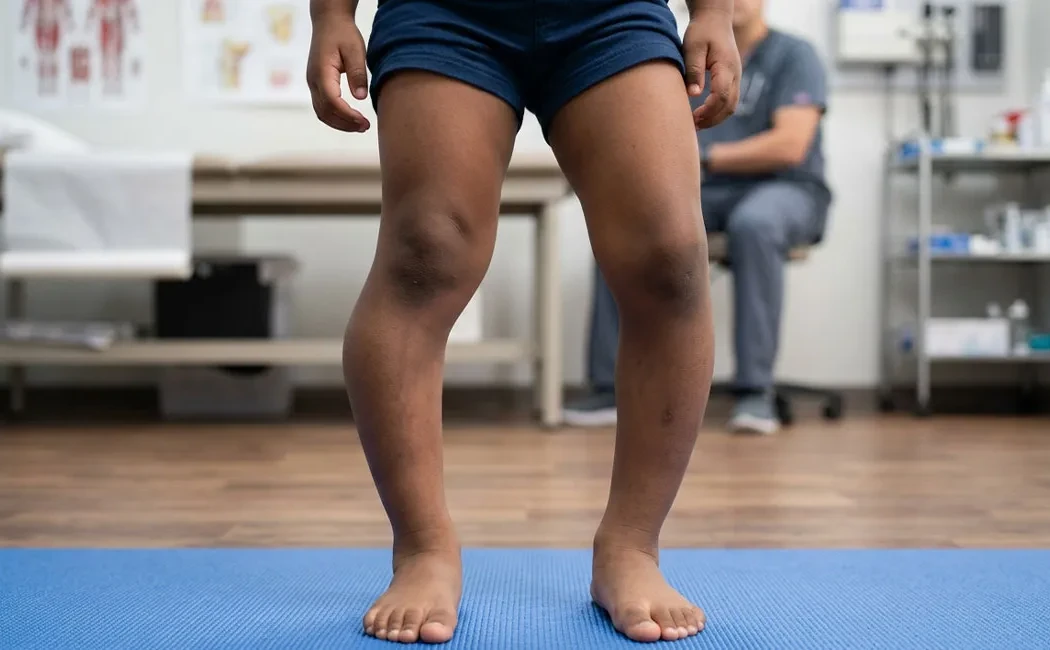
Blount disease is a pathological condition seen in childhood that results from a developmental disturbance in the medial portion of the proximal tibial growth plate. Also known as “tibia vara” in medical literature, this condition causes progressive bowing of the legs. Unlike physiological bowing, Blount disease can lead to permanent deformities and joint problems if left untreated.
When investigating causes of bowed legs in children, distinguishing between physiological processes and pathological conditions is crucial. Factors such as early walking and obesity create excessive pressure on the growth plate, slowing growth on the inner side of the bone while the outer side develops normally. This imbalance causes the leg to bend inward.
What Is Blount Disease?
Blount disease is a developmental deformity characterized by abnormal ossification in the medial proximal tibial physis (growth cartilage). It creates a varus (O-shaped) deformity of the legs. The disease is generally categorized into infantile (early onset) and adolescent (late onset) forms. The infantile type usually presents between ages 2 and 5, while the adolescent type appears after age 10.
The underlying mechanism involves loss of function of the growth plate under mechanical load. Bone abnormalities arising from this process require specialized approaches within the scope of lower limb deformity treatments. Though classified among rare pediatric bone diseases it is a relatively common orthopedic condition in at-risk groups.
Differences Between Physiological Bowlegs and Blount Disease
It is common and normal for children to have mild bowing of the legs (genu varum) during the early walking phase. This condition is called physiological bowlegs and typically self-corrects by age 2. Blount disease, on the other hand, shows a progressive and non-correcting pattern. Differentiating these is vital to avoid unnecessary treatments or delayed interventions.
The primary differences between physiological and pathological bowing are identified through radiological evaluation by a pediatric orthopedic specialist, especially when differences in pediatric tibial deformities are considered. Parents are advised to consult a specialist if they notice bowed legs in their child (leg deformities in children).
Symptoms and Stages of Blount Disease
The hallmark symptom of Blount disease is a bowing deformity beginning just below the knees, directing the lower legs inward. This deformity can be unilateral or bilateral. Pain is uncommon in infancy but adolescent cases often report knee pain and difficulty walking. Advanced cases may present leg length discrepancy and lateral thrust during gait.
Disease staging is determined using radiological criteria such as the Langenskiöld classification, which guides the treatment strategy (Pediatric deformity management).
Diagnostic Process for Blount Disease
Diagnosis starts with a thorough physical examination. The specialist assesses the child’s gait, degree of leg bowing, and joint mobility. Definitive diagnosis relies on weight-bearing full-leg X-rays (orthoroentgenogram). These images evaluate the condition of the medial proximal tibial growth plate as well as the metaphyseal-diaphyseal angle (Drennan angle), with angles greater than 11 degrees typically indicating Blount disease.
Treatment Options for Blount Disease
Treatment depends on the child’s age, severity of the deformity, and disease stage. Early detected mild cases often respond to non-surgical treatments, whereas surgical intervention may be necessary in advanced deformities.
Non-Surgical Treatments
In early infantile Blount disease (usually under age 3), using special braces such as KAFO (Knee-Ankle-Foot Orthosis) can help halt and correct deformity progression. These braces provide external support to reduce abnormal load on the growth plate. Success requires consistent use during most of the day and regular follow-up, emphasizing family compliance. However, in adolescent type or advanced infantile cases, bracing is generally ineffective.
Surgical Treatments
If non-surgical methods fail or diagnosis is late, surgery becomes necessary. The goal is to correct the deformity, restore joint surfaces, and enable normal growth. Techniques used within lower limb deformity surgery include osteotomies (bone cutting and realignment) and hemiepiphysiodesis (growth modulation).
In children with remaining growth potential, temporary growth plate arrest can guide correction over time. Complex cases may require gradual correction using external fixators like Ilizarov or computer-assisted systems. The surgical planning in Blount disease treatment is crucial for preserving future functional capacity.
Consequences of Untreated Blount Disease
If left untreated, Blount disease worsens progressively. The increasing tibial angulation can cause serious knee instability and meniscal tears. Long-term cartilage degeneration may result in early-onset osteoarthritis. Leg length discrepancies may adversely affect the spine and hip joints. Rarely, bone healing issues arise, linking nonunion surgery and Blount disease. Early diagnosis and proper treatment are critical to prevent permanent disabilities.
Scientific References and Medical Disclaimer
This article is based on current medical literature and international orthopedic guidelines. References include PubMed, Mayo Clinic, AAOS (American Academy of Orthopaedic Surgeons), and the Turkish Orthopaedics and Traumatology Association sources.
The content on this website is provided for general informational purposes only and does not constitute professional medical advice, diagnosis, or treatment. Always seek the guidance of a qualified healthcare professional with any questions you may have regarding your health. Do not delay seeking medical care or discontinue any treatment based on the information provided here. Medical conditions and outcomes may vary from person to person.