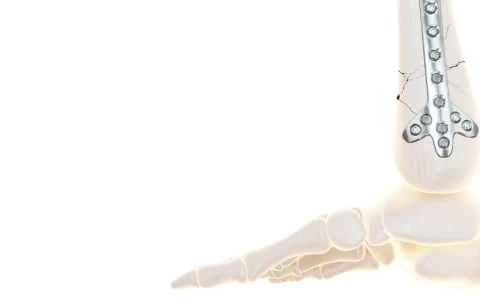
The plates, screws and nails used to fix fractures can often stay in place for life. We explain when removal is advisable, how timing is decided, the possible risks and what recovery looks like.
On this page 8 sections
- What are orthopaedic implants and what do they do?
- Do plates and screws always need to come out?
- When is hardware removal surgery needed?
- Timing: when can implants be removed?
- How is the operation done and what are the risks?
- Recovery and what to look out for afterwards
- When should you see a doctor?
- Key points
Hardware removal surgery, often called metalwork removal in the UK, is an operation to take out the plates, screws, nails or wires used to fix a fracture once the bone has healed. The short answer to whether it is needed is that, in adults, most implants can stay in place for life as long as they cause no problems, and routine removal is not necessary for everyone. Removal is considered for pain or irritation, infection, a broken or loose implant, growing children and some planned future operations.
In Turkey these implants are popularly called "platinum", but they are not made of platinum; they are usually titanium alloys or medical-grade stainless steel. The decision to remove them is individual, weighing the expected benefit against the risks of another operation after examination and X-rays.
What are orthopaedic implants and what do they do?
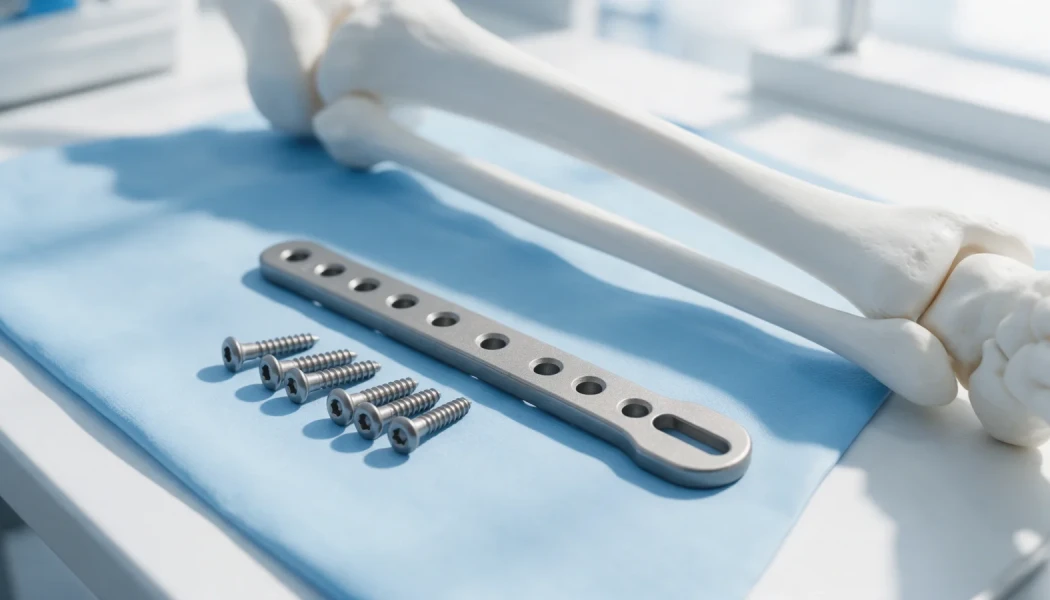
Metal implants hold the pieces of a broken bone in the correct position until the fracture heals. The main types are:
- Plates and screws: fixed to the outer surface of the bone; common for wrist, ankle, upper arm and collarbone fractures.
- Intramedullary nails: long rods placed inside the marrow canal, often used for thigh and shin bone fractures.
- Wires and K-wires: used around the elbow, kneecap and hand, and in many children's fractures.
- External fixators: frames outside the body attached to the bone with pins through the skin; these are always removed once treatment is complete.
Once the bone has healed, it carries the load itself. The implant has done its job, but it can usually remain in the body without harm. For more on the implants used to fix fractures, see our article on plates and nails used in nonunion surgery.
Do plates and screws always need to come out?
No. In adults whose fracture has healed and who have no symptoms, routine removal is generally not recommended. The main reason is that removal is a genuine operation, with risks such as anaesthetic complications, infection, nerve injury and refracture. Modern implant materials are well tolerated, and there is no strong evidence that leaving them in long term harms general health. True metal allergy is uncommon and difficult to diagnose.
Two practical questions come up often. Airport scanners may detect some implants, which rarely causes difficulty. Most modern orthopaedic implants do not prevent an MRI scan either, although they can distort the image (artefact), so the MRI team should be told beforehand. Neither concern is a reason for removal on its own.
When is hardware removal surgery needed?
Removal is considered in the following situations:
- Implant-related pain or irritation: implants that sit just under the skin, such as plates on the outer ankle, wires around the kneecap or elbow and collarbone plates, can rub against shoes or clothing. Examination should confirm that the pain really comes from the implant, and how much it improves after removal varies from person to person.
- Infection: if infection develops around an implant and the bone has healed, removal is often needed to control it.
- A broken, loose or displaced implant: this often means the bone has not united, and treatment is planned as part of nonunion surgery.
- Malunion or deformity correction: if the bone has healed crooked, existing implants may need removing before or during corrective surgery, as described on our malunion surgery page.
- Growing children: some implants close to a growth plate, or likely to become buried as the bone grows, are usually removed after healing.
- A future operation in the same area: for example, old implants may need removing before a joint replacement, often during the same procedure.
| Situation | General approach |
|---|---|
| Bone healed, no symptoms | Usually left in place |
| Prominent implant with rubbing and pain | Removal may be considered |
| Infection around the implant | Removal planned together with infection treatment |
| Broken or loose implant | Assessed for nonunion; refixation if needed |
| Growing child | Often removed, depending on the implant |
| Concern about MRI or airports only | Removal usually not needed |
Timing: when can implants be removed?
Implants should only be removed once examination and X-rays, and sometimes a CT scan, confirm that the bone has fully healed. Removing them too early can allow the fracture to reopen or lose its position. Timing depends on the bone, the fracture type and the patient's age. Children's bones heal faster, so removal can usually be earlier, whereas in adults with long-bone fractures of the thigh, shin or forearm, surgeons often wait at least a year and sometimes longer. Urgent problems such as infection follow a different timetable.
When weighing up removal, your surgeon will consider:
- Is the pain really coming from the implant, or from a joint, tendon or nerve problem?
- Has the bone fully healed, and is its quality good enough?
- Where is the implant, and are there nerves or blood vessels close by?
- Your age, work and sport, and conditions that affect healing such as diabetes or smoking
- Does the expected benefit outweigh the risks of another operation?
If you have the discharge summary or operation note from your original surgery, bring it along. When it records the make and model of the implant, the right extraction instruments can be prepared in advance.
How is the operation done and what are the risks?
The operation is usually done through the previous scar under regional or general anaesthesia. Screws are taken out one by one and the plate lifted off; nails are extracted through small incisions with dedicated instruments, often with X-ray guidance. Smaller implants are usually removed as a day case or with a short stay, while large nails may need more preparation.
It is not always straightforward: worn screw heads, locking screws that have effectively bonded to the plate, or new bone growing over the plate can make the procedure longer. Occasionally it is safer to leave a broken screw fragment in the bone. Possible risks include:
- Wound infection and healing problems
- Nerve or blood vessel injury (particularly around the arm and forearm)
- Refracture through temporarily weakened screw holes
- Pain not improving as much as hoped
- General anaesthetic risks
Recovery and what to look out for afterwards
Wound care follows your surgeon's instructions, and stitches are usually removed after 10 to 14 days. Some swelling and tenderness in the first days is normal, and keeping the limb raised helps. Many people return to desk-based work within a few days to a few weeks.
The bone gradually fills in the screw holes, and during this period it is temporarily more vulnerable. Heavy manual work, contact sports and jumping activities are therefore postponed for a period your surgeon will advise, which may range from a few weeks to a few months depending on the implant and the bone.
Some people put an ache in cold weather, or after standing for a long time, down to their implant. It is not always clear whether such symptoms really come from the metalwork, so the change people notice after removal varies. The scar takes several months to mature, and protecting it from the sun during this time is advisable.
When should you see a doctor?
Whether an implant is still in place or has recently been removed, seek prompt assessment if you notice:
- New or increasing pain around the implant
- Redness, warmth, discharge or fever
- A sense of movement or clicking in the bone, or a new change in shape
- Thinning or discolouration of the skin over the implant
- Sudden pain and swelling after a minor strain following removal
Problems with fracture healing and implant-related symptoms should be assessed by an orthopaedic and trauma surgeon experienced in bone reconstruction. Prof. Dr. Halil İbrahim Balcı's areas of work include nonunion and malunion surgery.
Key points
- Plates, screws and nails are usually titanium or stainless steel and can often stay in for life if they cause no symptoms.
- The main reasons for removal are pain or irritation, infection, broken implants, children and planned future surgery.
- Removal is planned only after imaging confirms that the bone has fully healed.
- Removal surgery has its own risks, and the bone needs protecting from refracture for a while afterwards.
- The decision is made individually after examination and X-rays.
Frequently Asked Questions
Yes, in most cases. In adults whose bone has healed and who have no implant-related symptoms, plates, screws and nails usually do not need routine removal. Titanium and medical-grade stainless steel implants are well tolerated by the body. If pain, irritation, signs of infection or a problem with the implant develop in later years, a fresh assessment is needed. The decision is always individual, based on examination and X-rays.
After removal, the empty screw holes act as weak spots in the bone for a while, so the risk of refracture is temporarily higher. The bone gradually fills these holes in. The level of risk depends on the bone involved, the size of the implant and your activities, which is why surgeons advise waiting for a period before heavy work or contact sport. Following this advice helps reduce the chance of problems.
Most modern orthopaedic implants do not prevent MRI scanning, although they can distort the image close to the implant. Always tell the MRI team the type and location of your implant beforehand. Airport security scanners may detect some implants, which usually just means a brief additional check. Neither situation is, on its own, a reason to have hardware removal surgery.
Many people return to desk-based work within a few days to a few weeks, and the wound usually heals within about two weeks. Heavy manual work, contact sports and jumping activities are postponed for longer, sometimes for several months, to allow the screw holes to fill in. Your surgeon will advise on the exact timing, based on the type of implant removed, the bone involved and your activity level.
Implants are removed more often in children than in adults, because they may sit close to a growth plate or become buried as the bone grows, making later removal harder. Flexible nails and wires, for example, are usually taken out after the fracture has healed. The rule is not the same for every implant, however; the decision depends on the type and position of the implant and the child's age, following a paediatric orthopaedic assessment.
This article is for general information only and does not replace a medical examination, diagnosis or treatment. Treatment options and outcomes vary from person to person.
Related treatment area Malunion Surgery: Fractures That Healed Bent, Twisted or Short