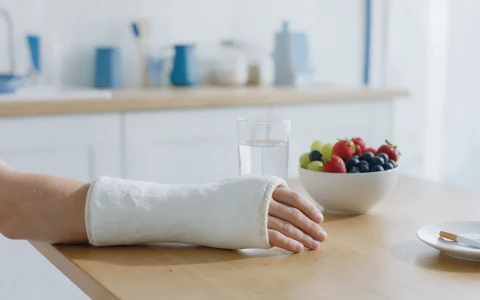
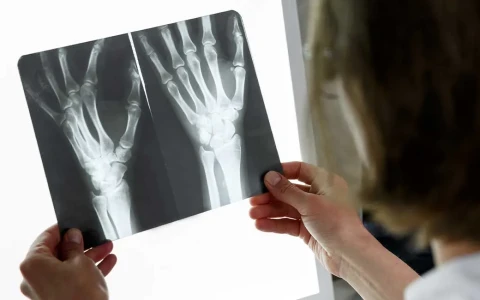
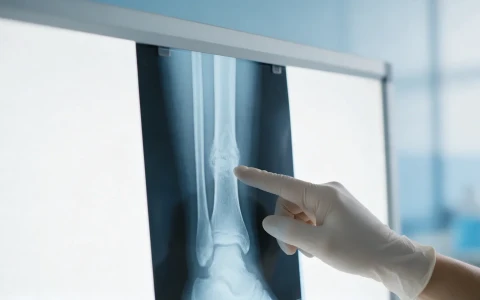
Bone affected by osteoporosis does heal, but fixing weaker bone and preventing further fractures need special attention. We explain healing, treatment principles and why a bone health check after a fracture matters.
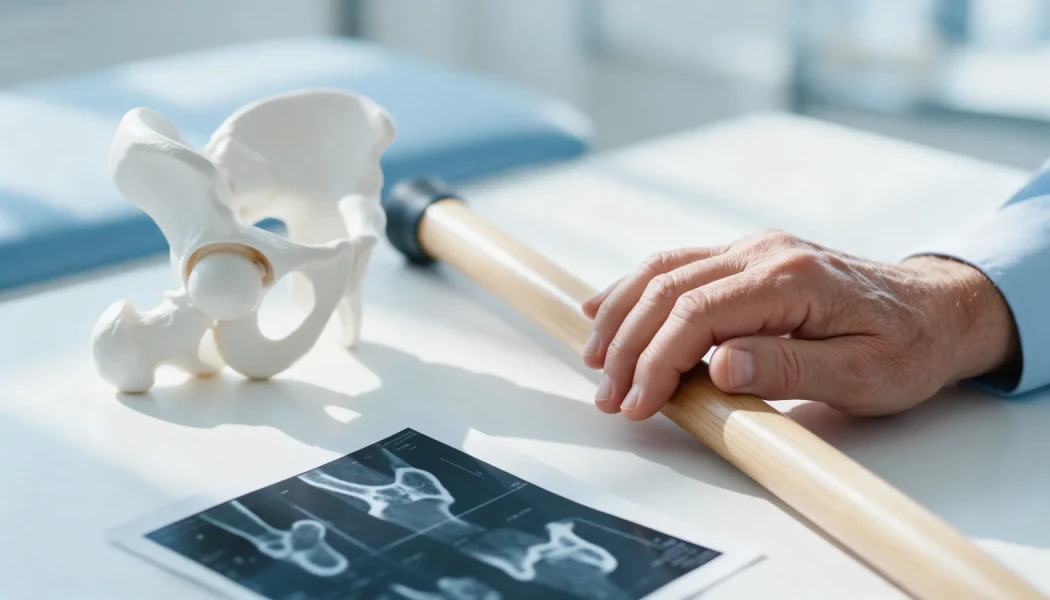
On this page 8 sections
- What is osteoporosis and why is it called a "silent" disease?
- What is a fragility fracture, and which fractures are most common?
- How does osteoporosis affect fracture healing?
- Treating fractures in weaker bone: what matters?
- Steps that support recovery
- Why is a bone health assessment after a fracture important?
- When should you see a doctor?
- Key points
Osteoporosis is a condition in which bone mass falls and the internal structure of bone weakens, so bones break more easily. To answer the most common question straight away: osteoporotic bone does heal after a fracture. The basic biology of osteoporosis fracture healing is the same as in healthy bone, although the process may be slower in some people. The real challenges are getting implants to hold securely in weaker bone, helping the patient move early and preventing further fractures.
World Osteoporosis Day, held every year on 20 October, is a good moment to think about bone health. This article explains how osteoporosis affects healing, how fractures in weaker bone are treated, what supports recovery and why a bone health assessment after a fracture matters. Treatment is always planned individually after examination and imaging.
What is osteoporosis and why is it called a "silent" disease?
Bone is living tissue that is constantly renewed. With age, and especially in women after the menopause, breakdown outpaces formation and bone mass falls. Osteoporosis usually causes no pain or symptoms, and many people only find out they have it after their first fracture.
The main risk factors include:
- Older age, female sex and early menopause
- A parent who has had a hip fracture
- Low body weight, inactivity, smoking and excess alcohol
- Long-term corticosteroid (glucocorticoid) treatment and some other medicines
- Rheumatoid arthritis, certain thyroid and parathyroid disorders, and bowel conditions that impair absorption
- Vitamin D deficiency and poor nutrition
Diagnosis is most often made with a bone mineral density scan (DXA) of the hip and lower spine. A mild reduction is called osteopenia and a marked reduction osteoporosis. Even if a medicine you take is a risk factor, do not stop it on your own; discuss it with your doctor.
What is a fragility fracture, and which fractures are most common?
A fragility fracture is one caused by a force that would not normally break healthy bone, such as a fall from standing height or less. Worldwide, one in three women and one in five men over the age of 50 will have a fracture related to osteoporosis at some point in their lives.
| Fracture site | Typical cause | Common treatment approaches |
|---|---|---|
| Hip (top of the thigh bone) | Sideways fall from standing | Usually surgery: a nail, screws, or a partial or total hip replacement |
| Wrist | Putting a hand out to break a fall | A cast or a plate, depending on the fracture and activity level |
| Spine (compression fracture) | Bending, lifting, sometimes no clear cause | Pain relief, guided activity; procedures in selected patients |
| Shoulder (top of the arm bone) | Fall to the side or forwards | Sling and early movement; a plate or replacement for some fractures |
Many spinal fractures go unnoticed; loss of height and a forward stoop are sometimes the only signs. A wrist fracture is often the first "warning" fracture and an important opportunity to check bone health.
How does osteoporosis affect fracture healing?
Fracture healing starts with a blood clot and an inflammatory response, continues with the formation of soft and then hard callus (new bone bridging the break) and ends with a remodelling phase that lasts months. These stages still happen in osteoporotic bone, but research suggests that callus may form more slowly in older age and with osteoporosis, and the new bone can take longer to mature.
In practice, other issues are often more decisive:
- Implant hold: thinner bone offers less solid material for screws to grip, so implants may loosen or cut out.
- Comminution: weaker bone tends to break into more pieces and may collapse at the fracture site.
- Other health factors: muscle loss, poor balance, diabetes, under-nutrition and smoking can all slow recovery.
- Risks of immobility: long periods in bed increase the risk of blood clots, chest infection, pressure sores and further muscle loss.
Healing time depends on the site. A wrist fracture, for example, is often treated in a cast or splint for a few weeks, whereas after hip fracture surgery patients are usually helped up with a walking frame very soon, although full bone maturation and regaining independence in daily life can take months. Follow-up X-rays show whether healing is progressing as expected.
Most fractures heal with appropriate treatment, but in some people healing is delayed or does not happen. Our article on factors that influence nonunion surgery discusses what affects this.
Treating fractures in weaker bone: what matters?
The main goal is fixation strong enough to let the patient move early and safely. Locking (angle-stable) plates, nails placed inside the bone and, in selected cases, bone cement to improve screw hold may be used. For fractures of the femoral neck in particular, a partial or total hip replacement instead of fixing the fracture can allow earlier weight-bearing in suitable patients. Our page on hip osteoarthritis and hip replacement explains these options.
In older adults, hip fracture surgery is recommended within the first day or two if the person is medically fit, because waiting in bed increases the risk of complications. The decision is made by the team, taking into account the anaesthetic assessment and other health conditions. If healing runs into difficulty, the options for nonunion surgery are considered.
Steps that support recovery
- Early movement and physiotherapy: getting up as soon as your surgeon allows helps preserve strength and balance.
- Nutrition: a balanced diet with enough protein and calcium supports bone healing. Vitamin D levels can be checked with a blood test, and your doctor will decide whether a supplement is needed.
- Stopping smoking and limiting alcohol: smoking reduces blood flow to bone and impairs bone formation.
- Preventing falls at home: removing loose rugs, using night lights, fitting grab rails in the bathroom, wearing suitable shoes and keeping up with eye checks all reduce the risk of another fall.
- Reviewing medicines: some medicines cause dizziness or drowsiness and can increase fall risk; it is worth discussing this with your doctor.
Why is a bone health assessment after a fracture important?
After a fragility fracture, the risk of another fracture rises considerably and is highest in the first two years. Fracture care should therefore not stop once the broken bone has healed. A bone density scan, a fracture risk assessment tool and blood tests for calcium, vitamin D, kidney and thyroid function may be requested.
Osteoporosis treatment is planned together with endocrinology, rehabilitation medicine, geriatrics or another relevant specialty. Several groups of medicines can increase bone density or slow bone loss. Current evidence suggests that, in suitable patients, starting osteoporosis treatment after a fracture does not noticeably delay healing; the choice of medicine and its timing are decided individually.
When should you see a doctor?
- Inability to bear weight, marked pain or deformity after a simple fall or strain
- Back pain in later life that starts after bending or lifting and does not settle
- Noticeable loss of height or an increasing forward stoop
- Pain that increases rather than eases during fracture treatment, or a sense of movement at the fracture
- Redness, discharge or fever around a surgical wound
- Calf swelling and pain, or sudden breathlessness: seek urgent care
- Any fracture after the age of 50: ask your doctor about a bone health assessment
If healing is delayed or nonunion is suspected, assessment by an orthopaedic and trauma surgeon experienced in bone reconstruction is advisable. Prof. Dr. Halil İbrahim Balcı's areas of work include nonunion surgery.
Key points
- Bone affected by osteoporosis does heal, although healing may be slower in some people.
- The main challenge in weaker bone is secure implant fixation that allows early movement.
- The hip, wrist, spine and shoulder are the most common sites of fragility fractures.
- After one fragility fracture the risk of another rises, so bone health should always be assessed.
- Nutrition, exercise, stopping smoking and fall prevention support both recovery and prevention.
Frequently Asked Questions
Yes. Bone affected by osteoporosis does heal, and the main stages of healing are the same as in healthy bone. In older age and with osteoporosis, however, callus may form more slowly. The bigger challenges are getting implants to hold securely in weaker bone and helping the patient move early. Healing time depends on the fracture site and type, the treatment used and general health, and it is monitored with follow-up X-rays.
If you have broken a bone after a simple fall or minor strain, particularly after the age of 50, a bone health assessment is recommended. This usually includes a bone mineral density (DXA) scan, a fracture risk calculation and some blood tests. The aim is to estimate your risk of a further fracture and to plan treatment if needed. Your doctor will decide which tests are appropriate for you.
Current evidence suggests that, in suitable patients, starting osteoporosis treatment after a fracture does not noticeably delay healing. Even so, the choice of medicine and when to start it are decided by the relevant doctor, taking into account the type of fracture, kidney function, other conditions and any other medicines you take. Please do not start or stop medicines on your own; raise any questions with your doctor.
Weight-bearing exercise such as walking, muscle-strengthening work and balance training support bone and muscle health and help reduce the risk of falls. While a fracture is healing, which movements are safe and when depends on the fracture site and its treatment. People who have had a spinal fracture are usually advised to avoid sudden forward bending and heavy lifting. An exercise programme should be planned with a physiotherapist.
Yes. Although osteoporosis is more common in women, it is also an important health problem in men and is often overlooked. Long-term corticosteroid use, low testosterone, smoking, excess alcohol, inactivity and some chronic illnesses can raise the risk. Recovery after a hip fracture can be challenging in men too, so men who have had a fragility fracture should also have their bone health assessed.
This article is for general information only and does not replace a medical examination, diagnosis or treatment. Treatment options and outcomes vary from person to person.
Related treatment area Hip Osteoarthritis: Symptoms, Treatment and the Replacement Decision