How long does a broken bone take to heal? The stages of bone healing, typical times for common fractures, factors that slow healing and the difference between delayed union and nonunion.
On this page 8 sections
How long does a bone take to heal? There is no single answer, because bone healing is measured in weeks and months rather than days. In children many fractures heal in three to six weeks, while in adults most take around six to twelve weeks depending on the bone. Large bones such as the shin bone and thigh bone often need three to six months, and sometimes longer. The timescale depends on where the break is and what type it is, as well as age, blood supply to the bone, general health and the treatment used.
It is also worth knowing that a bone being "healed" is not the same as getting back your full strength and movement. This article explains the stages of bone healing, typical healing times for different bones, how doctors decide that a fracture has united, what slows healing down and the difference between delayed union and nonunion.
How does bone heal? The four stages
Bone is one of the few tissues in the body that can repair itself without leaving a scar. After a fracture it passes through four overlapping stages:
- Bleeding and inflammation (the first few days to about a week): a blood clot (haematoma) forms between the broken ends. Inflammatory cells and growth factors arriving in the area start the repair process. This is when pain and swelling are at their worst.
- Soft callus (roughly weeks two to three): a temporary bridge of fibrous tissue and cartilage forms across the gap. The fracture is still weak and needs protecting.
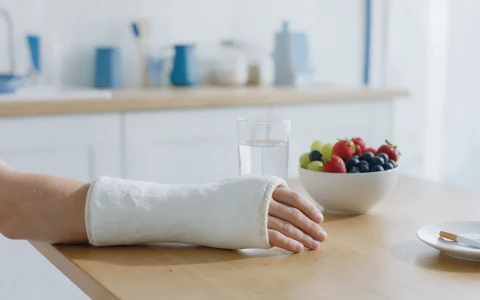
- Hard callus (from about week three to the second or third month): the cartilage bridge is gradually replaced by bone, and callus starts to show on X-rays. The fracture becomes progressively stronger, and this is usually when a cast comes off or weight-bearing is increased.
- Remodelling (months to years): excess callus is reabsorbed and the bone gradually returns towards its original shape. This stage is particularly powerful in children, in whom some angulation can correct itself with growth.
When a fracture is fixed very rigidly with a plate and screws, the bone can heal directly without forming visible callus. Fractures treated in a cast, a splint or with an intramedullary nail usually heal through callus. Both are normal, so the absence of callus on an X-ray is not necessarily a problem.
How long does a bone take to heal? Typical timelines by bone
The table below gives a general idea for common fractures. Here, "healed" means strong enough for everyday use; returning to sport or heavy manual work may take longer.
| Bone / fracture site | Children (approx.) | Adults (approx.) |
|---|---|---|
| Finger and hand bones | 3–4 weeks | 4–6 weeks |
| Wrist (lower end of the radius) | 3–6 weeks | 6–8 weeks |
| Collarbone (clavicle) | 3–6 weeks | 6–12 weeks |
| Upper arm bone (humerus) shaft | 4–8 weeks | 8–12 weeks |
| Ankle | 4–6 weeks | 6–10 weeks |
| Shin bone (tibia) shaft | 6–10 weeks | 4–6 months |
| Thigh bone (femur) shaft | 4–12 weeks (depending on age) | 3–6 months |
Children's bones heal faster because the membrane covering the bone (the periosteum) is thick and has a rich blood supply, and because they are still growing. By contrast, areas with a more limited blood supply, such as the scaphoid bone in the wrist, the neck of the femur, the talus in the ankle and the lower part of the tibia, may take longer than expected.
Is a healed bone the same as full recovery?
Even after the bone has united, it takes time to rebuild muscle strength, joint movement and balance. An adult with a wrist fracture, for example, may find the bone heals in six to eight weeks but still need several more months of exercises before grip strength fully returns. After a shin bone fracture, getting back to running and contact sport usually requires an additional period of strengthening once the bone has healed. A return to desk work is often possible relatively early, whereas heavy manual work and driving require the bone to be strong enough and sudden reflex movements to be comfortable. These decisions are made with your doctor, based on the type of fracture, the treatment used and the nature of your job.
How do doctors know a fracture has healed?
The decision is never based on a single finding but on examination and imaging together:
- Clinical findings: little or no pain when the fracture site is pressed or loaded, and no movement between the broken ends.
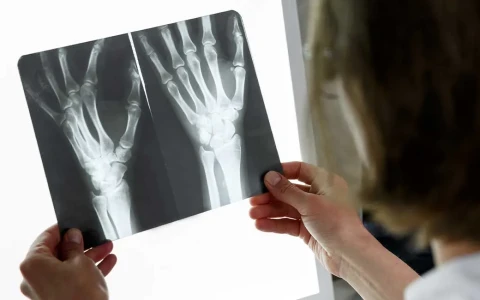
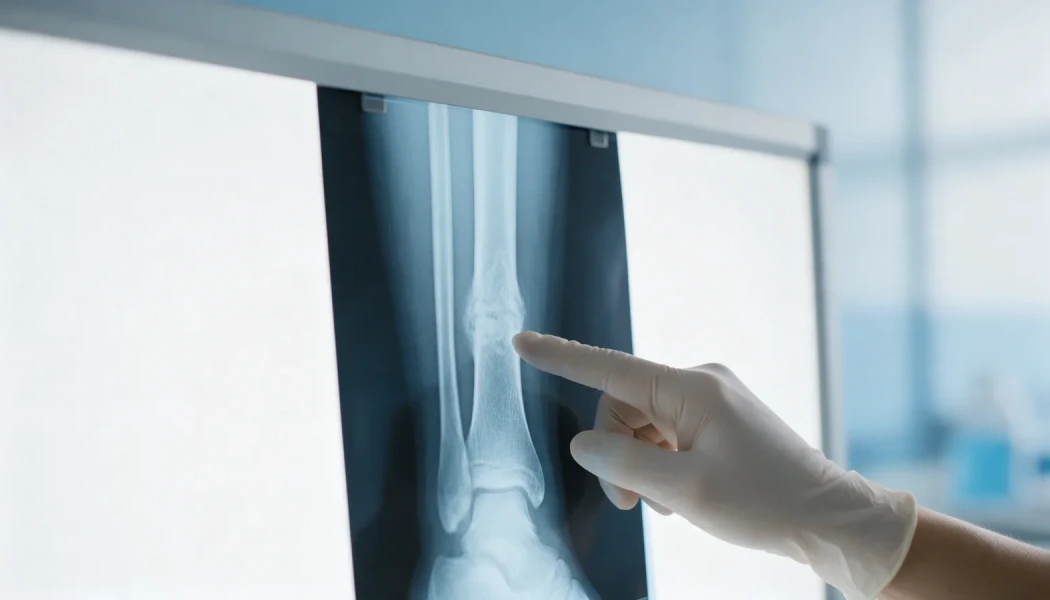
- X-ray findings: bridges of bone crossing the fracture line on images taken from two different angles.
- Further imaging: if there is doubt, a CT scan can show the extent of healing more clearly.
Having the cast removed or putting the crutches away does not mean the bone has fully regained its strength. Weight-bearing and activity are increased step by step by your doctor according to follow-up X-rays.
What slows down bone healing?
The factors that affect healing time fall broadly into three groups.
Factors related to the fracture
- a site with a limited blood supply
- a fracture in several pieces, an open fracture or a fracture with bone loss
- severe damage to the surrounding muscle and skin
- infection at the fracture site
Factors related to treatment
- fixation that is not stable enough, or surgery that disturbs the blood supply more than necessary
- not following advice on weight-bearing and movement
Factors related to the person
- older age, smoking and alcohol
- poorly controlled diabetes, kidney disease and circulatory problems
- low protein intake, vitamin D deficiency and osteoporosis
- certain medicines, such as long-term steroid treatment
If you are worried that a medicine might be affecting your healing, do not stop it yourself; discuss it with the doctor who prescribed it. For more on what influences healing, see our article on factors that influence the outcome of nonunion surgery.
Delayed union or nonunion: what is the difference?
Delayed union means the expected healing time has passed and the fracture has not yet united, but follow-up X-rays show that healing is still progressing, however slowly. Time is often allowed, together with measures such as stopping smoking, correcting nutrition and vitamin D levels and adjusting weight-bearing; some patients need further intervention.
Nonunion (pseudarthrosis) means the healing process has stopped. It is usually suspected when a fracture has not united six to nine months after the injury and X-rays have shown no progress over the previous few months. Some nonunions are caused by insufficient stability, others by poor biology and some by infection, and treatment is planned according to the cause. The options are explained in detail on our nonunion surgery page and in our article on pseudarthrosis treatment, while more complicated cases involving infection are covered under complex and infected nonunion.
How can you help your fracture heal?
- Follow your doctor's advice on weight-bearing and movement; avoid both doing too much too soon and staying immobile for longer than necessary.
- If you smoke, stop; this is one of the most important things you can do for your bone.
- Eat a balanced diet with enough protein, calcium and vitamin D, and ask your doctor whether you need a supplement.
- If you have diabetes, monitor your blood sugar closely.
- In the first few days, keep the arm or leg raised above the level of your heart to reduce swelling.
- Keep up the exercises for the neighbouring joints and your physiotherapy programme.
- Attend your follow-up appointments and X-rays.
When should you see a doctor?
Seek urgent medical attention if you notice:
- severe pain inside a cast or splint that keeps getting worse and does not respond to painkillers
- numbness, blue or pale discolouration, coldness, or inability to move the fingers or toes
- pain and swelling in the calf, shortness of breath or chest pain
- discharge, redness around a surgical wound, or a fever
Contact your doctor without waiting for your next appointment if pain at the fracture site persists beyond the expected healing time, you feel movement or "giving" at the fracture, the arm or leg looks increasingly bent, or the cast cracks or becomes loose.
Key points
- Fractures heal over weeks and months, not days, and children heal considerably faster than adults.
- Healing passes through bleeding, soft callus, hard callus and remodelling stages.
- Doctors judge healing by combining examination with X-ray findings.
- The fracture site, treatment method, smoking, diabetes and nutrition all affect healing time.
- In delayed union healing continues slowly; in nonunion it has stopped and treatment aimed at the cause is needed.
Frequently Asked Questions
Not quite. Removing the cast means the bone is strong enough for everyday use, but healing carries on. The bone keeps remodelling and gaining strength for months, and the muscles and joints also need time to recover after being immobilised. Activities are therefore increased gradually after the cast comes off, with physiotherapy if needed. When you can return to sport or heavy work is decided on the basis of follow-up examination and X-rays.
There is no simple method that markedly increases the natural speed of bone healing, but you can remove the things that slow it down. Stopping smoking, getting enough protein and vitamin D, keeping blood sugar under control and following your doctor's weight-bearing advice are the most important steps. Be cautious about products marketed as speeding up fracture healing, and use supplements or medicines only after discussing them with your doctor.
Pain and swelling are expected in the first few days and usually ease steadily over the following weeks. Mild aching with movement or weight-bearing can persist for some time, especially during physiotherapy. However, pain that gets worse rather than better, pain that keeps you awake at night, significant pain that continues beyond the expected healing time, or pain accompanied by a fever is not normal and should be checked by a doctor.
Healing does tend to slow with age. Reduced blood supply to bone, a lower capacity for cellular repair, osteoporosis, other long-term conditions and certain medicines all play a part. Even so, fractures in many older people heal well with appropriate treatment and rehabilitation. In this age group, preventing further falls, assessing bone health and getting moving again early are important parts of recovery.
Surgery is considered if follow-up X-rays show no progress after the expected healing time, if pain and movement at the fracture persist, or if the implant has loosened or broken. Its aim depends on why the bone has not healed: improving stability, boosting biology with a bone graft, or clearing any infection. The most suitable approach is decided after examination, imaging and, where needed, blood tests to look for infection.
This article is for general information only and does not replace a medical examination, diagnosis or treatment. Treatment options and outcomes vary from person to person.
Related treatment area Revision Surgery for Complex and Infected Nonunion