
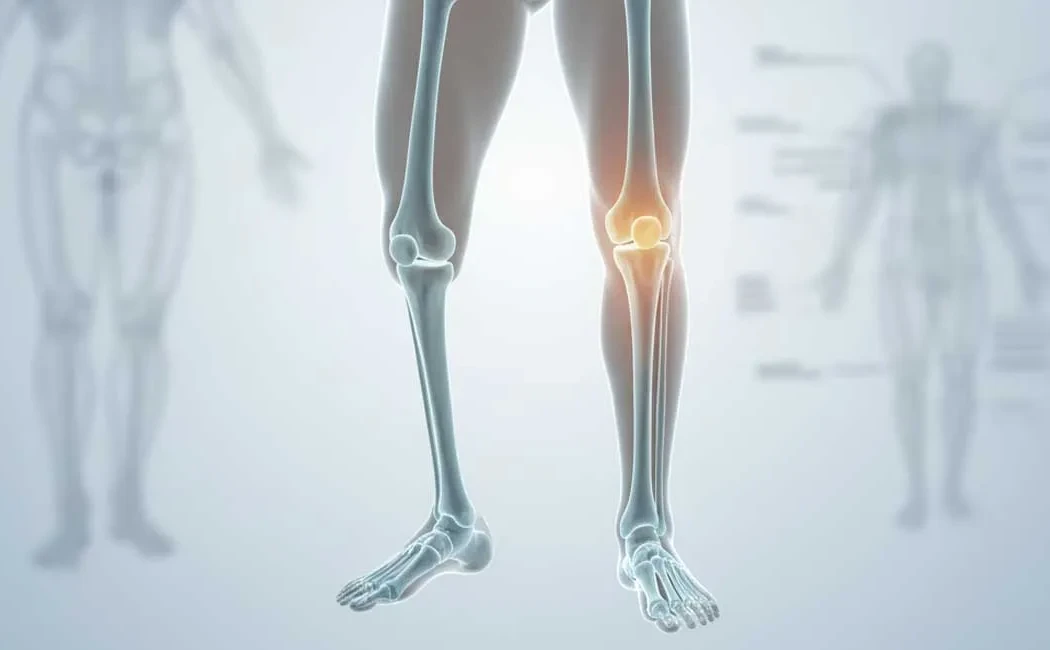
Unilateral limb length discrepancy refers to the condition where one lower extremity (leg) is shorter than the other. This is not merely an aesthetic concern; it can cause spinal curvature (scoliosis), lower back pain, and gait biomechanical disturbances. Treatment of unilateral limb length discrepancy aims to eliminate these functional problems, improve patient quality of life, and preserve long-term joint health. The treatment approach is personalized, considering the extent of discrepancy, patient age, and underlying cause.
What is Unilateral Limb Length Discrepancy?
Unilateral limb length discrepancy involves a difference in length of the femur (thigh bone) or tibia (shin bone), or both, between the legs. This inequality shifts the body's center of gravity and alters load distribution on the hip, knee, and ankle joints. Minor discrepancies may be well tolerated by the body, but differences beyond a certain threshold require either surgical or non-surgical intervention.
Causes of Leg Length Discrepancy
Leg length discrepancy may arise from congenital factors or develop later due to trauma or disease. Understanding the cause is crucial for determining the correct treatment strategy. For detailed information, visit our page on lower limb deformity surgery. Patients should also be aware of early signs of hip joint problems that can result from untreated discrepancies.
Congenital Causes
Congenital causes include conditions such as fibular hemimelia (partial or complete absence of the fibula), proximal femoral focal deficiency (PFFD), and hemihypertrophy (one side of the body growing larger than the other). These anomalies are often detected in childhood and may lead to progressive limb shortening during growth.
Acquired Causes
Acquired discrepancies typically occur from growth plate fractures in childhood, bone infections (osteomyelitis), or tumor surgeries. Damage to the growth plate can halt or slow bone growth, resulting in asymmetry.
Diagnostic Process and Measurement Techniques
Diagnosis involves a thorough physical examination and imaging studies. The clinician evaluates gait and pelvic alignment. Definitive diagnosis employs orthoroentgenogram (full-length leg X-ray) and computed tomography (CT) scans to precisely identify the bone responsible and the degree of shortening with millimetric accuracy.
Comparisons of pre- and post-treatment results are essential to assess treatment success.
Treatment Options for Unilateral Limb Length Discrepancy
Treatment depends on the severity of the length difference. Non-surgical approaches are usually preferred for discrepancies under 2 cm, whereas surgical intervention is often necessary for differences of 2-5 cm or more. Further information on bone lengthening surgery is available.
Orthotics and Conservative Approaches
For mild discrepancies (up to about 2 cm), shoe lifts or custom insoles can help equalize leg length. Such conservative measures protect spinal and hip alignment without requiring surgery.
Epiphysiodesis and Surgical Interventions
In growing children, temporary or permanent growth plate arrest (epiphysiodesis) can be performed on the longer limb, allowing the shorter leg to catch up over time. In adults or patients without remaining growth potential, bone lengthening surgery is the preferred method.
Bone Lengthening Surgery Process
Bone lengthening surgery for unilateral limb length discrepancy involves carefully cutting the bone and gradually distracting it by approximately 1 mm per day using specialized devices. This exploits the body’s natural regenerative ability to form new bone tissue. Learn more about the Ilizarov technique for limb lengthening. It is important to note that the procedure may involve reconstructive surgery challenges.
Ilizarov and Intramedullary Nail Systems
Bone lengthening can be performed using external fixators, such as the Ilizarov frame, or internal magnetic nails placed within the bone (intramedullary systems). The Ilizarov method is advantageous for correcting complex deformities, whereas intramedullary nails often allow for a more comfortable recovery.
Lengthening and Healing Phases
The lengthening phase typically begins 5-7 days post-operation. The patient or caregiver activates the device daily to incrementally increase length. Once the desired length is reached, a consolidation phase follows during which the new bone hardens.
Potential Risks and Complications
As with any surgery, bone lengthening carries risks such as infection, nerve or vascular injury, joint stiffness, and delayed bone healing. Cases requiring nonunion surgery and treatment or correction of malunions necessitate careful management throughout the process.
Rehabilitation and Functional Recovery
A successful surgical outcome depends heavily on a robust rehabilitation program. Physical therapy begins immediately post-surgery to maintain joint mobility and strengthen muscles. Patient education regarding post-lengthening surgery precautions is essential to facilitate recovery.
All information provided is for general informational purposes only and does not constitute medical advice. The content is not intended to replace individual diagnosis, treatment, or professional guidance. Diagnosis and treatment should be planned only after an in-person evaluation by a qualified healthcare provider. Since each patient's clinical condition is unique, surgical or non-surgical treatments may vary accordingly. The information is based on current scientific sources and up-to-date medical approaches. Do not delay seeking professional medical care based on this content.