
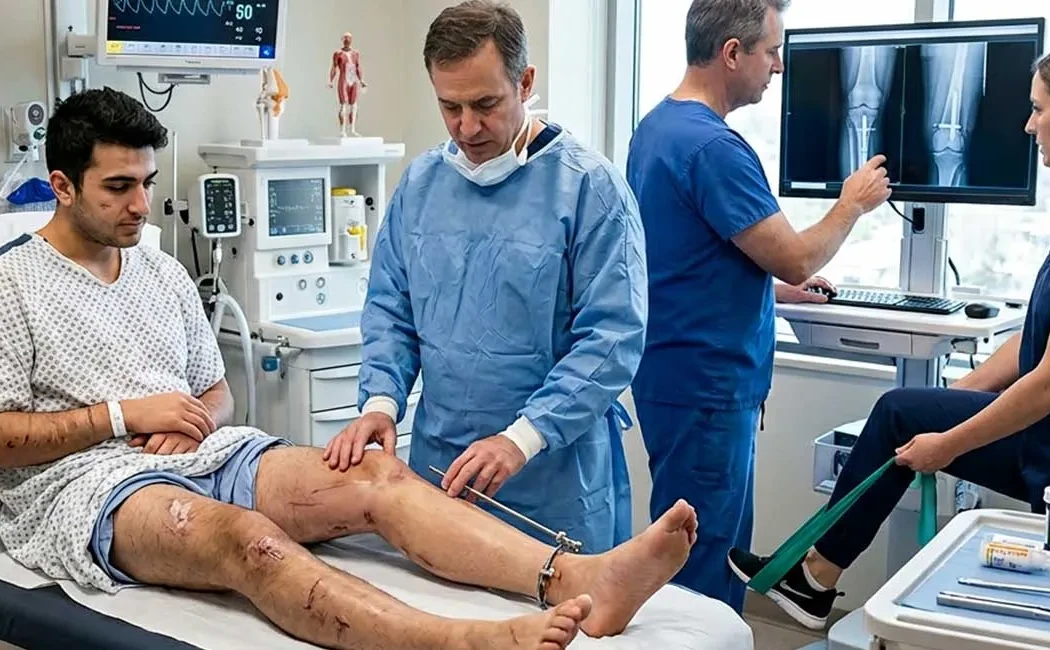
Cosmetic limb lengthening surgery is a complex procedure chosen mainly for aesthetic concerns or functional needs. It involves the controlled cutting and gradual lengthening of bones. Like any surgical intervention, it carries inherent risks and potential complications. It is vital that patients fully understand the risks of cosmetic limb lengthening to make well-informed decisions.
This article provides a detailed overview of the potential complications of limb lengthening surgery, methods to minimize these risks, and strategies for managing possible issues. Our objective is not to cause alarm but to set realistic expectations based on scientific evidence and guide patients through a safe treatment process.
What is Cosmetic Limb Lengthening Surgery?
Cosmetic limb lengthening typically involves osteotomy (bone cutting) of the tibia or femur, followed by gradual bone elongation of about 1 mm per day using external or internal fixators. This process leverages the body’s natural ability to generate new bone tissue. However, it is more than just a bone surgery—it requires comprehensive reconstruction, including the elongation of muscles, nerves, blood vessels, and soft tissues alongside the bone.
For a general overview and detailed information on our services, please visit: Bone Lengthening Surgery Service. The complexity of the procedure introduces multiple risk factors, necessitating careful management at every stage.
What Are the Risks of Cosmetic Limb Lengthening?
Risks associated with limb lengthening surgery vary based on surgical technique, patient physiology, and postoperative care. Risks of cosmetic limb lengthening can generally be classified into minor (correctable with minor interventions) and major (may require further surgery or have permanent consequences) complications.
More detailed information is available in our article Risks of Cosmetic Limb Lengthening Surgery, and for broader literature data, refer to our page on Complications in Extremity Lengthening Surgery.
Infection
Infection is one of the most concerning complications in any surgery, including limb lengthening. Infections can range from superficial pin tract inflammations to deep bone infections such as osteomyelitis. While superficial infections typically respond to oral antibiotics and local care, deep infections may require surgical debridement and prolonged antibiotic treatment.
Nerve and Vascular Injury
During lengthening, nerves and blood vessels surrounding the bone are stretched. Peroneal nerve injury is a particularly serious risk that can cause foot drop. Excessive nerve tension or surgical trauma may cause temporary or, less commonly, permanent sensory or motor loss.
Nonunion and Malunion
Insufficient bone regeneration leading to "nonunion" or delayed healing can occur due to excessive elongation rate, metabolic conditions, or smoking. Malunion involves healing in an incorrect alignment, potentially causing mechanical axis deformities.
Muscle Contractures and Limited Mobility
When muscles and tendons cannot adapt to the rapid bone lengthening, joint stiffness and muscle contractures may develop. Achilles tendon tightness often limits ankle movement, impairing gait mechanics. Intensive physical therapy is therefore essential throughout the process.
Psychological and Social Impacts
The lengthy, demanding treatment can impose significant psychological stress. Mobility restrictions, pain management difficulties, and temporary social withdrawal may lead to anxiety or depressive symptoms. Mental preparation is necessary for patients undergoing this procedure.
Long-Term Effects of Complications
If complications are not properly managed, they can result in long-term functional impairments. Issues such as joint osteoarthritis, chronic pain, and gait abnormalities may arise over time. Cases requiring Lower Extremity Deformity Surgery might develop as sequelae of these complications.
Preventive Measures to Minimize Complications
Although risks cannot be entirely eliminated, appropriate strategies can significantly reduce them. For detailed guidance, please see our article on Postoperative Care After Extremity Lengthening Surgery and information on the role of newer technologies at Extremity Lengthening Technologies.
Surgeon and Facility Selection
Choosing an experienced surgeon and a well-equipped center is the most important factor in minimizing complications. Confirm the surgeon's case experience and the facility’s infection control protocols.
Preoperative Evaluation
A thorough assessment of bone quality, overall health, and psychological readiness is essential before surgery. Eliminating risk factors such as smoking directly impacts healing success.
Sterilization and Surgical Protocols
Strict sterilization protocols are critical to prevent surgical site infections. The surgical environment and implant quality are pivotal in reducing infection risk.
Postoperative Physical Therapy and Follow-up
Consistent physical therapy is mandatory to maintain muscle flexibility and joint range of motion. Regular X-rays should monitor bone regeneration and adjust elongation speed accordingly.
Treatment Pathways for Complications
Prompt intervention is key to preventing permanent damage when complications arise. Treatment algorithms depend on the type and severity of the problem.
For example, in cases of delayed bone healing, Nonunion Surgery options may be considered. Similarly, corrective Malunion Surgery can restore mechanical axis and function when bone heals at an improper angle.
Conclusion and Information Notice
Cosmetic limb lengthening surgery, while having the potential to enhance quality of life, must be approached with caution regarding risks of cosmetic limb lengthening. A successful outcome requires an experienced surgical team, patient compliance, and careful follow-up. The information provided herein aims to raise awareness and should not substitute personalized medical advice. Each patient’s condition is unique; consult a specialist to discuss individual treatment options and risks.
All content is provided for general informational purposes only and does not constitute medical advice. The information presented is not a substitute for professional diagnosis, treatment, or consultation. Diagnosis and treatment should be determined solely through direct evaluation by a qualified healthcare provider. Since each patient’s clinical condition is unique, surgical and non-surgical treatments may vary on an individual basis. The information is based on current scientific knowledge and accepted medical practices.