
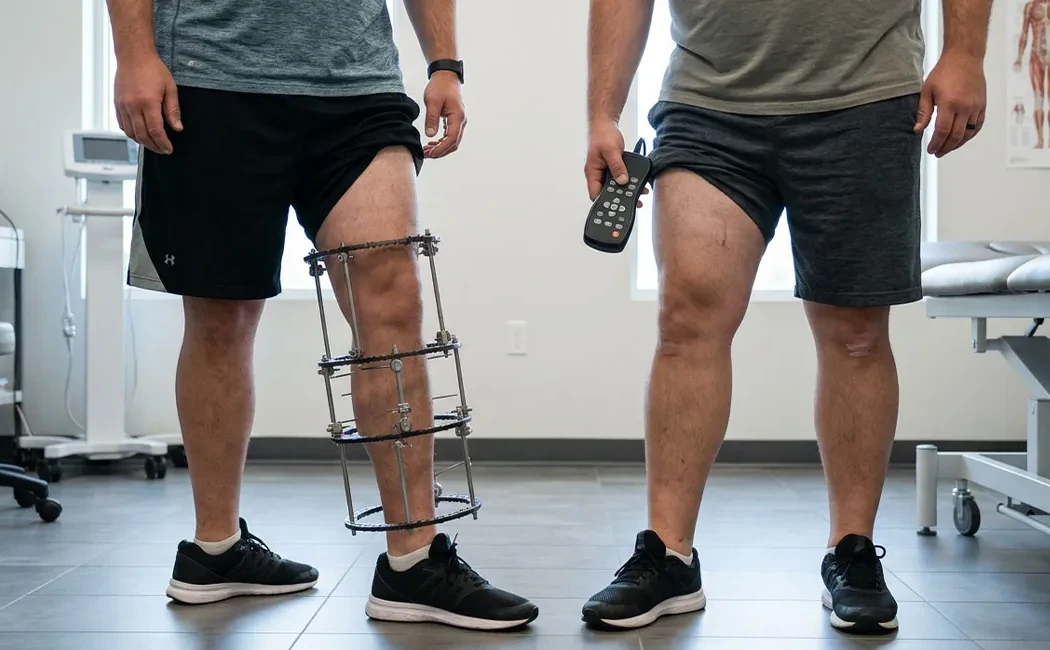
Advancements in technology have diversified the techniques used in limb lengthening surgery and extremity reconstruction. One of the most researched topics by patients during treatment planning is the Ilizarov vs Precice 2 comparison. Although both methods fundamentally aim to lengthen the bone in a controlled manner (distraction osteogenesis), they differ significantly in application, patient comfort, and recovery process.
The Ilizarov method has been used for decades, employing an external fixator system applied outside the body. In contrast, Precice 2 is a more modern technology involving a magnetic nail implanted inside the bone. This article will explore the technical details, advantages, and disadvantages of each method based on scientific evidence.
Ilizarov Method: Key Features and Application Process
Developed by Gavriil Ilizarov in the 1950s, this technique revolutionized orthopedics. It uses an external fixator composed of rings outside the body connected to the bone with wires. It is especially effective for correcting complex deformities and treating bone infections.
In this method, the bone is surgically cut (osteotomy), and then lengthened daily by a controlled amount (usually 1 mm) using the external device. The primary advantage is the ability to perform multi-directional corrections and a lower cost compared to other methods. However, having an external device affects patient comfort and carries a risk of infection at the wire sites. For detailed information, see our article on the Ilizarov technique.
Precice 2 System: Magnetic Nail Lengthening Technology
The Precice 2 system is among the most advanced technologies in limb lengthening surgery. In this method, the lengthening is done entirely by a telescopic intramedullary nail implanted inside the bone. There is no visible external device; lengthening is controlled externally with a magnetic remote controller (ERC) applied to the skin.
The main benefit of Precice 2 is the elimination of infection risk associated with external pins, and minimal scarring for a better aesthetic outcome. Additionally, because there is less trauma to muscles and soft tissues, maintaining joint mobility is often easier. When comparing Precice and Ilizarov, it should be noted that the convenience of Precice 2 comes with higher costs.
Comparison Table: Ilizarov vs Precice 2
To simplify patient decision-making, it is important to evaluate the key parameters of both methods side by side.
As shown, Precice 2 excels in comfort and aesthetics, while Ilizarov offers advantages in weight-bearing capacity and cost-effectiveness. The best choice depends on the patient’s anatomical structure and expectations.
Comparison with Other Techniques: Holyfix, LON, and Combined Methods
Beyond Ilizarov and Precice 2, other bone lengthening surgical techniques are available in orthopedic surgery, including Holyfix and LON (Lengthening Over Nail).
- LON (Lengthening Over Nail): A combination of Ilizarov external fixator and an intramedullary nail. The external fixator is removed after lengthening, shortening recovery time.
- Holyfix: Similar to Ilizarov but uses a unilateral rail system instead of rings.
Especially for upper extremity lengthening or complex deformities, surgeons may prefer one of these or combined approaches based on their expertise.
Risks, Complications, and Recovery Process
Like all surgeries, limb lengthening carries risks such as infections, neurovascular injuries, joint stiffness, and delayed or non-union of the bone.
In Precice 2, because the nail is inside the bone, full weight-bearing may be delayed depending on bone regeneration quality. Ilizarov patients often bear weight earlier but must carefully maintain the external fixator. Adherence to post-op care instructions is crucial. In rare cases of non-union, non-union surgery may be needed, where success factors are critical.
Cost Comparison and Influencing Factors
Costs vary significantly depending on the technology used. The magnetic nails in Precice 2 are high-tech imported implants and increase surgical expenses. The materials in the Ilizarov method tend to be more affordable.
Other cost factors include hospital stay length, rehabilitation, and additional treatments. For current limb lengthening surgery costs, a detailed examination and planning are required.
Which Method Is Suitable for Whom? Decision Flowchart
Choosing the right method involves balancing medical needs with personal preferences.
In general, Precice 2 may be preferred by patients prioritizing comfort and aesthetics without budget constraints, while Ilizarov or combined methods may suit those seeking cost-effectiveness or dealing with complex deformities.
Conclusion and Informational Note
There is no single “best” option in the Ilizarov vs Precice 2 comparison; each has unique strengths and indications. Treatment success depends not only on the chosen method but also on surgeon expertise and patient commitment to rehabilitation.
This process requires a multidisciplinary approach. Always consult with an orthopedic specialist experienced in limb lengthening before making a decision and evaluate all options carefully.
This content has been prepared by Prof. Dr. Halil İbrahim Balcı and team for general informational purposes only. It does not constitute medical advice and is not a substitute for professional medical examination. Diagnosis and treatment should be determined by a qualified physician based on the individual condition of each patient. For definitive information regarding surgical procedures and treatment options, please consult a healthcare professional. Do not delay seeking medical care based on this information.