
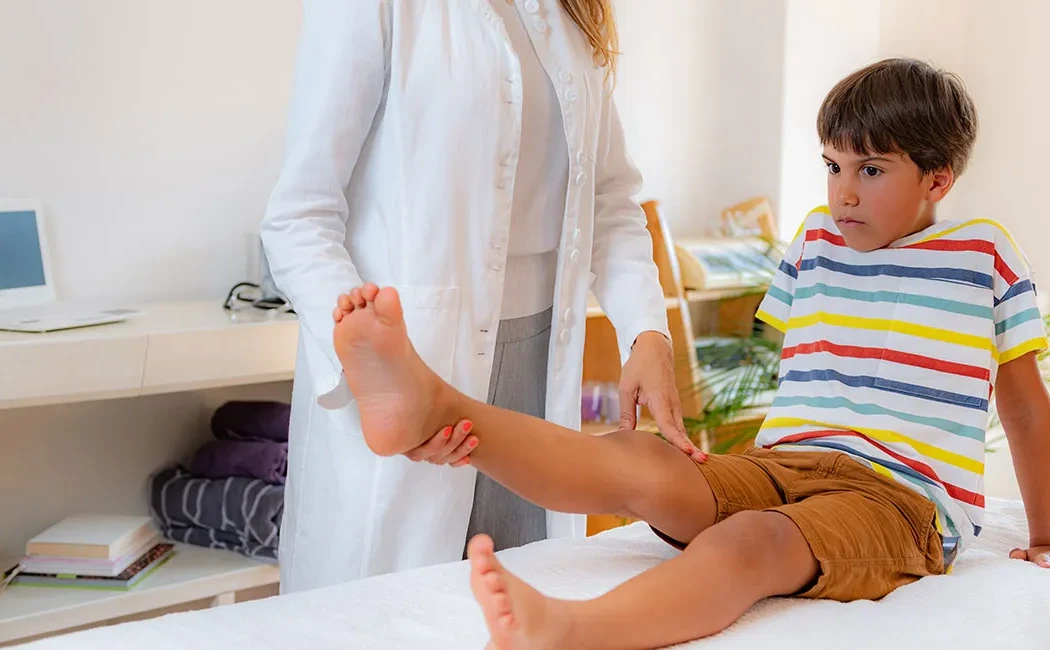
Children’s growth and development involve continuous changes in the musculoskeletal system. Congenital anomalies, developmental disorders, or injuries require approaches distinct from those used in adults. Pediatric orthopedics aims to protect musculoskeletal health and treat existing pathologies from the newborn period until skeletal maturity at the end of adolescence.
Parents naturally worry about their children’s physical development. Walking difficulties, posture asymmetries, or deformities in limbs may warrant professional evaluation. This guide covers the core areas of pediatric orthopedics, commonly encountered conditions, and current treatment methods from a scientific standpoint.
What Is Pediatric Orthopedics?
Pediatric orthopedics is a specialized field of medicine focused on diagnosing, treating, and monitoring musculoskeletal diseases in children and adolescents. Children are not simply miniature adults anatomically and physiologically; their open growth plates (physes) and high bone healing capacity require tailored management. A fracture or deformity in childhood must be handled carefully due to its potential impact on growth.
The discipline encompasses a wide range of issues—from congenital hip dislocation, clubfoot, and scoliosis to neuromuscular diseases like cerebral palsy, bone infections, and sports injuries. The goal is to maximize the child’s functional ability and ensure a pain-free, mobile life.
Musculoskeletal Development in Children
The developing musculoskeletal system in children is shaped by genetics, nutrition, hormonal balance, and mechanical stresses. From birth, bones grow in length and mature in shape. For example, mild bowing of infants’ legs is physiological; it changes and usually corrects as walking begins and the child grows.
However, damage to growth plates or genetic syndromes can disrupt this natural process. Regular monitoring is essential for healthy development. For more details, see our page on bone development disorders in children.
Common Orthopedic Conditions
Flat Feet
Flat feet (pes planus) refer to the absence or insufficiency of the foot arch. In infants and young children, the fat pad under the foot gives a flat appearance known as “physiological flat feet.” Most children develop an arch naturally as they grow. However, rigid flat feet, which cause pain and movement limitations, are pathological and may require treatment. Flexible flat feet typically do not require specific intervention, whereas rigid forms might necessitate surgical options.
Scoliosis
Scoliosis is characterized by lateral curvature and rotation of the spine. It often becomes noticeable during the rapid growth spurt of adolescence. Signs include uneven shoulder height, protruding scapula, or asymmetry in the waist. Early detection and regular monitoring are critical to halt progression. Comprehensive information is available in our article on common deformities in pediatric orthopedics.
Clubfoot (Pes Equinovarus)
Pes equinovarus, commonly known as clubfoot, is a congenital deformity where the infant’s foot turns inward and downward. It is identified at birth and should be treated promptly. The Ponseti method (serial casting) is widely used and achieves high success rates. Untreated cases can lead to permanent disability. Detailed information on treatment is available on our page dedicated to clubfoot deformity in children.
Congenital and Developmental Deformities
Hip Dislocation (Developmental Dysplasia of the Hip)
Developmental Dysplasia of the Hip (DDH) refers to incomplete formation or dislocation of the hip joint. Early diagnosis is possible through hip ultrasound in the newborn period. Non-surgical treatment with devices like the Pavlik harness has high success if initiated promptly. Delayed cases may require surgery. Information on treatment options can be found on our hip dislocation treatment in children page.
Upper and Lower Limb Deformities
Deformities in arms and legs in children may be congenital or develop after trauma or infection. Limb length discrepancies, knock knees (genu valgum), or bow legs (genu varum) can impair gait and harm joints. These conditions require a specialized approach detailed in our article on pediatric lower limb deformities.
Similarly, shortened or curved arms can cause functional loss. Procedures for upper limb lengthening and deformity correction are available. For rarer complex cases, refer to our section on rare pediatric deformities.
Rare Bone Diseases
Conditions like osteogenesis imperfecta (brittle bone disease), skeletal dysplasias, and metabolic bone diseases require a multidisciplinary approach. These diseases affect bone quality and development, leading to frequent fractures and deformities. Details are provided in our rare pediatric bone diseases and treatments resource.
Diagnostic and Screening Methods
Accurate diagnosis in pediatric orthopedics begins with a thorough physical examination and family history. The physician assesses the child’s gait, joint range of motion, and neurological condition. Imaging techniques play a crucial role in confirming diagnoses. Radiography (X-rays) is the first-line investigation for bone structure evaluation.
Ultrasound is preferred in the newborn period to image cartilaginous structures. Magnetic Resonance Imaging (MRI) is used for detailed visualization of soft tissues, cartilage, and bone marrow pathologies.
Treatment Approaches
Physical Therapy and Rehabilitation
Non-surgical options are often the first line of treatment in pediatric orthopedic conditions. Physical therapy includes muscle strengthening exercises, stretching routines, and posture training, especially effective for postural disorders and mild deformities. For neuromuscular diseases such as cerebral palsy, rehabilitation is essential to improve motor skills and prevent contractures.
Surgical Interventions
When conservative treatments are insufficient or deformities are progressive, surgery is considered. Surgical planning takes into account the child’s age and growth potential. Lower limb deformities may be corrected with lower limb deformity surgery techniques.
In cases of malunion following fractures, malunion surgery is performed to realign bones. Nonunion cases are managed with nonunion surgery, combining biological and mechanical support.
Bone Lengthening and Deformity Correction
Bone lengthening surgery is applied for limb length discrepancies or shortness associated with deformities. Advanced technologies like the Ilizarov method or magnetic rods are employed. Controlled distraction promotes new bone growth. Further information is available on our bone lengthening surgery page.
Preventive Recommendations for Parents
Parents should be attentive to several key factors to maintain their child’s musculoskeletal health. Balanced nutrition with adequate calcium and vitamin D is vital for bone development. Encouraging age-appropriate physical activities strengthens muscles and increases bone density.
Heavy backpacks can negatively impact spinal health; therefore, ergonomic bags and proper carrying techniques are important. Children’s sitting and posture habits should also be monitored.
This content is provided for informational purposes only and does not constitute medical advice. It is not intended to replace individualized diagnosis, treatment, or professional guidance. Diagnosis and treatment decisions should only be made following a direct consultation with a qualified healthcare provider. Since each patient's clinical situation is unique, surgical or non-surgical treatments may vary accordingly. The information presented is based on current scientific resources and established medical practices. Do not delay seeking necessary care or consult a healthcare professional for personalized medical advice.