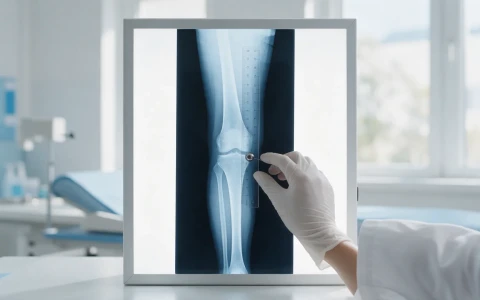
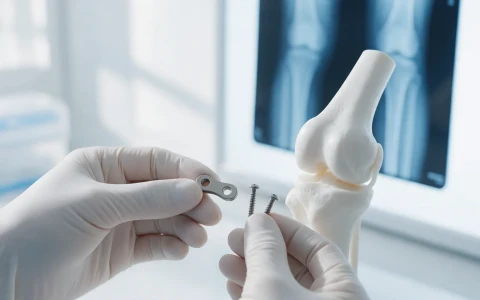
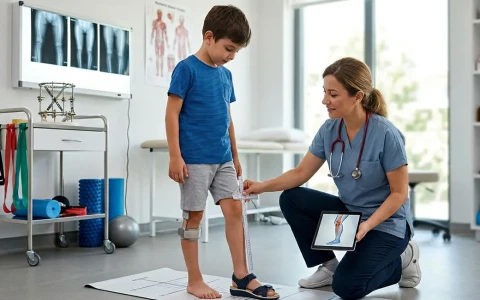
Epiphysiodesis stops or slows the growth plate of the longer leg so that a leg length difference closes with growth. We explain who it suits, how timing is planned, the techniques and the risks.
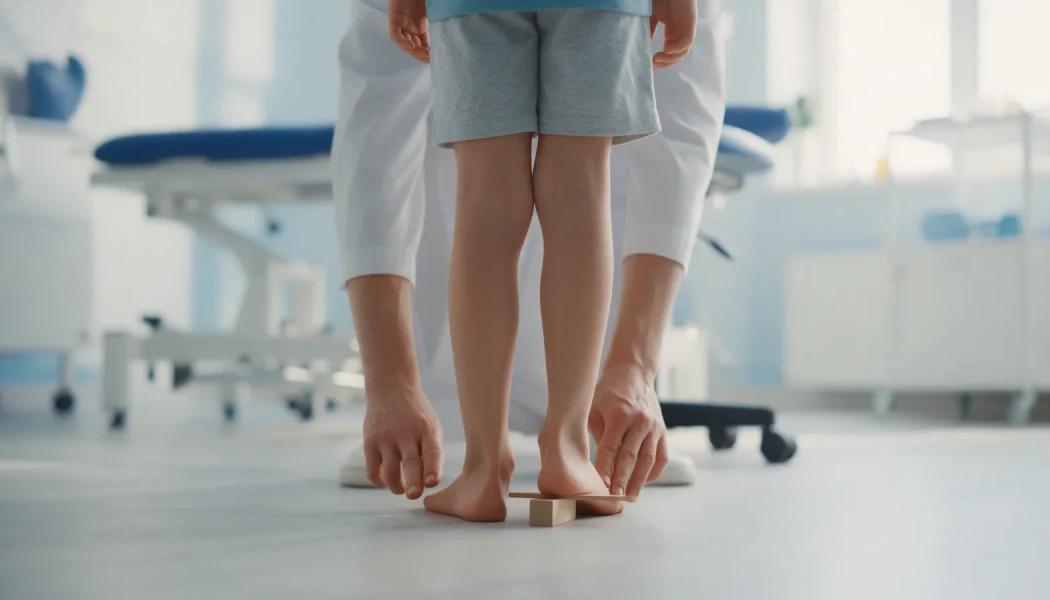
On this page 8 sections
Epiphysiodesis is a procedure for growing children with a leg length difference in which the growth plate of the longer leg is surgically stopped or slowed. Because the shorter leg carries on growing, the difference between the legs narrows towards the end of growth until the legs are equal. It is usually considered when the difference expected at the end of growth is roughly 2 to 5 cm, and the most critical part of the method is getting the timing right.
Epiphysiodesis is done through small incisions and needs only a short hospital stay, but it can only be performed while a child is still growing. This article explains how it works, which children it suits, how the timing is calculated, which techniques are used and what its limitations are.
What is epiphysiodesis and how does it work?
The leg bones grow longer thanks to the growth plates near their ends. Most leg growth comes from the two growth plates around the knee: on average, the lower end of the thigh bone (femur) adds about 1 cm a year and the upper end of the shin bone (tibia) about 6 mm. These figures vary between children and across different stages of growth.
In epiphysiodesis, one or both of these growth plates in the longer leg are closed or slowed at the right moment. As the shorter leg keeps growing at its normal pace, the gap closes a little more each year. The shorter leg does not grow faster; instead, growth in the longer leg is stopped so that the shorter leg can catch up. This is why the procedure has to be planned so that both legs are equal at the moment growth ends.
Which children might need epiphysiodesis?
The cause and size of the leg length difference are the main factors that determine treatment. Epiphysiodesis is mainly considered for:
- Conditions in which one side overgrows, such as hemihypertrophy or hemihyperplasia
- Overgrowth, or a growth plate injury, after a thigh bone fracture in childhood
- Length differences after hip conditions, bone infections or some benign bone tumours
- Mild to moderate congenital leg length differences
- Differences related to certain neurological conditions
The table below summarises the general approach according to the difference expected at the end of growth. These figures are not strict cut-offs; the child's expected adult height, the family's preferences and any associated deformities are all considered together.
| Expected difference at the end of growth | General approach |
|---|---|
| Under about 2 cm | Often no treatment, or a shoe insert is enough |
| About 2–5 cm | Well-timed epiphysiodesis, or a shoe raise |
| Over about 5 cm | Lengthening of the shorter leg, sometimes combined with epiphysiodesis |
We describe the lengthening methods used for larger differences on our page on medical limb lengthening and leg length discrepancy.
How is the timing of epiphysiodesis calculated?
The aim of epiphysiodesis is for both legs to be the same length when growth finishes. That requires three pieces of information: the current difference, the difference expected at the end of growth and how much growth the longer leg has left. To obtain them:
- Repeated measurements: leg lengths are measured at intervals on full-length standing X-rays. Several measurements are important to see how the difference changes over time.
- Bone age: usually assessed with an X-ray of the left hand and wrist, it shows whether the child's skeletal maturity is ahead of or behind their actual age.
- Growth prediction methods: growth charts, the Moseley graph and the multiplier method developed by Dror Paley and colleagues are used to estimate remaining growth.
In congenital leg length differences, the ratio between the two legs usually stays constant throughout growth, so the difference increases in proportion as the child grows. After a fracture or infection, the pattern can be less predictable, which is why it is followed with regular measurements. The procedure is often planned in early or mid-adolescence. If it is done too early, the longer leg may end up shorter than the other; if it is done too late, growth may finish before part of the difference has closed. Prof. Dr. Halil İbrahim Balcı's international publications focus on deformity, limb lengthening and paediatric orthopaedics, and he developed his experience in deformity surgery and Ilizarov techniques as a research fellow at the Paley Institute in the USA.
What techniques are used for epiphysiodesis?
Current techniques can be divided into those that stop growth permanently and those that slow it temporarily:
| Technique | How it is done | Permanent? |
|---|---|---|
| Percutaneous epiphysiodesis | Under X-ray guidance, the growth plate is disabled with a drill and curette through small incisions | Yes, irreversible |
| Transphyseal screws | Screws passed across the growth plate stop its growth | Usually regarded as permanent; whether growth returns after removal is unpredictable |
| Tension-band plates | Small plates are placed on the inner and outer sides of the growth plate | Intended to be temporary; growth may resume after removal, but not predictably |
Which bone is treated depends on how much difference needs to be closed: the lower end of the thigh bone, the upper end of the shin bone, or both. When the shin bone is treated, the growth plate of the neighbouring fibula is usually addressed at the same time. The difference from guided growth, the plate-based technique used to correct angular deformities, is that here both sides of the growth plate are slowed, not just one.
The operation and recovery
- The procedure is performed under general anaesthetic with a live X-ray imaging device.
- Small incisions of no more than a few centimetres are used, usually on both sides of the knee.
- Most children go home the same day or after one night; a cast is not usually needed.
- The knee may be swollen and sore to move for the first few days; crutches may be used briefly, and children start to put weight on the leg as comfort allows.
- A return to school is usually possible soon, with running and sport resuming within a few weeks on the surgeon's advice.
- At follow-up, X-rays confirm that the growth plate has closed or slowed as planned, and leg lengths are measured regularly until growth is complete.
Possible risks and limitations
Although epiphysiodesis is a minor procedure, there are risks and limitations families should know about:
- Effect on adult height: because the legs are equalised by stopping the longer leg's growth rather than lengthening the shorter one, the person's adult height will be somewhat less than it would have been based on the longer leg. For children who are already short, options such as lengthening are discussed in more detail.
- Under- or overcorrection: growth predictions are estimates, so if growth does not follow the expected pattern, the difference may not close completely, or a small difference may appear in the opposite direction.
- Angular deformity: if one side of the growth plate closes before the other, the knee can develop a bend, which is why follow-up matters.
- Other risks: temporary knee swelling and stiffness, occasionally infection, and with plates and screws, implant irritation and the need for removal.
Epiphysiodesis also does not correct bowing or joint problems in the shorter leg; these are assessed separately if present. You can read about all the options for leg length differences in our article on leg length discrepancy in children, and about associated deformities on our childhood lower limb deformities page.
When should you see a doctor?
Because epiphysiodesis can only be done while a child is still growing, assessing children with a noticeable leg length difference before growth ends helps the options to be planned in good time. It is sensible to see an orthopaedic surgeon if you notice:
- Your child limping or leaning towards one side when walking
- One hip or shoulder looking lower than the other when your child stands
- Your child standing on tiptoe on the shorter leg or bending the knee of the longer leg
- Trouser hems that sit at clearly different lengths
- One arm or leg, or one half of the body, looking noticeably larger than the other
- A previous thigh or shin bone fracture, bone infection or hip condition in childhood
A leg length difference first noticed during adolescence can still be assessed; the growth remaining will determine which options are suitable.
Key points
- Epiphysiodesis stops or slows the growth plate of the longer leg so that a leg length difference closes as the child grows.
- It is usually considered when a difference of about 2–5 cm is expected at the end of growth; larger differences generally call for lengthening.
- Timing is worked out from repeated measurements, bone age and growth prediction methods.
- The procedure uses small incisions and recovery is usually short, but its effect on adult height should be discussed beforehand.
- The right technique and timing are decided individually after examination and imaging.
Frequently Asked Questions
Epiphysiodesis does not shorten the bone; it equalises the legs by stopping the remaining growth of the longer leg. As a result, the person's adult height will be somewhat less than it would have been based on the longer leg, by roughly the amount that is equalised. The effect is usually a few centimetres and should be discussed openly with the family before a decision is made. For children who are already short for their age, options such as lengthening are considered separately.
That depends on the technique. With classic percutaneous epiphysiodesis, the growth plate is closed permanently and the procedure cannot be undone. With tension-band plates the aim is temporary slowing: growth may resume after the plates are removed, although how much is not always predictable. The choice of technique depends on the child's age, the growth remaining and the expected difference.
Because the procedure uses small incisions, most children can go back to school quite quickly. The knee may be swollen and sore to move for the first few days, when crutches can help. Running, jumping and sport are usually resumed after a few weeks, once knee movement and muscle strength have recovered sufficiently. The exact timing is set by the surgeon according to the technique used and the child's recovery.
For small leg length differences, a shoe insert or raise is often sufficient and is a perfectly valid option. A raise does not remove the difference but compensates for it, so it needs to be worn for life. As the difference gets larger, built-up shoes can become impractical in daily life. For differences of about 2–5 cm, the choice between epiphysiodesis and a shoe raise is made with the family after discussing the pros and cons.
Children's skeletal maturity does not always keep pace with their actual age: of two children the same age, one may finish growing earlier than the other. Bone age, usually assessed with a hand and wrist X-ray, helps to estimate how much growth time is left. Combined with leg length measurements and growth prediction methods, it is used to work out the most appropriate time for epiphysiodesis.
This article is for general information only and does not replace a medical examination, diagnosis or treatment. Treatment options and outcomes vary from person to person.
Related treatment area Childhood Lower Limb Deformities: Bow Legs, Knock Knees and In-Toeing