What should you watch for in your child's walking, leg alignment, feet and spine before school starts? We bring together normal findings by age and advice on bags, posture and shoes.
On this page 8 sections
- What does a child orthopaedic check-up involve?
- What is normal at each age, and what needs checking?
- School bags: weight and how to carry them
- Posture and sitting: is slouching a medical problem?
- Choosing shoes, and flat feet
- Scoliosis awareness: what can you look for at home?
- When should you see a doctor?
- Key points
A child orthopaedic check-up before the school year starts aims to assess a child's walking, leg alignment, feet and spine for their age, and to answer the "is this normal?" questions many parents have. Not every child needs a routine visit to an orthopaedic surgeon; regular check-ups with the paediatrician or family doctor are usually enough. But if you have noticed a limp, pain, marked leg bowing, or asymmetry of the feet or back, the weeks before a new school year are a good time to get those questions answered.
This guide brings together what is normal at different ages, practical advice on school bags, sitting and footwear, scoliosis awareness and the warning signs that call for an assessment.
What does a child orthopaedic check-up involve?
The assessment starts with the family's observations and the child's own complaints: pain, frequent falls, tiring quickly, shoes wearing out unevenly or difficulties during sport. The following are then usually checked:
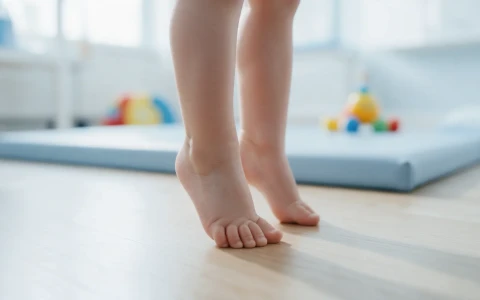
- Walking: limping, in-toeing or out-toeing, toe walking, and running and jumping skills
- Leg alignment: bow legs and knock knees, and any differences between the legs
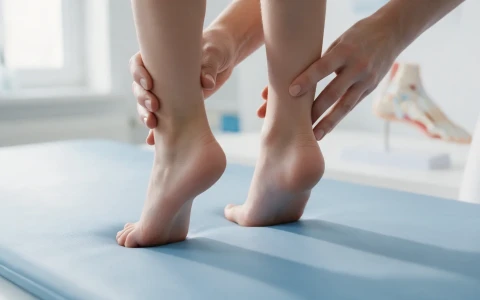
- Feet: the arch, flexibility of the foot, and any calluses or painful spots
- Hips and knees: range of movement, rotation and joint laxity
- Leg lengths: the level of the hips when standing and whether the legs are equal
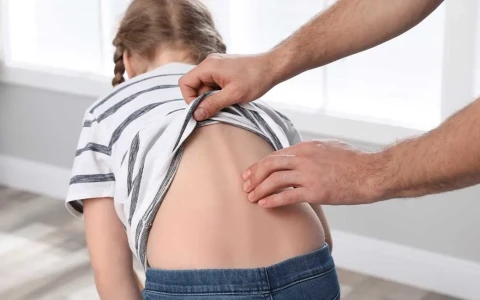
- Spine: shoulder and waist symmetry, and the forward bend test
- General development: muscle strength, flexibility and age-appropriate motor skills
Most of the time this examination needs no further tests. If needed, a full-length standing leg X-ray or an X-ray of the feet or spine may be requested.
What is normal at each age, and what needs checking?
Children's legs and feet change shape as they grow, so something normal at one age may need assessing at another. The table below is intended as a general guide:
| Age | Common and usually normal | May need assessment |
|---|---|---|
| 1–2 years | Bow legs, in-toeing from a twist in the shin bone, feet that look flat because of a fat pad | Bowing on one side or getting worse, limping, not walking by 18 months |
| 3–5 years | Knock knees, flexible flat feet, W-sitting and in-toeing from a twist in the thigh bone | Marked asymmetry, frequent falls, constant toe walking, painful or stiff flat feet |
| 6–10 years | Legs approaching adult alignment, arches becoming more visible, in-toeing easing | Marked knock knees after the age of 7–8, pain, tiredness that limits activities |
| 10 years and over | Temporary loss of flexibility with rapid growth, heel or front-of-knee pain that increases with activity | Uneven shoulders or waist, limping with hip or knee pain, repeated ankle sprains |
In particular, a teenager who limps with hip or knee pain should be assessed promptly for problems arising from the hip joint. You can read more about in-toeing and shin bone rotation in our article on tibial torsion and in-toeing in children, and find an overview of leg deformities on our childhood lower limb deformities page.
School bags: weight and how to carry them
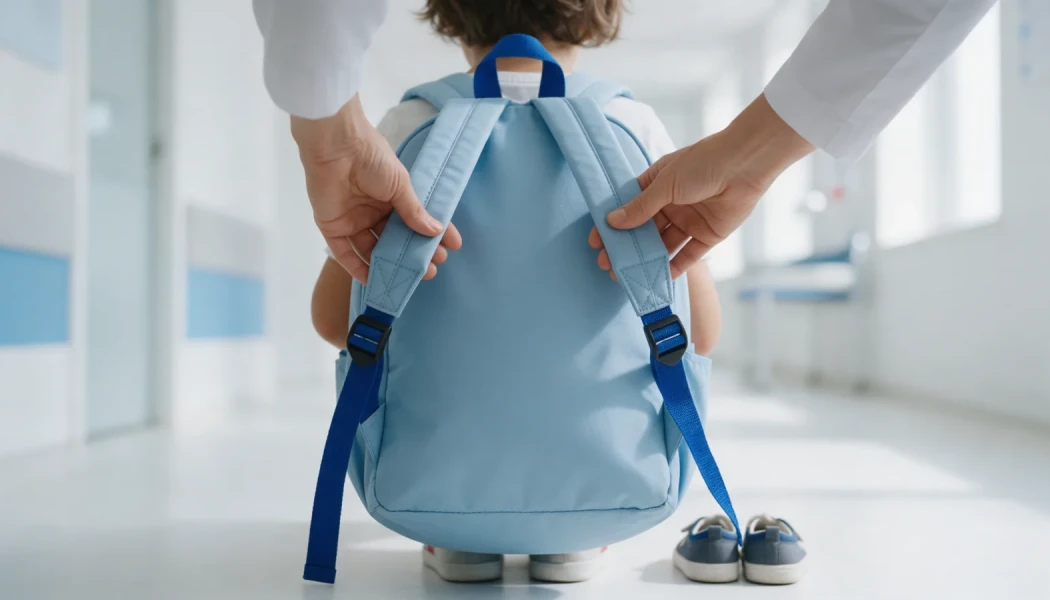
School bags are one of the topics parents ask about most. The general advice is that a full bag should weigh no more than about 10 per cent of the child's body weight, and at most 10–15 per cent. For a child weighing 30 kg, that means roughly 3 kg. When choosing and using a bag:
- Choose a backpack with two wide, padded straps, and make sure your child uses both.
- Adjust the straps so the bag sits close to the back and its lower edge does not hang far below the waist.
- Pack the heaviest books in the compartment closest to the back.
- Remove books and items that are not needed for that day's timetable, and use a school locker if there is one.
- Wheeled bags can reduce the load, but care is needed when carrying them on stairs.
Parents often ask whether a heavy bag can cause scoliosis. Current evidence does not show that school bags cause scoliosis, although very heavy or badly carried bags can lead to back and shoulder pain and tiredness.
Posture and sitting: is slouching a medical problem?
In children, a slumped posture with rounded shoulders is usually a habit; if your child can stand up straight when asked, it is generally not a sign of spinal disease. A stiff, pronounced rounding of the back that does not straighten when the child tries, or one accompanied by back pain, should be assessed.
A few simple adjustments help with homework and screen time:
- Feet should rest flat on the floor or a footrest, with the knees at roughly a right angle.
- The chair's backrest should be used, and the desk should be close to elbow height.
- Screens should be at eye level, and books ideally on a slightly sloping surface.
- A short movement break every 30–45 minutes is helpful.
Regular movement is one of the most important supports for good posture. The World Health Organization recommends that children aged 5–17 do an average of at least 60 minutes of moderate to vigorous physical activity a day. Trying a range of sports, rather than training intensively in a single sport from an early age, may help reduce overuse problems during growth.
Choosing shoes, and flat feet
When choosing school shoes, it helps to bear the following in mind:
- There should be roughly a thumb's width of space in front of the longest toe.
- The front of the shoe should bend easily, while the heel counter should be firm and supportive.
- Laces or hook-and-loop fastenings hold the foot more securely.
- Trying shoes on later in the day, with the socks your child will wear to school, makes it easier to find the right size.
- Avoid shoes that have been moulded out of shape by another child.
Flexible flat feet, which are common in school-age children, can be recognised when an arch appears as the child stands on tiptoe, and if they are not painful they are usually a normal variation. There is no strong evidence that insoles or special shoes build an arch in flexible flat feet that cause no pain. Flat feet that are painful, stiff, one-sided or associated with frequent sprains, on the other hand, do need assessing. Walking barefoot at home on safe surfaces supports the development of the foot muscles.
Scoliosis awareness: what can you look for at home?
Scoliosis in adolescence, a sideways curve of the spine, usually appears during the growth spurt after the age of ten and is generally not painful, so parents are often the first to notice it. With your child standing relaxed and with their back uncovered, you can check:
- Are the shoulders level?
- Is one shoulder blade more prominent or sticking out more than the other?
- Are the gaps between the arms and the waist the same on both sides?
- When your child bends forward with the knees straight, does one side of the back look higher than the other?
Any of these findings does not mean your child has scoliosis; an examination and, if needed, a standing spinal X-ray will clarify things. Back pain is not a typical symptom of scoliosis, and persistent back pain that wakes a child at night, or weakness in the legs, should be assessed separately. We describe the treatment options in our article on treatment methods for scoliosis in children.
When should you see a doctor?
A paediatric orthopaedic assessment is advisable, without waiting for the school year, if your child has:
- A limp that is becoming constant, whether or not it is painful
- Limping with hip or knee pain during adolescence
- Bone or joint pain that wakes them at night
- Leg bowing on one side or getting worse, or a difference in leg length
- Frequent falls or tripping, or marked difficulty running compared with peers
- Constant toe walking that continues beyond the age of three
- Painful or stiff flat feet, or repeated ankle sprains
- Clear asymmetry of the shoulders, shoulder blades or waist
A swollen, red joint with fever, or loss of walking and running skills a child had already gained, needs urgent assessment. For an overview of common orthopaedic conditions in children, see our paediatric orthopaedics page. Prof. Dr. Halil İbrahim Balcı is a faculty member in the Department of Orthopaedics and Traumatology at Istanbul Faculty of Medicine and offers consultations in Turkish, English and French.
Key points
- Not every child needs a routine orthopaedic examination, but the weeks before school are a good time to check anything you have noticed.
- Bow legs, knock knees, flexible flat feet and in-toeing are often normal at certain ages; findings that are one-sided, painful or progressive should be assessed.
- A school bag should weigh no more than about 10 per cent of body weight and be carried on both shoulders, close to the back.
- A good sitting set-up, regular activity and well-fitting shoes support everyday comfort.
- Signs of scoliosis such as uneven shoulders or waist are assessed with an examination and, if needed, an X-ray.
Frequently Asked Questions
No. For children who are developing well and have no complaints, regular check-ups with a paediatrician or family doctor are generally enough. If you notice a limp, pain, marked or one-sided leg bowing, frequent falls, painful flat feet, or uneven shoulders or waist, a paediatric orthopaedic assessment is appropriate. Your child's doctor can also refer you if they spot something during a routine check.
The general advice is that a full school bag should weigh no more than about 10 per cent of the child's body weight, and at most 10–15 per cent. For a child weighing 25 kg, that is roughly 2.5 kg. Carrying the bag on both shoulders, close to the back, with the heaviest books nearest the spine helps spread the load more evenly. Emptying the bag together once a week to remove unnecessary items also helps.
Flexible flat feet that cause no pain are common in school-age children and are usually a normal variation. In this situation there is no strong evidence that insoles or special shoes build an arch. Insoles may be recommended after an examination to improve comfort when there is pain, early tiredness or marked distortion of the shoes. Flat feet that are stiff, painful or affect only one side should be assessed separately.
W-sitting is common in children who have an inward twist of the thigh bone and flexible joints, and it is usually a consequence of that build rather than a cause of problems. There is no strong evidence that this way of sitting on its own leads to lasting harm. Encouraging other positions, such as cross-legged sitting or side-sitting, is usually enough. If there is pain, limping or frequent falling, an assessment is advisable.
Yes. Most children who in-toe can happily take part in running, football, dance and other activities. In-toeing usually comes from a twist in the thigh or shin bone and tends to lessen as the child grows, and sport is not expected to hold back that improvement. If there are frequent falls, pain, in-toeing on one side only, or an appearance that worsens with age, a paediatric orthopaedic assessment is appropriate.
This article is for general information only and does not replace a medical examination, diagnosis or treatment. Treatment options and outcomes vary from person to person.
Related treatment area Childhood Lower Limb Deformities: Bow Legs, Knock Knees and In-Toeing