Flat feet in children are usually a normal stage of development. The difference between flexible and rigid flat feet, a simple tiptoe test, a balanced view of insoles and signs that need a check-up.
On this page 8 sections
Flat feet in children, meaning the inner arch of the foot is not visible when standing, are usually a normal stage of development, especially in younger children. In babies and toddlers the arch is hidden by a fat pad in the sole and by the natural flexibility of the joints, and it generally becomes more defined up to the age of six to ten. A flexible flat foot that does not hurt and shows an arch when the child stands on tiptoe usually needs no treatment. Pain, stiffness, a flat foot on one side only or frequent ankle sprains, however, are reasons for an orthopaedic assessment.
The questions parents ask most often are whether flat feet will correct themselves, whether insoles or special shoes are needed and which signs actually matter. This article explains how the arch develops, the difference between flexible and rigid flat feet, a simple check you can do at home and a balanced view of the treatment options.
How does the arch develop, and when are flat feet normal?
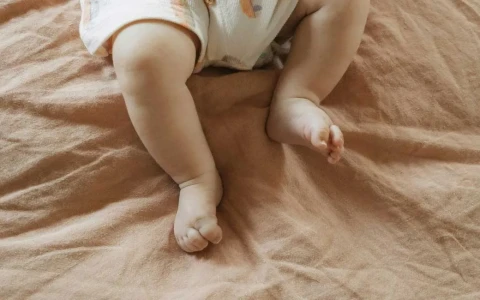
The feet of newborns and babies almost always look flat. This is because of the soft pad of fat filling the sole, the natural looseness of the ligaments and the fact that the foot muscles are not yet developed. Once a child starts walking, the muscles strengthen, the ligaments tighten and the bones mature, so the inner arch gradually becomes visible over several years.
In most children the arch appears in the early school years, although in some the process continues until around the age of ten. Flat feet are more common in children with a family history of flat feet, in those with generally flexible joints and in children who are overweight. In some people a flexible flat foot persists into adult life, usually without causing any symptoms. In short, a flat foot that does not hurt and does not restrict movement is not, in itself, regarded as a disease.
Flexible versus rigid flat feet
The most important distinction when assessing a flat foot is whether the foot is flexible or stiff:
| Feature | Flexible flat foot | Rigid (stiff) flat foot |
|---|---|---|
| Standing on tiptoe | The arch appears and the heel turns inwards | No arch forms and the heel stays turned outwards |
| Foot movement | Joints are supple with a normal range of movement | Movement is restricted |
| Pain | Usually none | Common; pain and tiring easily |
| How common | Very common | Uncommon |
| Possible causes | Normal development, joint laxity, family tendency | Tarsal coalition, congenital foot anomalies, neurological conditions, previous injury |
| Approach | Usually observation | Detailed assessment and treatment of the cause |
One of the causes of rigid flat foot in adolescents is tarsal coalition, an abnormal bridge of bone or cartilage between two bones of the foot that is present from birth. It is usually noticed between the ages of about eight and sixteen because of recurrent ankle sprains and foot pain. Problems recognised in infancy, such as congenital vertical talus, which gives the sole a rounded, rocker-bottom appearance, need early assessment alongside other congenital foot deformities such as clubfoot. In some children, a flexible flat foot occurs together with a tight Achilles tendon or an extra bone on the inner side of the foot (an accessory navicular) that forms a painful bump, and these can cause symptoms.
A simple check at home: the tiptoe test
These observations do not replace an examination, but they can give you an idea of whether your child's foot is flexible:
- Ask your child to stand barefoot on a flat floor and look at their feet from behind. In children with flat feet the heels may tilt slightly outwards.
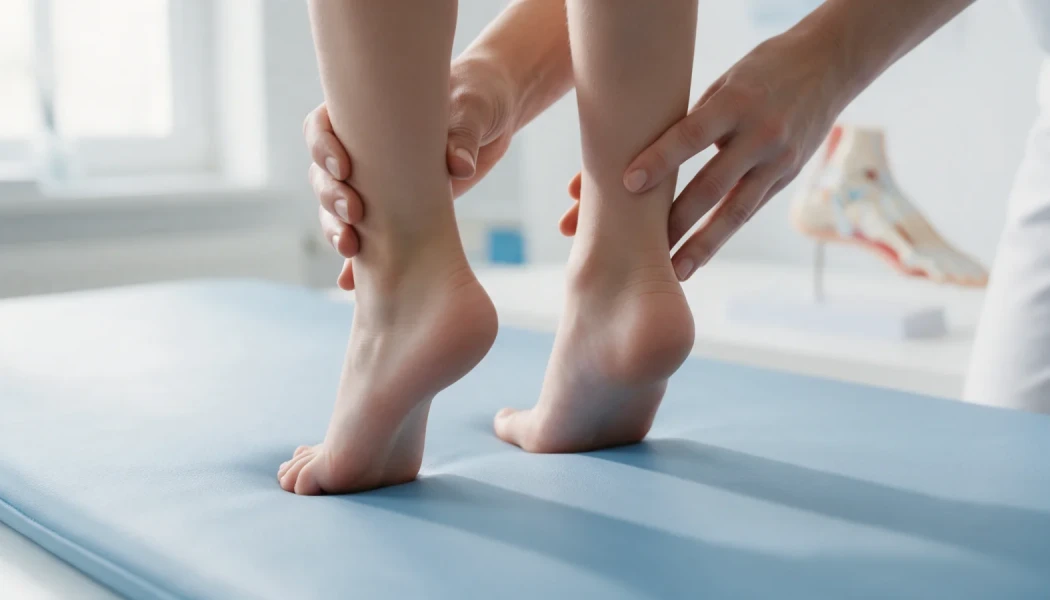
- Ask them to rise up onto their toes. In a flexible flat foot the inner arch appears and the heels turn inwards.
- While they are standing, gently lift their big toe upwards. In a flexible foot this movement brings up the arch.
- Look at the soles and heels of their shoes and check whether one side wears down much faster than the other.
- Notice whether your child mentions pain in the feet, ankles or legs, or tires quickly on walks or during play.
How are flat feet in children assessed?
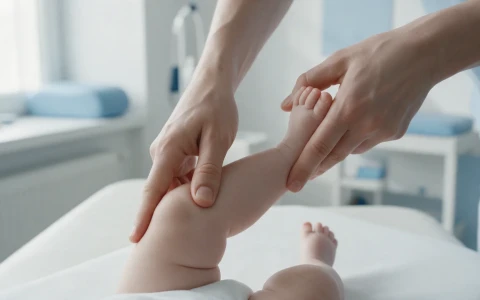
The examination looks not just at the foot but at the whole lower limb and the child's general development. The doctor asks about pain, tiredness, activity levels, family history and motor milestones. Standing, walking and rising onto tiptoe are observed, the mobility of the foot joints is checked and tightness of the calf muscles and Achilles tendon is measured. Knee alignment, in-toeing or out-toeing and twisting of the leg bones are assessed at the same time, because the foot can look flat as it adapts to alignment problems higher up the leg. A neurological examination is carried out where needed.
Imaging is usually unnecessary for a flexible flat foot that is not painful. If the foot is painful, stiff or flat on one side only, standing X-rays are taken, and if a cause such as tarsal coalition is suspected, a CT or MRI scan may follow. This assessment is part of a broader view of childhood lower limb deformities.
Treatment: insoles, shoes and exercise
Flexible flat feet without pain
A flexible flat foot that does not hurt usually needs no treatment; reassurance and, where appropriate, occasional review are enough. Being active, running and playing, and walking barefoot on varied surfaces such as sand or grass in a safe setting all help the foot muscles to develop. Shoes should not squeeze the foot, should hold the heel well, have a flexible sole and fit the child's foot size.
A balanced view of insoles
Research has not shown that insoles or orthopaedic shoes change the natural development of the arch in flexible flat feet that are not painful, so not every child without symptoms needs them. On the other hand, in children who have pain or tire easily, a suitable insole can support the foot and ease symptoms. Whether an off-the-shelf or a custom-made insole is more appropriate depends on the examination findings and the child's symptoms.
Exercises
- regular stretching if the calf muscles or Achilles tendon are tight
- games that work the small muscles of the foot, such as scrunching up a towel or picking up small objects with the toes
- tiptoe walking and single-leg balance exercises
- a suitable diet and activity programme if the child is overweight
Rigid or painful flat feet
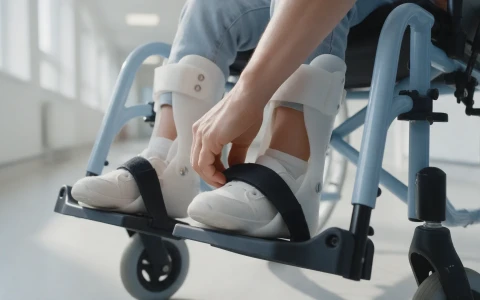
For a stiff or painful flat foot, treatment is planned according to the cause. Temporarily reducing activity, physiotherapy, insoles and, during painful spells, a short period in a cast or walking boot may be among the first steps. For a wider overview of foot and leg deformities, see our article on common deformities in paediatric orthopaedics.
When is surgery considered?
Surgery for flat feet in children is seldom needed. It is generally considered for rigid flat feet with long-standing pain despite non-surgical treatment, or for selected flexible flat feet causing significant symptoms. The method depends on the cause and the child's age: removing the abnormal bridge in tarsal coalition, lengthening tight calf muscles or the Achilles tendon, corrective bone surgery on the heel bone, or removing a painful accessory bone are among the options. Which approach is appropriate is decided after examination and imaging.
When should you see a doctor?
If you notice any of the following, it is advisable for your child to have a paediatric orthopaedic assessment:
- recurring pain in the foot, ankle, calf or knee
- tiring quickly on walks or during play, avoiding activities, or limping
- no arch forming on tiptoe, or a stiff foot
- a flat foot on one side only
- frequent ankle sprains
- a painful swelling or bump on the inner side of the foot
- in a baby, a sole that curves outwards like the bottom of a rocking chair
- associated signs such as muscle weakness, balance problems or developmental delay
- flat feet that are still marked and causing symptoms after the age of ten
Key points
- Flat feet in children are usually a normal developmental stage, particularly when young, and the arch generally develops by the age of six to ten.
- In a flexible flat foot the arch appears on tiptoe; if there is no pain, treatment is usually unnecessary.
- A stiff, painful or one-sided flat foot should be investigated for causes such as tarsal coalition.
- Insoles do not change arch development in flexible flat feet without pain but can ease symptoms in children who have them.
- Whether treatment is needed, and which kind, is decided individually after examination and, where necessary, imaging.
Frequently Asked Questions
In most children, yes. Flat feet in young children usually improve gradually up to the age of six to ten as the muscles strengthen and the ligaments tighten, and the arch becomes visible. In some people a flexible flat foot continues into adulthood, but this usually causes no symptoms. If there is pain, stiffness, a flat foot on one side only or frequent sprains, it is better to have an orthopaedic assessment than to wait for it to improve.
There is not enough evidence that insoles or orthopaedic shoes change arch development in flexible flat feet that do not hurt, so they are not necessary for every child. An ordinary shoe that holds the foot well, has a flexible sole and is the right size is usually enough. In children with pain, early tiredness or a specific underlying cause, insoles can ease symptoms. The decision should be based on the examination findings.
Children with flexible flat feet and no pain can usually take part in any sport, and regular physical activity also helps the muscles of the feet and legs to develop. If sport causes pain in the foot, ankle or calf, early tiredness or frequent sprains, the child should be examined. For these children, suitable sports shoes, insoles if needed and stretching and strengthening exercises can help to reduce symptoms.
There is no scientific evidence that flexible flat feet without pain cause knee pain, back pain or posture problems in children. In some children, however, flat feet occur together with other differences in leg alignment and may contribute to tiredness in the knees or calves. If there is pain, it is important to examine the whole leg, from the hip to the foot, rather than looking only at the foot for the cause.
Walking barefoot in a safe setting, such as at home, on grass or on sand, encourages the small muscles inside the foot to work and helps balance. It is a natural activity that supports foot development, but it should not be seen as a treatment that corrects flat feet on its own. Take care with sharp objects, hot ground and slippery surfaces, and do not put off an examination if there is pain or stiffness.
This article is for general information only and does not replace a medical examination, diagnosis or treatment. Treatment options and outcomes vary from person to person.
Related treatment area Childhood Lower Limb Deformities: Bow Legs, Knock Knees and In-Toeing