
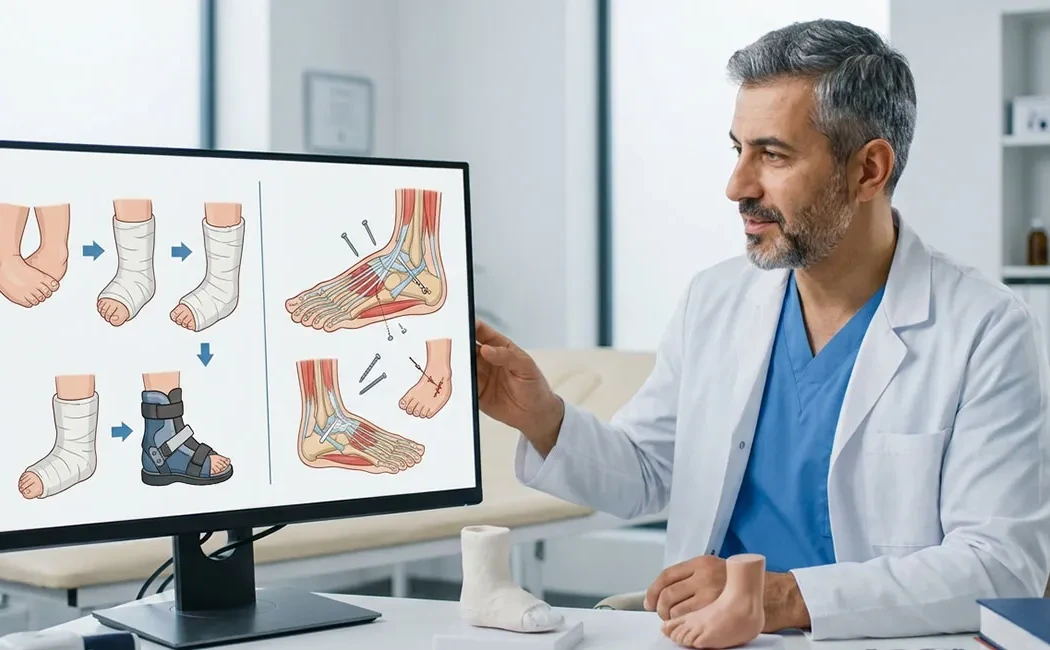
Clubfoot is a common skeletal deformity present at birth, characterized by the foot pointing inward and downward. Medically known as pes equinovarus, this condition can be concerning for parents, but modern clubfoot treatment offers highly effective outcomes. Early diagnosis and an appropriate treatment plan enable children to develop normal foot function and appearance as they grow.
Treatment typically begins shortly after birth and involves stages that require patience. Contemporary orthopedic approaches prioritize non-surgical methods initially, but surgical interventions may be necessary depending on the severity of the deformity. This guide covers the entire treatment journey, from the Ponseti method to surgical alternatives.
What is Clubfoot (Pes Equinovarus)?
Pes equinovarus is a complex deformity resulting from developmental variations in the bones, ligaments, and muscles of the foot. It can affect one or both feet. If left untreated, this condition may lead to permanent disability. Detailed information is available on our Pes Equinovarus Treatment page. The severity varies from case to case.
A Congenital Deformity: Pes Equinovarus
Pes equinovarus is among the most commonly encountered childhood deformities. It is thought to arise from a combination of genetic predisposition and environmental factors. The ankle is pointed downward (equinus) and inward (varus), with the sole facing inward. This anatomical irregularity is more related to the shortening and tightness of soft tissues than to bone malformation.
Diagnosis and Specialist Evaluation
Diagnosis is typically made via physical examination immediately after birth. In some cases, detailed prenatal ultrasound can detect the condition before birth. Consulting an experienced specialist in pediatric orthopedic deformities is essential to develop an effective treatment plan. The examination assesses foot flexibility, severity of deformity, and any accompanying musculoskeletal issues.
Treatment with the Ponseti Method
Currently, the Ponseti method is regarded as the gold standard approach for clubfoot treatment. This method aims to correct the foot without surgery and is applied worldwide with high success. It offers a minimally invasive strategy, particularly effective in lower limb deformities.
Core Steps of the Ponseti Method
The Ponseti technique involves gentle manipulation and serial casting of the foot. Treatment usually starts within the first weeks after birth. A specialist carefully stretches the foot into the correct position and applies a cast extending from the groin to the toes to maintain this position. This cast is replaced every 5 to 7 days, gradually guiding the foot toward normal alignment.
Tenotomy and Orthosis Usage
At the end of the casting series, a minor surgical procedure called "Achilles tenotomy" may be necessary to release tension in the Achilles tendon. This procedure is generally performed under local anesthesia and helps restore full upward bending (dorsiflexion) of the foot. A final cast is applied after the tenotomy and remains for around three weeks.
Surgical Intervention Options
Although Ponseti treatment succeeds in most cases, surgery may be required for resistant or late-presenting deformities. At this stage, lower limb deformity surgery is considered. Surgical planning is carefully tailored based on the child's age and the deformity's characteristics.
When is Surgery Necessary?
Surgery is considered for cases that do not respond to conservative treatment, relapse, or receive delayed intervention. Additionally, children with syndromic clubfoot (such as those associated with arthrogryposis or spina bifida) may more often require congenital deformity surgery. Physicians provide detailed information to families regarding risks and expected outcomes before proceeding.
Common Surgical Techniques
Surgical options include soft tissue releases, tendon transfers, and bone procedures. For older children or severe deformities, reconstructive methods like bone lengthening surgery and Ilizarov techniques may be employed.
Post-Treatment Follow-Up and Rehabilitation
Treatment success extends beyond casting or surgery; long-term monitoring and rehabilitation are critical. Regular check-ups help manage potential complications, including rare instances requiring nonunion surgery or malunion surgery.
Orthosis Use and Physical Therapy
To maintain correction, special orthoses (such as the Dennis Brown splint) are used to prevent the foot from turning inward again. Initially, orthoses are worn 23 hours daily, gradually reducing to night-only use.
Role of Parents and Medical Follow-Up
Parental adherence to the treatment protocol is paramount for success. Consistent use of orthoses and regular medical appointments significantly reduce the risk of recurrence. Children should be monitored by specialists throughout their growth until skeletal maturity.
Medical Information and Disclaimer
This guide is based on data from the World Health Organization (WHO), Mayo Clinic, and current scientific literature. Each child's condition is unique, necessitating personalized treatment plans. The information provided here is for general educational purposes and does not substitute professional medical advice.
This content is provided for general informational purposes only and does not constitute medical advice. It is not intended to replace professional diagnosis, treatment, or consultation. Diagnosis and treatment decisions should always be made following an in-person examination by a qualified healthcare provider. Since each patient’s clinical condition is unique, surgical and non-surgical approaches may vary on an individual basis. The information presented here is based on current scientific evidence and up-to-date medical practices. Do not delay seeking professional medical care based on this content.