
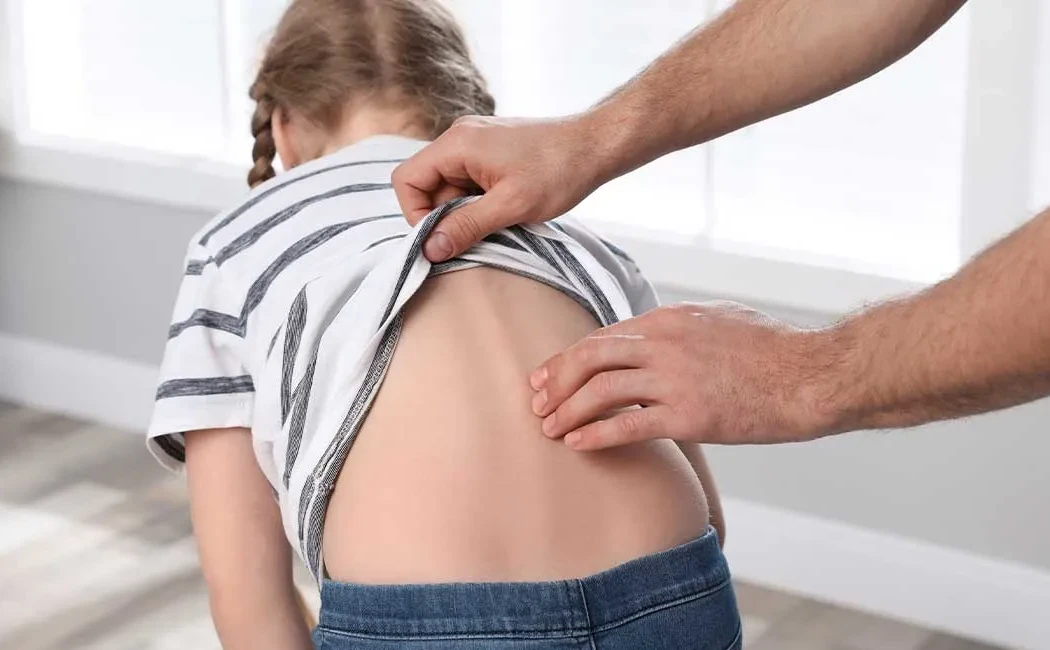
Scoliosis is defined as an abnormal lateral curvature of the spine that can negatively affect development when it appears during childhood. Early detection and appropriate treatment can prevent serious complications. The causes of scoliosis in children vary and include idiopathic, congenital, neuromuscular, and scoliosis related to other systemic diseases.
Types and Causes of Scoliosis
The most common type in children is idiopathic scoliosis. Although the exact cause of this type is unknown, genetic and environmental factors are believed to play a role. Congenital scoliosis results from structural anomalies in the spine present at birth. Neuromuscular scoliosis arises from neurological disorders such as cerebral palsy or spina bifida or from muscle weaknesses leading to spinal curvature.
Importance of Early Diagnosis
Early diagnosis is crucial in preventing the progression of scoliosis. Since the spine is flexible and developing during childhood growth phases, scoliosis can progress rapidly. Interventions applied early can prevent the curvature from worsening or reduce the need for surgery. Physical examination is complemented by X-rays to determine the degree of scoliosis. The Cobb angle measurement is the standard method to assess the severity of the curvature.
Treatment Options
The treatment approach depends on the severity of the curvature, the child's age, growth status, and type of scoliosis.
Conservative Treatment:
For children with mild to moderate curvature, observation, specific exercises, and brace (orthosis) treatment are used. Braces aim to limit the progression of curvature while the spine is still growing. They are most effective during the growth period.
Surgical Treatment:
Surgery is preferred for severe curvatures or when conservative methods fail. The goal of scoliosis surgery is to correct the spinal deformity and ensure stability. Modern techniques use screw and rod systems to straighten the curvature.
Ilizarov and Limb Reconstruction Surgery:
In some cases, especially when bone deformities accompany advanced scoliosis, ring external fixator systems like the Ilizarov method are employed. This method allows reconstruction of the skeletal system while providing advantages in limb lengthening and deformity correction. The Ilizarov device enables slow and controlled distraction of bones, simultaneously correcting complex deformities and performing lengthening if necessary.
Nonunion and Deformity Surgery:
If nonunion or infection complications develop in the spinal bones in addition to scoliosis, surgical correction is required. After controlling infection, proper reconstruction and stabilization procedures are performed.
Management of Bone and Soft Tissue Infections:
There is a risk of infection in surgical wounds during scoliosis treatment. Early recognition of infections and appropriate antibiotic therapy, especially in children, are crucial. Failure to control infection can compromise spinal stability. Frequent postoperative monitoring is important.
Sports Surgery and Functional Rehabilitation:
Sports activities and physiotherapy in children with scoliosis are an integral part of the treatment plan, helping strengthen spinal muscles and improve posture. Regular exercises, particularly in mild and moderate scoliosis, effectively control curvature progression.
Special Approaches in Pediatric Orthopedics:
Treatments planned according to children’s growth phases should be personalized. Cosmetic surgeries such as cosmetic lengthening may improve quality of life for children concerned about appearance. A multidisciplinary approach involving orthopedic surgeons, physiotherapists, and family collaboration enhances treatment success.
All these treatment options are shaped according to the child’s age, type, and degree of scoliosis. Early diagnosis and appropriate treatment are vital to prevent progression and improve quality of life. Surgical methods are combined with conservative practices and rehabilitation programs tailored to the patient's needs.