Toe walking is common in toddlers who are just learning to walk. How long it is considered normal, possible causes, what the doctor checks and the treatment options available.
On this page 8 sections
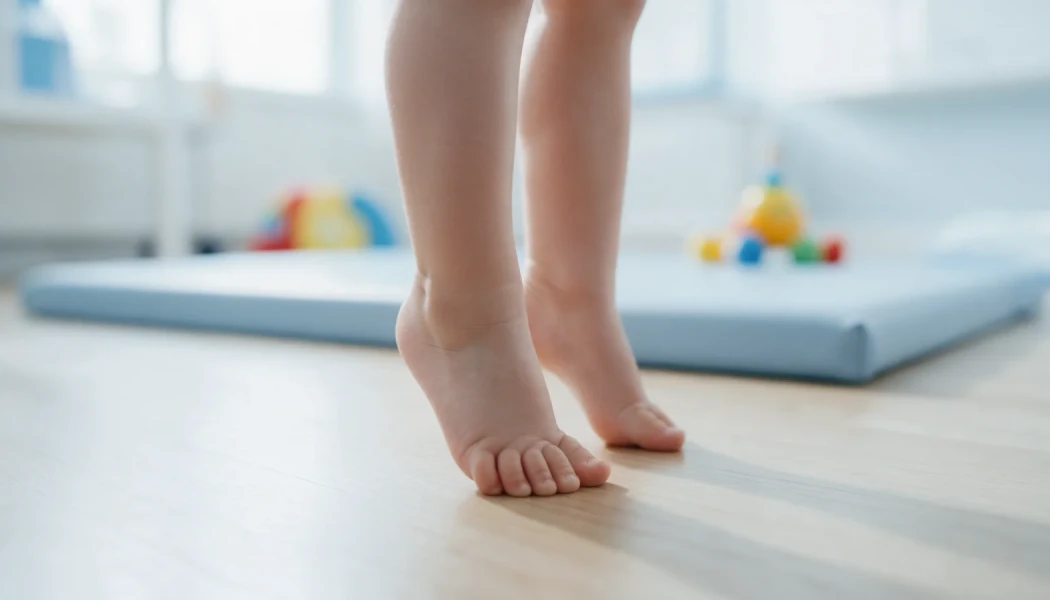
Toe walking means walking on the toes and the ball of the foot without the heel touching the ground. Occasional toe walking is common in toddlers who are just learning to walk, and it usually fades by around the age of two as a heel-to-toe pattern develops. If it continues beyond the age of three, affects only one leg, the heel cannot be brought down to the floor, or it comes with other signs such as developmental delay or frequent falls, an assessment by a paediatric orthopaedic specialist is advisable.
The question parents ask most often is whether this is simply a habit or a sign of an underlying problem. This article explains when toe walking is considered normal, what can cause it, what the doctor looks for and what treatments are available. Every child is different, and the cause and treatment plan can only be determined through examination.
What is toe walking and until what age is it normal?
Most children take their first steps between 9 and 18 months. Early walking is immature: the legs are held wide apart, steps are short and some children walk on their toes from time to time. As the nervous system and muscles mature, a pattern in which the heel strikes the ground first appears, and in most children this is established between the ages of two and three.
When no cause can be found and toe walking continues after the age of three, it is called idiopathic toe walking (idiopathic means "of unknown cause"). These children usually walk on their toes on both sides, can stand with their heels flat when asked, and have a normal neurological examination. A family history of toe walking is common. Idiopathic toe walking is a diagnosis of exclusion: the doctor reaches it only after other possible causes have been considered.
What causes toe walking?
Most toe walking is idiopathic. In some children, however, a muscular, neurological or developmental condition may contribute. The table below summarises the main possibilities a doctor considers; the clues are not for diagnosing at home, but to show why a proper examination matters.
| Possible cause | Clues the doctor looks for |
|---|---|
| Idiopathic toe walking | Both sides affected, can put heels down when asked, normal neurological examination, family history |
| Tight calf muscles or Achilles tendon | Limited upward bending of the ankle, heel unable to reach the floor at all |
| Neurological conditions such as cerebral palsy | Premature or difficult birth, muscle stiffness, brisk reflexes, delayed motor milestones |
| Muscle disorders | Toe walking starting after a period of normal walking, frequent falls, using the hands to push up from the floor, bulky-looking calves |
| Developmental differences | Delayed speech and social communication, sensory sensitivities |
| Spinal cord or nerve problems | One side only, change in foot shape, a dimple or tuft of hair on the lower back, bladder or bowel problems |
| Leg length difference | Toe walking only on the shorter leg |
Toe walking on one side only deserves particular attention, as it may be linked to a difference in leg length or a neurological condition affecting one side. You can read how leg length differences are assessed in our article on leg length discrepancy in children.
What does the assessment involve?
Assessment begins with a detailed history. The doctor will ask about the pregnancy and birth, whether your child was born early, developmental milestones such as sitting, crawling, walking and talking, when the toe walking started and whether anyone else in the family walked this way. Short videos of your child walking at home are very helpful, because children often walk differently in the consulting room.
The physical examination usually includes:
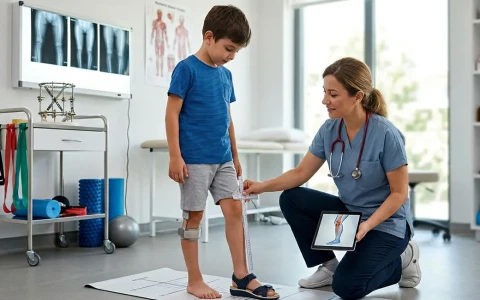
- Watching your child walk and run barefoot, and whether they can walk on their heels
- Measuring how far the ankle bends upwards with the knee straight and with the knee bent; this helps show whether the tightness lies in the calf muscle or the Achilles tendon
- Muscle tone, strength and reflexes
- How your child gets up from the floor, and their balance
- Leg lengths, the spine and the skin over the lower back, and the shape of the feet
Depending on the findings, a paediatric neurology opinion, blood tests, nerve and muscle studies, an MRI of the spine or computerised gait analysis may be suggested. Most children do not need these tests; the decision is based on the examination.
Toe walking treatment: from observation to surgery
Treatment depends on the child's age, how much the ankle can move and whether there is an underlying cause. If there is, treatment is coordinated with the relevant specialists. For idiopathic toe walking a stepwise approach is usual:
- Observation: for young children with normal ankle movement, regular review is often all that is needed.
- Stretching and physiotherapy: daily calf stretches, heel walking and balance games form the basis of the programme.
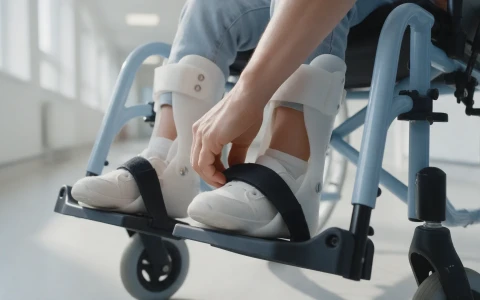
- Night splints or orthoses: splints that hold the ankle at a right angle, often worn overnight, can help the muscles lengthen.
- Serial casting: below-knee casts, changed weekly over a few weeks, gradually bring the ankle upwards. In some children, and after discussion with the relevant specialists, injections that temporarily relax the calf muscle may be combined with casting.
- Surgery: if marked, fixed tightness persists despite other measures, usually in older children, a controlled lengthening of the calf muscle covering or the Achilles tendon may be considered. A period in a cast is followed by an orthosis and physiotherapy.
During serial casting most children can walk in their casts and carry on with much of their usual routine. The casts must be kept dry, the colour and warmth of the toes checked regularly, and the skin at the edges of the cast inspected for rubbing. If you notice severe pain, blue or swollen toes, contact the team who applied the cast without delay. Once the casts come off, continuing with stretches and splints helps to maintain the movement that has been gained.
Which step is appropriate, and how a child responds, varies from one child to another. Some children may still toe walk at times when tired, even after treatment, which is why follow-up is important.
What can parents do at home?
What happens at home is an important part of treatment, but the programme should be set by the doctor or physiotherapist who has examined your child. In general, the following can help:
- Doing the recommended stretches every day, turning them into a game
- Activities that use the heels, such as heel walking or walking up slopes and stairs
- Praising heel-down walking rather than constantly correcting your child
- Choosing well-fitting shoes with flexible soles and no raised heel
- Recording short walking videos every few weeks to track progress
For other common questions about walking, posture and foot development in children, see our children's orthopaedics guide for parents.
What is the long-term outlook?
In many children with idiopathic toe walking the pattern becomes less frequent with age. In others, tightness of the calf muscles may gradually increase, showing up as frequent tripping, difficulty finding comfortable shoes, foot or calf pain on long walks or difficulty with some sports. Regular checks of ankle movement allow treatment to be planned at the right time if it is needed. Toe walking on its own is not an emergency; what matters is not to overlook the signs that call for assessment.
When should you see a doctor?
An assessment by a paediatric orthopaedic specialist is advisable if:
- Toe walking continues beyond the age of three
- Your child walks on the toes of one foot only
- The heel cannot be brought down to the floor even when standing
- Toe walking starts after a period of normal, flat-footed walking
- Your child falls often or struggles with stairs or getting up from the floor
- There are delays in speech, motor skills or social development
- There is foot or leg pain, a change in shape, muscle weakness or loss of skills your child had already gained
Prof. Dr. Halil İbrahim Balcı's clinical interests include paediatric orthopaedics and childhood lower limb deformities. The aim of an assessment is to avoid unnecessary tests while identifying any cause that should not be missed, and to agree a suitable follow-up plan with the family.
Key points
- Occasional toe walking is common in toddlers and usually fades by the age of two to three.
- Toe walking that continues beyond three, affects one side or comes with other signs should be assessed.
- A detailed history and physical examination are central; further tests are requested only when needed.
- Treatment is stepwise, from observation, stretching and splints to serial casting and, for suitable children, surgery.
- Regular follow-up helps detect calf tightness in good time.
Frequently Asked Questions
Toe walking is seen more often in children on the autism spectrum, but on its own it is not a sign of autism, and most children who toe walk have no developmental problem. If there are other signs, such as delayed speech, difficulty with eye contact or differences in social communication, a developmental assessment is also advisable. This is carried out by the relevant specialists.
Toe walking in toddlers who are just learning to walk often fades on its own by the age of two or three. Some older children with idiopathic toe walking also improve with age. However, if ankle movement is limited or there are other signs, assessment is recommended rather than simply waiting. How it progresses varies from child to child.
Stretches for the calf muscles are usually recommended, such as leaning against a wall, lowering the heels off a step and pulling the foot upwards while sitting. Heel walking, walking up slopes and balance games can also help. The type, duration and frequency of exercises should be set by a doctor or physiotherapist according to your child's examination findings.
Surgery is considered in only a small proportion of children who toe walk. If marked, fixed tightness of the calf muscle or Achilles tendon persists despite stretching, splints and serial casting, a controlled lengthening of the tendon or the calf muscle covering may be considered, usually in older children. The decision is made after examination, taking the child's age into account.
Toe walking on one side is more likely than toe walking on both sides to have an underlying cause. A difference in leg length, a hip problem or a neurological condition affecting one side can all produce this pattern. For this reason, children who toe walk on one side should have an orthopaedic assessment and, where needed, a neurological one.
This article is for general information only and does not replace a medical examination, diagnosis or treatment. Treatment options and outcomes vary from person to person.
Related treatment area Childhood Lower Limb Deformities: Bow Legs, Knock Knees and In-Toeing