
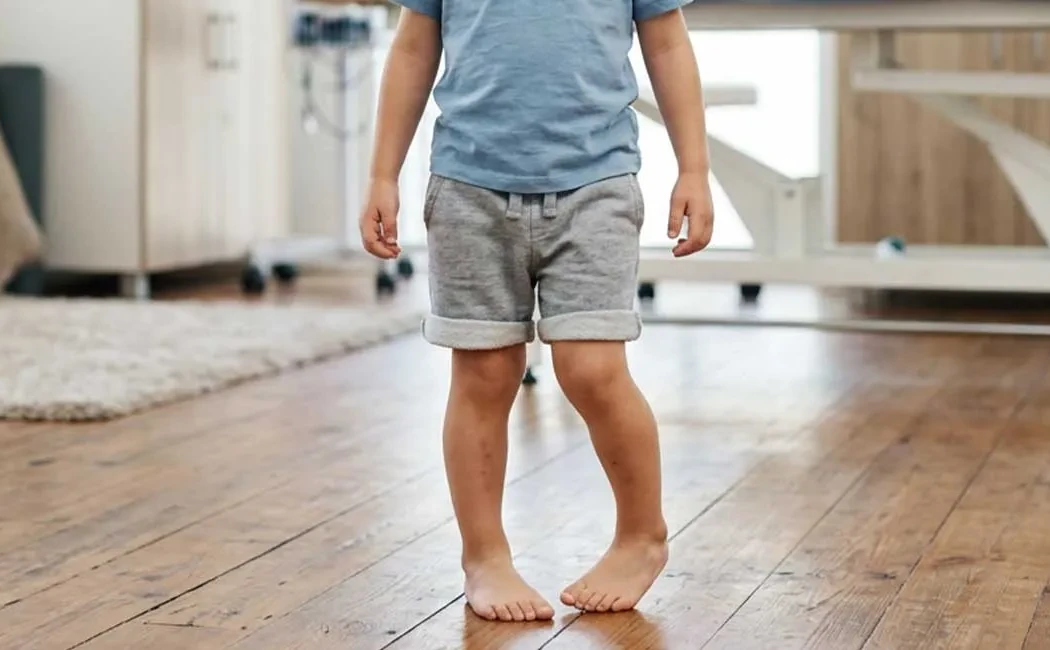
One of the most common orthopedic concerns parents face during childhood is their child’s feet turning inward while walking. This condition, known medically as tibial torsion, results from the tibia bone twisting around its own axis. Although it often improves naturally as the child grows, in some cases it may persist and require treatment.
Tibial torsion can affect a child's gait quality and cause concern among families. Early recognition, accurate diagnosis, and timely follow-up help prevent more complex lower limb problems later on. This guide reviews the causes, symptoms, and current treatment options for tibial bone rotation based on scientific evidence.
What Is Tibial Torsion?
Tibial torsion refers to the twisting of the tibia bone along its length, either inward or outward. The most common type is internal tibial torsion, where the bone rotates inward. This causes the child’s feet to point toward each other when walking and can lead to frequent tripping. It often develops due to the position of the baby in the womb and is usually more marked in the first years after birth.
Understanding this anatomical variation is easier by comparing normal leg alignment with one affected by tibial torsion.
This condition is a common form of lower limb deformities in childhood. Most cases are physiological and resolve naturally as growth progresses. If correction does not occur or the deformity worsens, differential diagnosis should exclude other less common childhood deformities.
Symptoms and Diagnosis of Tibial Torsion
The hallmark sign of tibial torsion is the inward pointing of toes when the child walks or stands. Parents may describe their child as "pigeon-toed" or note that the legs seem to get tangled when running.
Intoeing and Gait Abnormalities
Intoeing is the most visible clinical expression of tibial torsion. While the knees usually face forward, the feet turn inward. This becomes more noticeable during fatigue or fast running and often leads to frequent falls, which prompt parents to seek medical advice.
Understanding the difference between intoeing and out-toeing improves parental observation.
Symptom intensity and changes with age should be carefully monitored as part of tibial torsion symptom assessment. Not all intoeing is due to tibial torsion; conditions such as femoral anteversion (hip rotation) or metatarsus adductus (forefoot curvature) can produce similar appearances.
Diagnostic Methods and Specialist Examination
Diagnosis begins with a detailed history and physical examination. The specialist observes the child’s gait and measures parameters such as the thigh-foot angle, which is critical in identifying the degree and origin of the rotation (hip, tibia, or foot).
Routine use of imaging modalities like X-rays or CT scans is not required unless surgical planning is needed. In most cases, physical exam findings suffice to establish diagnosis and monitoring.
Causes of Tibial Torsion
The most common cause is the baby's position in the womb (intrauterine positioning). Tight space inside the uterus can cause the legs to bend and twist inward, temporarily affecting tibial alignment. This usually resolves naturally as bones grow and muscles strengthen after birth.
Genetic factors also contribute; children with a family history of intoeing are more likely to develop tibial torsion. Additionally, certain syndromic or neuromuscular conditions requiring treatment for congenital deformities can underlie pathological tibial torsion. Therefore, a comprehensive evaluation is essential to rule out rare bone diseases and deformities in children.
Treatment Options: Non-Surgical and Surgical Approaches
Treatment is tailored based on the child’s age, deformity severity, and functional impact. Most cases improve spontaneously by age 7-8.
Physical Therapy and Orthotic Use
For mild to moderate cases, non-surgical methods are preferred. Historically, special shoes, insoles, or night splints (such as Dennis-Browne splints) were widely used; however, current research indicates these devices have limited effect on altering the natural course of tibial torsion. Physical therapy may help if there is muscle imbalance or accompanying issues.
Physical therapy programs generally focus on strengthening and stretching exercises.
In certain cases, conservative treatments aim to optimize function before considering joint-preserving surgeries. Parents’ patience and adherence to scheduled follow-ups are crucial during this period.
When Is Surgery Necessary?
Surgery is usually reserved for children aged 8-10 whose torsion does not improve and who have significant walking or running difficulties (not merely cosmetic concerns), typically when inward rotation exceeds 15 degrees.
Surgical correction typically involves cutting the tibia (osteotomy) to realign and fix it at the proper angle. This procedure, performed by experienced deformity surgeons, has satisfactory outcomes within lower limb deformity surgery. Postoperative healing requires careful monitoring for factors that may impair bone union, and parents should be aware of advanced options like non-union surgery for rare complications.
Home Care and Supportive Measures
A simple but effective measure parents can take is regulating their child's sitting habits. The "W-sitting" position, where knees are bent and feet point outward, can worsen tibial torsion. Instead, encourage cross-legged sitting.
Simple observations at home can assist in monitoring progress.
Children should remain active, encouraged to run and play. Choosing flexible, comfortable shoes that do not constrict the foot is also important.
Expert Opinion and Information Note
Tibial torsion is mostly a physiological process resolving with growth. Persistent intoeing, unilateral marked rotation, or worsening symptoms with age warrant evaluation by a pediatric orthopedic or deformity specialist. Early assessment prevents unnecessary treatments and ensures timely intervention when needed.
The information provided is for general informational purposes only and does not constitute medical advice. It is not intended to replace professional diagnosis, treatment, or guidance. Diagnostic and treatment decisions should be made exclusively after an in-person consultation with a qualified physician. Since each patient's clinical condition is unique, surgical and non-surgical approaches may vary accordingly. The content is based on current scientific knowledge and up-to-date medical practices.