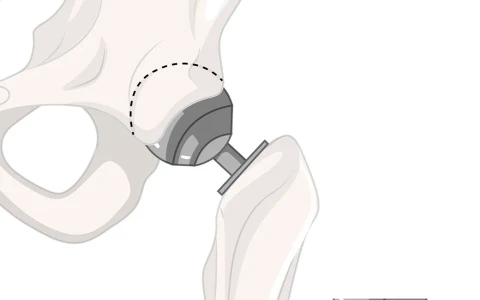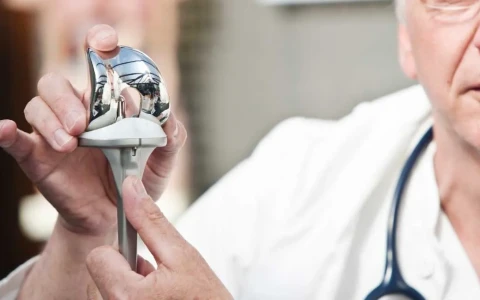
Revision joint replacement is an operation to replace part or all of an existing hip or knee replacement because of loosening, infection, dislocation, wear or a fracture around the implant. Complex primary replacement is a first-time replacement that needs far more planning than a standard one because of severe joint or bone deformity, a short leg, old fractures and implants, previous infection or bone loss. Both are among the most demanding areas of joint reconstruction.
This page covers situations that go beyond a routine hip or knee replacement: which cases count as complex, the signs that a replacement is failing, how infection is investigated, the techniques used in revision, recovery and the realistic risks. If you are considering a first replacement and have no particular structural problem, our page on hip and knee replacement surgery is a better starting point.
What are complex primary and revision joint replacements?
In a standard replacement, the anatomy of the joint is largely preserved and off-the-shelf implants give a predictable reconstruction. In complex primary and revision cases, the position of the joint centre, the amount of healthy bone, ligament stability and leg length have often changed. Planning, implants and recovery all differ as a result.
| Feature | Standard primary | Complex primary | Revision |
|---|---|---|---|
| Joint anatomy | Largely preserved | Altered by deformity, shortening or bone loss | Altered by the previous implant, bone loss and scar tissue |
| Planning | Standard X-rays | Long-leg X-rays, CT and detailed measurements | Infection ruled out; CT assessment of remaining bone |
| Implants | Standard components | Long stems, augments or constrained designs where needed | Modular systems, components that fill bone defects, custom implants |
| Surgery and recovery | Shorter and more predictable | Longer; an additional osteotomy may be needed | Longer; a two-stage approach in some cases |
Which situations call for a complex primary replacement?
- High hip dislocation and severe dysplasia: when the femoral head sits far above its socket, the new cup is placed at the true joint level and a shortening osteotomy of the femur is often added to protect the sciatic nerve.
- Old fractures and malunion: deformity outside the joint can prevent correct alignment of the implant. In suitable patients, a corrective osteotomy is done during the replacement or as a separate stage.
- Retained implants: plates, nails or screws from earlier surgery need a plan for safe removal.
- Joint infection in childhood: deformity, shortening and the possibility of a dormant infection are assessed together.
- A short leg or leg length difference: length can be partly restored during the replacement, but the amount of lengthening that nerves tolerate safely is limited.
- Skeletal dysplasias and short stature: in conditions such as achondroplasia, bone dimensions may not suit standard implants.
- Severe bow-legged or knock-kneed knees: when ligament imbalance and bone loss are present, more constrained designs, which rely less on the ligaments, may be required.
- Stiff or fused joints: for example, converting a previously fused (arthrodesed) hip into a replacement.
Why might a joint replacement need revision?
In suitable patients, modern implants can function well for many years, but problems can develop over time and occasionally early on. The main reasons for revision are:
- Aseptic loosening: the bond between implant and bone weakens without infection, usually over years.
- Periprosthetic joint infection: this can develop in the first weeks after surgery or years later via the bloodstream.
- Dislocation and instability: recurrent hip dislocation, or a knee that feels unstable and gives way.
- Wear and osteolysis: particles from a worn plastic bearing can weaken the surrounding bone.
- Fracture around the implant: usually after a fall; if the implant has come loose, revision is needed.
- Poorly positioned components or knee stiffness: these can cause pain and restricted movement.
- Tissue reactions to metal-on-metal hip implants: regular monitoring is recommended for these implants.
Signs that a replacement may be failing
- pain that starts or increases after a long comfortable period
- thigh or groin pain that is worst with the first steps
- pain that has never settled since the operation
- a hip that dislocates, or a knee that gives way or feels unstable
- new swelling, warmth, redness, wound discharge or fever
- a change in leg length or walking pattern, or new noises from the joint
The reasons for and process of hip revision are explained in our article on hip replacement revision surgery, and common problems after knee replacement in our article on problems after knee replacement.
Assessment: ruling out infection first
With a painful or failing replacement, the first and most important question is whether infection is involved, because it completely changes the treatment pathway. Assessment includes:
- Detailed history and examination: when the pain began, any wound problems after the first operation and possible sources such as dental or urinary infections.
- X-rays compared with earlier films: looking for gaps around the implant, changes in position and bone loss.
- Blood tests: inflammatory markers such as ESR and CRP.
- Joint aspiration: fluid is drawn from the joint for cell count and culture, with additional biomarkers where needed. Because antibiotics can stop bacteria growing in culture, any decision about antibiotics before samples are taken should be made together with your orthopaedic surgeon.
- CT scan: shows component position and the extent of bone loss, and is the basis of revision planning.
- Other tests: blood metal ion levels and special MRI sequences for metal-bearing implants, and nuclear medicine scans in selected cases.
The implant is not always the source of the pain; the lower back, the tendons around the hip and circulation problems are also considered. Because revising a replacement for unexplained pain often does not help, the decision is made only after a careful work-up.
Treatment approaches for an infected joint replacement
Treating an infected replacement is a lengthy process run jointly by orthopaedic surgeons and infectious diseases specialists. The route chosen depends on how long the infection has been present, the organism, whether the implant is still fixed, the soft tissues and your general health:
- Debridement with implant retention: for acute infections soon after surgery, or of recent onset, the joint is thoroughly cleaned, exchangeable parts are replaced and a prolonged course of antibiotics follows, provided the implant is still well fixed.
- One-stage revision: in selected patients, the infected implant is removed, the joint is cleaned and a new implant is fitted in the same operation.
- Two-stage revision: the implant is removed and replaced with a temporary spacer made of antibiotic-loaded bone cement. After antibiotic treatment, and once the infection is confirmed to be under control, the new implant is fitted at a second operation.
- Salvage options: very rarely, with recurrent infection and severe tissue loss, options such as fusing the joint or leaving it without an implant may be discussed.
The general approach to infection in bone and soft tissue is explained on our page on bone and soft tissue infections.
Reconstruction options for bone loss and deformity
The main technical challenge in revision and complex primary surgery is finding sound bone for the new implant to anchor in, and restoring the correct joint centre, length and stability. Bone loss is graded with systems such as Paprosky (hip) or AORI (knee), and the techniques are chosen accordingly:
- Long and modular stems: bypass the damaged area and anchor in healthy bone further down.
- Porous metal cones, sleeves and augments: fill defects and create a solid platform for the implant.
- Revision cups and cage systems in the hip: support the cup when there is major bone loss in the pelvis; for very severe defects, custom implants made from CT data may be used.
- Bone grafts: defects can be restored with the patient's own bone or with bone from a tissue bank.
- Constrained and hinged knee replacements: the implant itself provides stability when the ligaments are inadequate.
- Dual mobility hip cups: may be chosen to improve stability in hips at high risk of dislocation.
- Osteotomies: controlled bone cuts to shorten or correct the femur, or to remove a well-fixed old stem safely.
When there is a large deformity outside the joint, deformity analysis and corrective osteotomy become part of the replacement plan. How hip osteoarthritis is managed at earlier stages is described on our hip osteoarthritis page.
The surgical process and recovery
- Preparation: diabetes, anaemia and nutritional problems are optimised and stopping smoking is advised. Possible sources of infection, such as dental or urinary infections, are treated. Where needed, preparation involves anaesthetists, physicians and infectious diseases specialists.
- Planning: CT and long-leg X-rays are used to measure bone loss, the joint centre and leg length, and every implant that may be needed is prepared in advance.
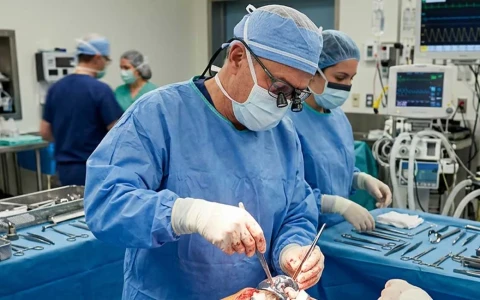
- Surgery: this takes longer than a standard replacement. Old components are removed with as little bone damage as possible, samples are sent for culture and the new reconstruction is performed. Measures to reduce blood loss are used.
- Hospital stay: usually somewhat longer than after a standard replacement, with attention to wound care, pain control and clot prevention.
- Rehabilitation: in some patients, weight-bearing has to be restricted for the first weeks while bone grafts or an osteotomy heal. Physiotherapy rebuilds joint movement, muscle strength and walking step by step.
- Long-term follow-up: regular X-rays allow loosening or wear to be detected early.
Recovery time varies with the reason for revision, the degree of bone loss and your general health. With two-stage treatment for infection, the whole process can take several months.
Looking after your joint replacement in the long term
- Attend check-ups and X-rays at the recommended intervals; loosening and wear are often visible on X-ray before they cause symptoms.
- Have dental, urinary and skin infections treated without delay, and tell the treating doctor that you have a joint replacement.
- Aim to keep a healthy weight and to exercise regularly with low-impact activities.
- Reduce the risk of falls at home: remove loose rugs, fit grab rails in the bathroom and use night lights.
Possible risks and complications
Complex primary and revision replacements carry higher risks than standard ones. Knowing them in advance helps set realistic expectations:
- Infection, or recurrence of infection: the risk is higher in joints that have been infected before.
- Dislocation and instability: more likely in hips with muscle and soft tissue damage.
- Nerve and blood vessel injury: needs particular care when the leg is lengthened significantly or there is extensive scar tissue.
- Fracture during or after surgery: more common in weakened bone.
- Greater blood loss and the need for transfusion.
- Deep vein thrombosis and pulmonary embolism.
- Leg length difference, ongoing pain or stiffness.
- Need for further revision: revision implants generally have a shorter lifespan than first-time implants.
- General medical complications: heart, lung and kidney problems, particularly in people with other health conditions.
When should you seek an assessment?
- pain in a replaced joint that starts or increases after a comfortable period
- a hip that dislocates, or a knee that gives way or feels unstable
- swelling, redness, warmth, wound discharge or fever around a replaced joint, which needs prompt assessment
- being unable to put weight on the leg after a fall
- a newly noticed change in leg length or walking pattern
- a hip replacement, especially a metal-on-metal one, that has not had a check X-ray for a long time
- having been told that a standard replacement is not suitable because of deformity, shortening or an old fracture
Options for complex joint reconstruction are also summarised in our article on complex joint reconstruction and prosthesis revision.
Prof. Dr. Balcı's approach to complex and revision joint replacement
Prof. Dr. Halil İbrahim Balcı is a faculty member in the Department of Orthopaedics and Traumatology at Istanbul University, Istanbul Faculty of Medicine. Because his academic work centres on deformity surgery, limb lengthening and Ilizarov principles, deformity outside the joint and leg length are assessed alongside the joint itself when a replacement is planned for a deformed or short limb. Before any revision, the cause of the problem and the possibility of infection are clarified first; the options, expected benefits and risks are then discussed openly so that the plan is a shared decision. Consultations are available in Turkish, English and French through our appointment page.
Key points
- Revision surgery replaces an existing implant because of loosening, infection, dislocation, wear or fracture.
- A complex primary replacement is a first-time replacement that needs special planning because of dysplasia, deformity, shortening, old implants or previous infection.
- With a problematic replacement, infection is investigated first, as it determines the treatment pathway.
- Bone loss and deformity can be reconstructed with long stems, metal cones, constrained implants and osteotomies.
- These operations are longer and carry more risk than standard replacements; recovery and outcomes vary from person to person.