
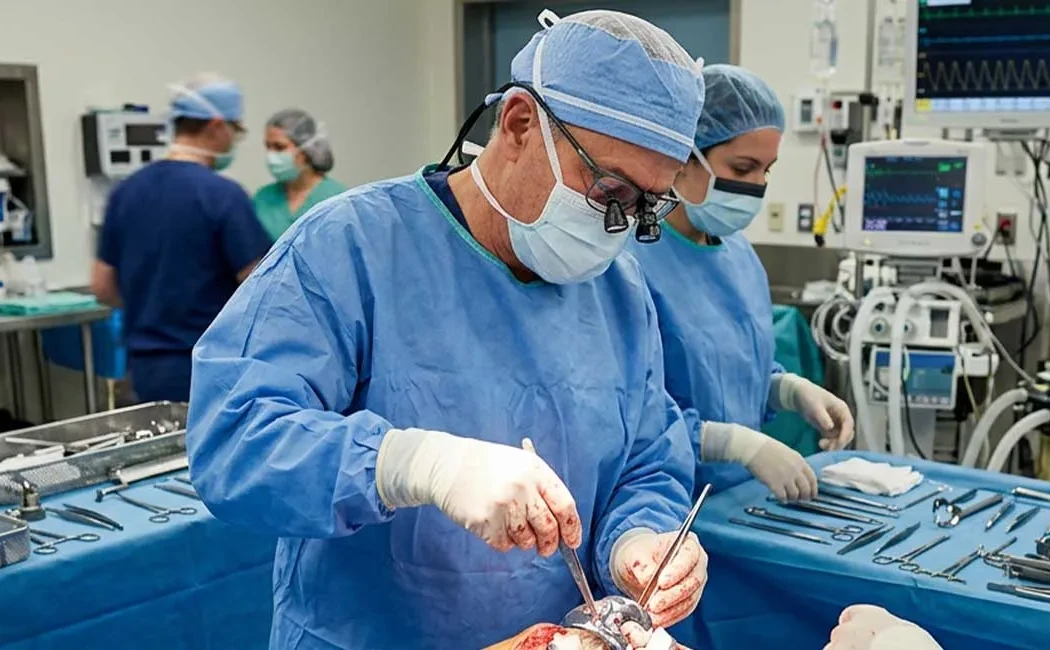
Joint reconstruction encompasses advanced surgical procedures aimed at rebuilding damaged, non-functional, or previously unsuccessfully replaced joints. Unlike standard joint replacement surgeries, these interventions often involve complex scenarios such as significant bone loss, deformities, or infections. The term "joint reconstruction" signifies a restoration of the joint’s biomechanics and structural integrity, rather than a simple component replacement.
This process, which directly affects patients’ quality of life, demands accurate diagnosis and individualized treatment planning. Patients typically present with pain, limited movement, and joint instability, requiring a thorough evaluation of the root cause and a multidisciplinary approach. This article explores the details of joint reconstruction, from challenging revision cases to the latest treatment methods.
What is Joint Reconstruction?
Joint reconstruction is a collective term for surgical interventions that restore the anatomical and functional aspects of a joint beyond primary (initial) prosthetic procedures. Most commonly performed on the knee and hip joints, this surgery is indicated when bone stock is insufficient or ligament structures are compromised. Leading institutions like the Mayo Clinic emphasize that such surgeries should be performed in experienced centers.
The goal extends beyond pain relief to reestablishing mechanical stability that enables patients to resume daily activities. Radiologic imaging plays a crucial role in assessing the condition before and after surgery.
Reconstructive surgery often requires longer operative times and more advanced technical equipment than standard prosthetic procedures. Implants are carefully selected or custom-fabricated to fit the patient’s existing bone structure.
Challenging Cases: Transition from Standard Prosthesis to Revision
While standard prosthetic surgeries generally have high success rates, over time mechanical wear, loosening, or infections can impair prosthesis function, necessitating revision surgery. Revision surgery is technically more demanding than the initial procedure, especially in patients with hip replacements where osteolysis (bone resorption) has resulted in extensive bone defects requiring complex restoration.
Pain is the most common symptom prompting revision. However, silent bone loss without pain can be detected during routine follow-up, underscoring the importance of regular monitoring for prosthesis patients.
Revision Approaches for Hip and Knee Joints
The hip and knee are the joints most frequently addressed with reconstructive surgery. In hip revisions, bone loss on the acetabular side is restored using special cages or supportive metal augments. Advances in hip and knee joint reconstruction surgery enable surgeons to closely replicate anatomical structures.
In the knee, ligament balance is as essential as bone restoration. Hinged or semi-constrained prosthesis systems may be preferred to correct instability. Lower limb deformity correction principles are also applied to rectify misalignments affecting the joint.
The overarching goal for both joints is to optimize load distribution and secure long-term implant fixation to bone. In some cases, allografts (bone sourced from tissue banks) may be necessary.
Challenges and Risks in Revision Surgery
Revision surgery carries higher complication risks compared to primary operations. One of the major challenges is managing infection. Treating an infected prosthesis typically requires a two-stage surgical approach. Additionally, when bone healing is compromised, nonunion surgery techniques may be utilized.
Poor quality of soft tissues can lead to wound healing complications. Scar tissue from previous surgeries can complicate dissection. Incorrect bone healing (malunion) requiring corrective surgery is sometimes essential to ensure proper prosthesis placement.
Next-Generation Implants and Technological Advances
Advancements in technology have transformed materials used in joint reconstruction. Notably, 3D printing (trabecular metal) allows production of porous implants that encourage bone ingrowth. These implants improve biological fixation in areas with significant bone defects.
In some cases, especially for upper extremity or complex deformities, custom-made implants are designed based on experience with deformity correction surgeries.
Modular components like cones and sleeves allow surgeons to tailor the implant precisely to the patient’s anatomy during surgery, enhancing the success rate of revision procedures.
Postoperative Recovery and Physical Therapy
Recovery after complex joint reconstruction is a gradual process demanding patience and discipline. Rehabilitation begins the day after surgery but proceeds more cautiously than with standard prostheses. Post-knee replacement physical therapy protocols are crucial for regaining joint range of motion and muscle strength.
Attention to home care guidelines also significantly influences recovery quality. Adhering strictly to hip replacement precautions (e.g., avoiding certain movements, appropriate seating height) is essential to prevent dislocation. Exercises guided by physiotherapists facilitate better integration of the new joint.
Alternative and Supportive Approaches
Not every joint problem requires prosthesis or extensive reconstruction. In early stages or younger patients, joint-preserving strategies are prioritized. Joint preservation surgeries, including osteotomies, can delay the need for prosthetic replacement.
Furthermore, untreated ligament injuries from sports trauma may lead to joint degeneration and eventual reconstruction necessity. Timely surgical repair of anterior cruciate ligament (ACL) injuries is a preventive measure supporting long-term joint health.
Although joint reconstruction is a complex and demanding process, when performed by experienced teams with appropriate technology, it has the potential to restore painless mobility and improve patients’ quality of life.
The information provided is for general informational purposes only and does not constitute medical advice. It is not intended to replace individualized diagnosis, treatment, or professional guidance. Diagnosis and treatment should only be planned following an in-person consultation with a qualified healthcare provider. Since each patient's clinical condition is unique, surgical or non-surgical procedures may vary accordingly. The content is based on current scientific evidence and up-to-date medical approaches.