Bone infection treatment aims to eliminate micro-organisms (usually bacteria) that have settled in a bone or the soft tissues around it, repair the damaged tissue and preserve the function of the arm or leg. Infection of bone is called osteomyelitis. It can arise through the bloodstream, after an open fracture or surgery, or when an infection in the surrounding soft tissues spreads into the bone. Infections caught early can often be treated with simpler measures, whereas long-standing (chronic) infections usually require surgery and prolonged treatment.
Bone and soft tissue infections may call for orthopaedic surgeons to work alongside infectious diseases specialists, plastic surgeons and radiologists. This page explains the types of infection, their symptoms, how they are diagnosed and the core principles of treatment. The right treatment for each person is decided after examination, imaging and microbiological testing.
What are bone and soft tissue infections, and what causes them?
The main types of infection
- Acute osteomyelitis: a bone infection that develops over days or weeks. In children it usually results from bacteria carried in the bloodstream settling near the growth plates of the long bones.
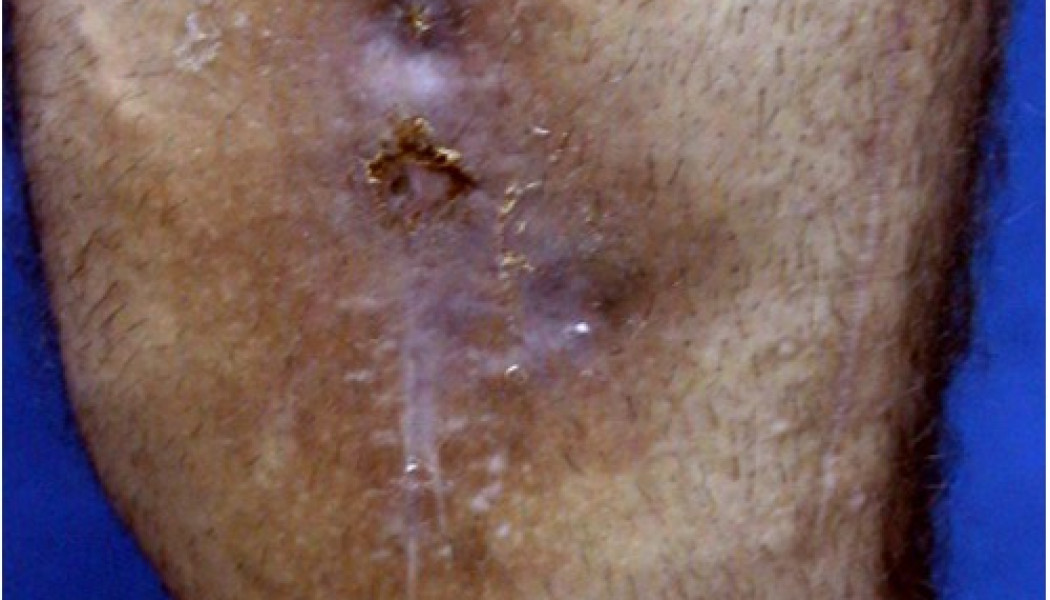
- Chronic osteomyelitis: infection that persists for months or even years. Fragments of dead bone (sequestra), new bone forming around them, and discharging tracts opening onto the skin (sinuses) may develop.
- Fracture-related and implant-related infections: infections that follow open fractures or operations using implants such as plates, nails or joint replacements.
- Joint infection (septic arthritis): an emergency in which infection inside a joint can damage the cartilage within a short time.
- Soft tissue infections: inflammation of the skin and the tissue beneath it (cellulitis), collections of pus (abscesses) and necrotising fasciitis, which can spread very rapidly and needs emergency surgery.
- Diabetic foot infections: infections that develop on a background of diabetes-related nerve and circulation problems and can extend into bone.
Micro-organisms, biofilm and risk factors
The organism most often responsible for bone infection is Staphylococcus aureus, although other bacteria can be involved in young children and in certain situations. The most important reason chronic and implant-related infections are hard to treat is biofilm: bacteria attach to the surface of an implant or to dead bone and surround themselves with a protective, sticky layer. This layer makes it difficult for both antibiotics and the body's own defence cells to reach them. As long as dead bone or a biofilm-covered implant remains in place, antibiotics alone are therefore often not enough.
The main factors that increase the risk of infection are open fractures with severe soft tissue damage, diabetes, smoking, vascular disease, conditions or treatments that suppress the immune system, poor nutrition, older age and previous surgery.
Symptoms: how is a bone infection recognised?
The symptoms vary with the type and duration of the infection:
- Acute infection: pain, swelling, redness and warmth over the bone, together with fever, fatigue and shivering.
- In children: a limp with fever, reluctance to use an arm or leg, refusing to bear weight, crying when the area is touched. In young children the signs can be vague.
- Chronic infection: pain that persists or flares up from time to time, a wound that will not heal, a small opening in the skin that discharges (a sinus), or recurrent redness along a surgical scar. There is often no fever.
- Implant infection: pain after surgery that does not settle or returns, discharge from the wound, a wound that breaks down, a loosening implant or a fracture that fails to heal.
Some symptoms need urgent assessment: sudden pain, swelling and loss of movement in a joint together with fever; or rapidly spreading redness, discoloration or blistering of the skin with pain out of proportion to its appearance and a general feeling of being unwell. In these situations, seek medical help without delay.
How is bone infection diagnosed?
- Blood tests: markers of inflammation such as the white cell count, CRP and ESR. These can be normal in chronic infection, but they are also useful for monitoring treatment. Blood cultures may be taken in acute infection.
- X-rays: in acute infection, bone changes are often not visible in the first 10–14 days; in chronic infection, dead bone fragments, bone loss and implant loosening may be seen.
- MRI: very sensitive for showing early inflammation of the bone marrow and abscesses.
- CT: shows dead bone fragments and the extent of bone loss in detail.
- Nuclear medicine scans: techniques such as labelled white cell scintigraphy or PET-CT are used in selected cases, for example when an implant is present or the diagnosis is difficult.
- Tissue samples and cultures: samples taken from deep tissue or bone are essential for a definite diagnosis and for choosing the right antibiotic. Superficial swabs from a sinus opening do not always reflect the organism deeper down, so several samples are usually taken during surgery. Where possible, samples are taken before antibiotics are started; whether antibiotics should be paused is a decision for your doctor alone.
- Histopathology: helps to confirm infection and, occasionally, to distinguish it from other conditions that can mimic it.
Staging the disease
In chronic osteomyelitis, treatment is often planned using the Cierny-Mader classification. This is based on two axes: how far the infection extends within the bone (confined to the marrow, superficial, localised or diffuse) and the patient's general health (healthy, with local or systemic health problems, or someone for whom the treatment itself might be riskier than the disease). This assessment guides how extensive an operation is necessary and safe.
Core principles of bone infection treatment
Treatment usually has several components and is planned for each individual:
- Surgical clean-out (debridement): all infected and non-viable bone and soft tissue is removed until healthy, bleeding tissue is reached. In chronic osteomyelitis this is the cornerstone of treatment.
- Managing the dead space: the cavity left after debridement may be filled with antibiotic-loaded bone cement or with absorbable antibiotic carriers, achieving high antibiotic levels at the site.
- Stabilising the bone: if the bone has been weakened or a fracture has not healed, stable fixation is needed. When infection is present, an external fixator is often preferred for this purpose.
- Soft tissue cover: covering the bone and any implant with healthy tissue that has a good blood supply is important for controlling infection; where necessary, tissue transfer (a flap) is carried out together with plastic surgeons.
- Antibiotic treatment: antibiotics chosen according to culture results are planned together with an infectious diseases specialist. Treatment usually lasts weeks and may start intravenously before continuing by mouth.
- Supporting general health: controlling blood sugar, stopping smoking and improving nutrition all influence the outcome.
| Situation | Common approach |
|---|---|
| Acute osteomyelitis diagnosed early in a child | Often antibiotics; surgical drainage if there is an abscess |
| Chronic osteomyelitis | Surgical debridement, dead-space management, culture-guided antibiotics; reconstruction if needed |
| Implant infection shortly after surgery | Debridement and antibiotics, retaining a stable implant where appropriate |
| Late implant infection | Usually removal or exchange of the implant, often as staged treatment |
| Joint infection (septic arthritis) | Urgent washout of the joint and antibiotics |
| Necrotising fasciitis | Urgent, extensive surgical debridement and intensive supportive care |
How does treatment progress?
Treatment of chronic infection is often staged. In the first operation the infected tissue is cleared, samples are taken and, if necessary, the bone is stabilised temporarily. Culture results usually come back within a few days, and antibiotic treatment is adjusted accordingly. The length of the hospital stay depends on the extent of surgery; after discharge, wound care, antibiotics and monitoring with blood tests continue. Once the infection is under control, a second stage to fill a bone defect or strengthen the bone is planned if needed. Physiotherapy is important at every stage to maintain joint movement and muscle strength.
We look in more detail at when surgery is needed in our article is surgery necessary in bone and soft tissue infections?
Implant and fracture-related infections
For infections around a plate, nail or joint replacement, the approach depends on when the infection began, whether the implant is still secure and whether the fracture has healed. In infections recognised within the first few weeks after surgery, the biofilm may not yet be mature, so it may be possible to keep a stable implant in place with surgical debridement and antibiotics. In infections that appear months later, the implant usually has to be removed or exchanged.
If the fracture has not yet healed, the aim is to suppress the infection until the bone unites, after which the implant can be removed; in some patients the implant is taken out and replaced with an external fixator. Difficult cases combining infection with non-union or bone loss are covered on our page on complex and infected non-unions, and revision surgery for infection around hip and knee replacements on our page on complex and revision joint replacement.
Reconstruction: restoring bone loss and alignment
Removing infected bone sometimes leaves a gap, shortening or deformity. Once the infection is under control, or in suitable cases within the same course of treatment, these problems are addressed:
- Bone transport: a segment cut from healthy bone is moved across the gap with an external fixator at about 1 mm a day, forming new bone behind it. The principles are explained on our page on Ilizarov and limb reconstruction surgery.
- The Masquelet (induced membrane) technique: in the first stage the gap is filled with antibiotic-loaded cement; the membrane that forms around it then acts as a biological sleeve for bone graft placed in a second stage a few weeks later.
- Bone grafts and vascularised bone transfer: for smaller gaps the patient's own bone can be used, and in selected cases bone transferred together with its blood supply.
- Correcting shortening and deformity: any remaining leg length difference or deformity can be treated with lengthening or a corrective osteotomy.
In children, infections that reach the growth plate can lead to a leg length difference or deformity in later years, so regular follow-up is advised until growth is complete, even after the infection has settled. For more on long-term management, see our article on long-term treatment strategies in bone and soft tissue infections, and for current surgical techniques, advanced methods used in bone and soft tissue infections.
Possible risks and long-term outlook
Treating bone infection can be demanding and carries some risks:
- Recurrence: chronic osteomyelitis can flare up again even years after treatment. For this reason doctors often speak of "remission" rather than cure, and long-term follow-up is recommended.
- The need for more than one operation: treatment is often staged, especially in chronic and implant-related infections.
- Side effects of antibiotics: prolonged treatment is monitored with regular blood tests.
- Weakening of the bone and fracture, joint stiffness, leg length difference and deformity.
- Wound healing problems and complications at a tissue transfer site.
Rarely, skin cancer can develop at the opening of a sinus that has discharged for many years, and very long-standing chronic inflammation can occasionally lead to systemic problems such as amyloidosis. These are uncommon, but they show why long-standing infections should not be neglected. In rare, very severe cases that do not respond to treatment, all the options are discussed openly with the patient, with their quality of life in mind.
When should you seek help?
- Pain, swelling and redness over a bone or joint together with fever (urgent)
- Your child has a fever and is limping, refusing to bear weight or not using an arm (urgent)
- Rapidly spreading redness of the skin with severe pain (urgent)
- Discharge from a wound, a wound that opens up or pain that returns after a fracture or operation
- A long-standing discharging opening in the skin or a wound that will not heal
- Similar symptoms returning after a previous bone infection
Prof. Dr. Halil İbrahim Balcı's approach
Prof. Dr. Halil İbrahim Balcı is a faculty member in the Department of Orthopaedics and Traumatology at Istanbul Faculty of Medicine. He co-edited the Springer book (2018) on the Ilizarov principles that underpin techniques such as bone transport, which are used to treat bone loss after infection, and has served on the board of Turkish ASAMI since 2015. In bone infections, treatment is planned with three goals in view together: controlling the infection, stabilising the bone and restoring the function of the limb, in collaboration with other specialties where needed. You can request a consultation through the appointment page.
Key points
- Bone infection (osteomyelitis) can develop through the bloodstream, after a fracture or surgery, or by spreading from nearby tissues.
- In chronic and implant-related infections, biofilm means that antibiotics alone are often not enough.
- Cultures from deep tissue or bone samples are essential for a definite diagnosis and the right choice of antibiotic.
- Treatment combines surgical debridement, dead-space management, stabilisation, soft tissue cover and targeted antibiotics.
- A hot, swollen joint with fever or a rapidly spreading skin infection needs urgent assessment.