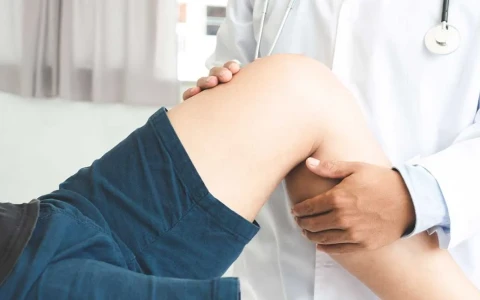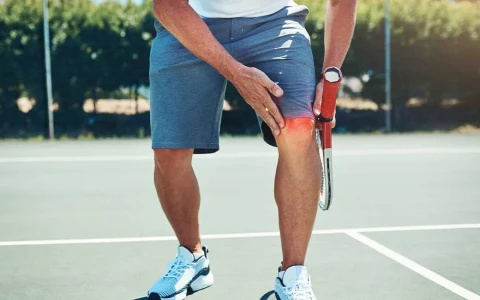
Sports surgery is the branch of orthopaedics that diagnoses and treats injuries to ligaments, menisci, cartilage, tendons and joint capsules sustained during sport or other demanding physical activity. The knee (anterior cruciate ligament, meniscus, cartilage), the shoulder (dislocation, rotator cuff) and the ankle (ligament injuries) are affected most often. Treatment does not automatically mean an operation: many injuries settle with physiotherapy and a change in activity. Surgery, usually performed arthroscopically through keyhole incisions, is reserved for structural damage that causes instability, locking or a risk of long-term joint damage.
This is not just a concern for professional athletes. Five-a-side footballers, teenagers in school teams, skiers, runners and older adults who want to stay active can all sustain sports injuries. This page explains the common injuries, how they are diagnosed, the non-surgical and surgical options, rehabilitation and how to return to sport safely.
What is sports surgery and who is it for?
Sports surgery focuses on repairing or reconstructing the soft tissues around a joint: ligaments, tendons, menisci, cartilage and the joint capsule. Relieving pain is only part of the aim. Just as important are restoring stability and function, helping you return to your previous level of activity as safely as possible and, where it can, reducing the risk of osteoarthritis later in life.
The plan depends on your age, the type of injury, the demands of your sport (cutting and pivoting, jumping, contact or overhead movements) and your own goals. The same anterior cruciate ligament tear may be managed quite differently in a young basketball player and in a middle-aged person whose main activity is walking. The final decision is made after a clinical examination and imaging.
The main injuries treated in sports surgery
Knee injuries
- Anterior cruciate ligament (ACL) rupture: typically happens during a sudden change of direction, an abrupt stop or an awkward landing, often without any contact. A feeling of the knee "giving way" is characteristic. Our article on ACL injuries in athletes covers this in more depth.
- Meniscal tears: tears of the two C-shaped cartilage cushions inside the knee. In younger people they usually follow a twisting injury; later in life they are often degenerative, caused by gradual wear of the tissue.
- Cartilage (chondral) injuries: damage to the smooth lining of the joint surface, either from a single impact or from repeated loading. Articular cartilage has a very limited capacity to heal itself.
- Kneecap (patellar) dislocation and medial collateral ligament injuries: kneecap dislocation is particularly common in teenagers, while most medial collateral ligament injuries heal without surgery.
Shoulder injuries
The shoulder has the widest range of movement of any joint in the body, which is also what makes it prone to dislocation. After a first dislocation the shoulder has a strong tendency to dislocate again, especially in young people who play contact sports. Tears of the rotator cuff (the group of muscles and tendons that wraps around the shoulder), SLAP lesions of the upper labrum and impingement problems in overhead sports such as volleyball, swimming and tennis also fall within this field. You can read more in our article on common shoulder injuries in athletes.
Ankle injuries
Ankle sprains are among the most common injuries in sport, and the great majority recover with good rehabilitation. However, an ankle that keeps going over or never feels quite reliable may have chronic ligament laxity, an osteochondral lesion (an injury to the cartilage and the bone beneath it) of the talus, or an Achilles tendon rupture, any of which may need a surgical opinion.
Which symptoms suggest a serious sports injury?
Not every ache after sport means structural damage; muscle soreness and minor strains usually settle within a few days. The following signs, however, point to a more significant injury and deserve an orthopaedic assessment:
- A "pop" or tearing sensation at the moment of injury
- Marked swelling of the knee within a few hours, which can indicate bleeding into the joint (haemarthrosis)
- The knee giving way, shifting or feeling unstable when you change direction
- The knee catching or locking at a certain angle, or being unable to straighten fully
- The shoulder coming out of joint, or feeling as though it is about to
- Weakness when lifting the arm, and shoulder pain that is worse at night
- Being unable to bear weight, or a limp that has not improved after a few days
Diagnosis: examination and imaging
An accurate diagnosis starts with a careful history and a thorough examination. How the injury happened, what you felt at the time and how the joint has behaved since often point strongly towards the answer. Specific tests are used to assess ligament laxity, meniscal signs, range of movement and muscle strength. Imaging is then used as follows:
- X-rays: show fractures, small fragments of bone pulled away by a ligament (avulsions) and the joint space.
- MRI: the main investigation for ligaments, menisci, cartilage and tendons.
- CT scanning: can measure bone loss from the shoulder socket after repeated dislocations, or clarify complex fractures.
- Ultrasound: allows quick, dynamic assessment of some tendon injuries while the joint is moving.
- Standing full-length leg X-rays: important when cartilage or meniscal problems occur together with bowed or knock-kneed alignment, to see how load passes through the knee.
An MRI finding on its own is not a reason to operate. Many people in middle age and beyond show meniscal wear on MRI without having any symptoms at all. Scans are therefore always interpreted alongside your symptoms and the examination findings.
Non-surgical treatment or arthroscopic surgery?
Non-surgical treatment includes rest and activity modification, ice, short-term protective splints or braces where needed and, above all, a structured physiotherapy programme. Partial ligament injuries, first-time ankle sprains, most medial collateral ligament injuries and degenerative meniscal tears that do not cause locking are usually managed in this way. Some people with an ACL rupture can also lead an entirely normal daily life if they give up pivoting sports.
Surgery comes into consideration for repeated episodes of the knee giving way, locking, a meniscal tear that is suitable for repair, recurrent shoulder dislocation or cartilage damage that threatens the joint surface.
What is arthroscopy?
Arthroscopy, often called keyhole surgery, is carried out through two or three small incisions, usually 0.5–1 cm long, through which a camera and fine instruments are passed into the joint. The inside of the joint is magnified on a screen, so that a meniscus can be stitched, a torn ligament replaced with a graft or a cartilage defect treated. There is less disruption to the soft tissues than with open surgery, and most patients go home the same day or the following day. Some procedures, such as Achilles tendon repair or an osteotomy to correct leg alignment, are still performed through open or small incisions.
| Injury | When non-surgical care may be suitable | Surgical options | Return to sport (approximate) |
|---|---|---|---|
| ACL rupture | Activities without pivoting or jumping, and no giving way | Arthroscopic ACL reconstruction, usually with a graft from your own tendons | Usually 9–12 months for pivoting sports |
| Meniscal tear | Degenerative tear without locking | Meniscal repair (stitching) or partial meniscectomy | 4–6 months after repair; a few weeks to 3 months after partial removal |
| Cartilage injury | Small lesions causing few symptoms | Microfracture, osteochondral grafting (mosaicplasty), cell-based techniques in suitable patients | Usually 6–12 months |
| Recurrent shoulder dislocation | First dislocation, lower-risk activities | Arthroscopic Bankart repair; Latarjet procedure where there is significant bone loss | Usually 4–6 months; longer for contact sports |
| Chronic ankle instability | Rehabilitation is usually the first step | Ligament repair or reinforcement | Usually 3–4 months |
These timescales are only a general guide. The actual time depends on the details of the injury, the procedure performed and your progress in rehabilitation, and it varies from person to person. For meniscal injuries, our article on surgical and non-surgical treatment of meniscal tears goes into more detail.
Surgery and rehabilitation step by step
- Assessment and shared decision-making: the examination and imaging results are discussed in the context of your sport, age and goals.
- Preparing for surgery ("prehabilitation"): before ACL reconstruction in particular, settling the swelling, regaining full knee extension and activating the thigh muscles helps to lower the risk of stiffness afterwards.
- The operation: usually performed under a spinal or general anaesthetic, often with a nerve block for pain relief.
- The first few days: most patients go home the same day or the next, with crutches, a knee brace or a shoulder sling where needed, and measures to reduce the risk of blood clots.
- Physiotherapy: range-of-movement exercises begin early, followed by progressive strengthening.
- Return to sport: gradual and staged, once agreed goals and tests have been met.
How is the return to sport decided?
Current practice bases the return to sport on measurable criteria rather than on time alone. These include closing the strength gap between the operated and uninjured leg, completing hop and change-of-direction tests with confidence, a knee that no longer swells, and feeling psychologically ready. Rehabilitation typically moves through regaining movement, strengthening, balance and neuromuscular (jumping and landing) training, and finally sport-specific work. Our article on rehabilitation after ACL surgery describes these stages in detail. Structured warm-up and neuromuscular training programmes may also help to reduce the risk of a further injury.
Special situations: young athletes and leg alignment
Children and teenagers
Sports injuries behave differently while the growth plates (physes) are still open. Because a growth plate can be weaker than the ligaments around it, a force that would tear a ligament in an adult may injure a growth plate in a child. When a child does need ACL surgery, techniques designed to protect the growth plates are used. By contrast, most growth-related aches at the front of the knee (Osgood–Schlatter disease) or at the heel (Sever's disease) do not need an operation. Our paediatric orthopaedics page covers the wider musculoskeletal problems of this age group.
Bowed legs and bone shape
In some sports injuries the problem is not confined to soft tissue. Marked bow-leggedness increases the load on the inner compartment of the knee, which can make it harder for a repaired meniscus or a treated cartilage defect to heal. In a similar way, an excessive backward slope of the top of the shin bone (posterior tibial slope) increases the strain on an ACL graft and may contribute to it tearing again. In such cases an osteotomy to correct alignment may be considered alongside the soft tissue surgery. This is discussed in detail on our page on adult leg deformity correction.
Possible risks and complications
Although arthroscopic surgery involves less soft tissue disruption than open surgery, every operation carries some risk. Knowing what these are helps to set realistic expectations:
- Infection: uncommon, but may need further treatment if it occurs.
- Blood clots (deep vein thrombosis): related to reduced mobility; preventive measures are tailored to your individual risk.
- Stiffness (arthrofibrosis): slow recovery of movement, particularly after ligament reconstruction.
- Graft re-rupture or failure of a repair to heal: a repaired meniscus does not always heal, and a ligament graft can tear again with a new injury.
- Donor-site symptoms: pain at the front of the knee, or a small patch of numbness on the front and outer side of the knee.
- Nerve or blood vessel injury: very rare.
- Osteoarthritis in the longer term: serious ligament and meniscal injuries can increase the risk of arthritis later on, whether or not surgery is carried out.
Surgery aims to restore stability and prevent further damage, but it cannot promise to return the knee exactly to the way it was before the injury. Where advanced cartilage loss and arthritis have already developed, other options come into play; these are covered on our hip and knee replacement surgery page.
When should you see an orthopaedic surgeon?
Seek an orthopaedic assessment without delay if you notice any of the following:
- Being unable to put weight on the leg after an injury, or a visible deformity
- Rapid swelling of the knee, or a knee that locks and will not straighten
- A shoulder that has dislocated, even if it went back in by itself
- A sudden feeling of being kicked at the back of the ankle, and being unable to rise onto tiptoe
- Numbness, tingling, or a hand or foot that is cold or discoloured
- Pain that has not settled after two or three weeks, or repeated giving way or sprains
Early assessment allows planning while the widest range of options is still available. Some meniscal tears that lock the knee, for example, have a better chance of being repaired if they are treated early.
Prof. Dr. Halil İbrahim Balcı's approach
Prof. Dr. Halil İbrahim Balcı is a faculty member in the Department of Orthopaedics and Traumatology at Istanbul University's Istanbul Faculty of Medicine and holds the European Board of Orthopaedics and Traumatology (EBOT) qualification. In line with his academic work in deformity surgery and limb reconstruction, the assessment of a sports injury takes account of leg alignment and bone shape as well as the soft tissue damage. Treatment is planned together with the patient once the examination and imaging findings have been discussed in detail, and consultations are available in Turkish, English and French. You can request an assessment through the appointment page.
Key points
- Sports surgery deals with ligament, meniscal, cartilage and tendon injuries of the knee, shoulder and ankle, and is not limited to professional athletes.
- Many sports injuries are treated without surgery; an operation, usually arthroscopic, is considered for instability, locking or a risk of progressive damage.
- Diagnosis relies on the history and examination as well as MRI, never on a scan alone.
- Return to sport is staged and based on strength and function tests rather than time alone.
- Open growth plates in children and leg alignment in adults can change the treatment plan.