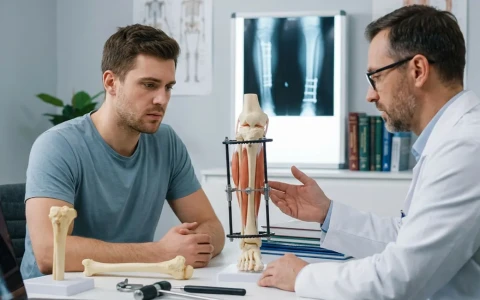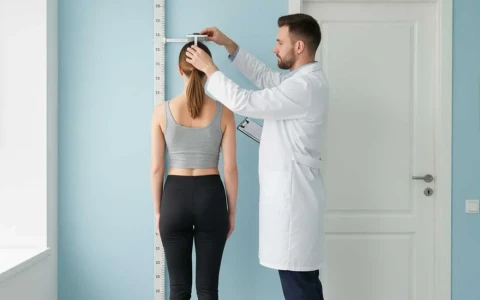
Limb lengthening surgery is an orthopaedic procedure in which the thigh bone (femur) or shin bone (tibia) is cut in a controlled way and the two ends are drawn apart by about 1 mm a day, so that the body fills the gap with new bone of its own. The same technique can treat short stature and leg length differences caused by medical conditions and, in carefully selected healthy adults, increase height for cosmetic reasons. The principle can also be applied to the bones of the arm.
Limb lengthening is not a quick cosmetic procedure. It is major surgery with real risks, followed by months of regular check-ups and intensive physiotherapy. This page explains the methods available (external fixators, lengthening over a nail and internal magnetic nails), who is suitable, the stages of treatment and the possible complications. Which method, and how much lengthening, is appropriate for any one person can only be decided after examination and imaging.
What is limb lengthening surgery and how does it work?
Limb lengthening is based on a biological process called distraction osteogenesis. The bone is divided while preserving its blood supply and the periosteum (the membrane covering it) as far as possible. After a short waiting period, the bone ends are separated very slowly. New bone tissue, known as the regenerate, forms in the gap: soft at first, then gradually hardening. Because this bone grows from the patient's own cells, a bone graft from elsewhere in the body is usually unnecessary.
It is not only the bone that has to lengthen. The muscles, tendons, nerves, blood vessels and skin around it must stretch too, and in practice it is usually these soft tissues, rather than the bone, that set the limit on how much lengthening is possible. That is why the rate is kept slow and physiotherapy continues throughout treatment.
Treatment has four basic phases: the bone cut (osteotomy), a latency period, the lengthening (distraction) phase and the consolidation phase, during which the new bone hardens. Lengthening usually proceeds at about 1 mm a day, divided into several small steps, so each centimetre takes roughly ten days. Consolidation usually takes longer than the lengthening itself.
Who is it for? Medical and cosmetic indications
Lengthening for medical reasons
- Leg length discrepancy: congenital causes, growth plate injuries, or shortening after a fracture or infection. Treatment options, including methods that guide growth, are covered in detail on our page on leg length discrepancy and medical limb lengthening.
- Skeletal dysplasias: conditions such as achondroplasia and hypochondroplasia, in which the limbs are short in relation to the trunk. In these children and young people the thigh, shin and sometimes upper arm bones may be lengthened in planned stages. Lengthening the upper arms can support independence in self-care and everyday tasks; this is discussed on our page on upper limb lengthening and deformity correction.
- Deformity combined with shortening: where a bone is both bent and short, both problems can be corrected during the same course of treatment.
Cosmetic limb lengthening
Cosmetic lengthening is considered for adults with normal body proportions and no underlying medical condition who are significantly troubled by their height. They need to have closed growth plates, be in good general health, be psychologically prepared to accept a long process and its risks, and have realistic expectations. Because cosmetic lengthening is major surgery on healthy bones, its potential benefits and risks must be weighed very carefully. You can read more about the selection criteria in our article who is suitable for cosmetic height lengthening surgery?
Lengthening methods: external fixator, LON and magnetic nail
There are three main approaches in use today. All rely on the same biological principle; they differ in how the bone is held and how the lengthening is carried out.
Lengthening with an external fixator (Ilizarov and similar frames)
A circular frame (Ilizarov or hexapod) or a monolateral fixator is attached to the bone with wires and pins, and lengthening is achieved by adjusting the frame. This method allows angular or rotational deformities to be corrected gradually at the same time, and it can be used in people with a narrow bone canal and in children who are still growing. Its drawbacks are the long time spent wearing the frame, pin-site care, the risk of infection and the impact on daily life. The method is described in detail on our page on Ilizarov and limb reconstruction surgery.
Lengthening over a nail (LON) and combined techniques
In lengthening over nail (LON), a nail is placed inside the bone and the lengthening itself is performed with an external fixator. Once the target length is reached, the nail is locked and the fixator is removed, so the frame stays on only for the lengthening phase and consolidation takes place under the protection of the nail. Related combined techniques insert a nail or plate after lengthening is complete. Because two different implants are involved, the risk of a pin-site infection spreading more deeply has to be taken into account.
Internal (intramedullary) magnetic lengthening nail
A telescopic nail is placed inside the bone and lengthened in tiny increments several times a day using a hand-held magnetic controller applied over the skin. With no external frame there are no pin-site infections, daily life and sleep are more comfortable, and the scars are smaller. This method has limits too: the bone canal and bone length must suit the nail; weight-bearing is usually restricted during lengthening; large angular corrections can generally be made only acutely, when the nail is inserted; and the nail is removed in a second operation once the bone is fully mature. For a detailed comparison of nail-based methods, see our article comparing the LON method with magnetic nails.
| Feature | External fixator | Lengthening over nail (LON) | Magnetic lengthening nail |
|---|---|---|---|
| Time in an external frame | Throughout lengthening and consolidation | Usually only during lengthening | No external frame |
| Correction of associated deformity | Gradual, multidirectional correction possible | Limited; mostly acute | Mostly acute, when the nail is inserted |
| Infection | Pin-site infection common, usually superficial | Risk of pin-site infection reaching the nail | No pin sites; deep infection rare but can be serious |
| Weight-bearing during lengthening | Often allowed early | Usually partial | Mostly partial |
| Typical candidates | Children, narrow bone canal, previous infection, complex deformity | Adults with a suitable bone canal | Adults with suitable bone size and little deformity |
The choice depends on a combination of age, bone dimensions, any associated deformity, history of infection, the amount of lengthening needed and personal preference. No single method is superior for every patient.
Suitability, assessment and realistic expectations
Everyone considering limb lengthening goes through a detailed assessment before surgery. This usually includes:
- Examination: height, sitting height and limb proportions, joint movement, muscle flexibility, gait, and the circulation and nerves.
- Imaging: standing long-leg X-rays (a full-length leg radiograph) to measure alignment, lengths and any deformity; CT where needed to assess bone rotation and the width of the bone canal.
- Blood tests: general health, vitamin D and markers of bone metabolism.
- Psychological assessment: particularly for cosmetic lengthening, it is advisable to discuss expectations, motivation and the ability to cope with a long process.
Smoking (which markedly slows bone formation), poorly controlled diabetes, active infection, metabolic bone disease, significant vascular or nerve disease, marked obesity and uncontrolled mental health problems all increase the risks; in these situations surgery may be postponed or not recommended. Lengthening may also be unsuitable for people who cannot attend regular check-ups or keep up with the physiotherapy programme.
How much lengthening is possible?
A safe amount depends on the length of the bone, how flexible the soft tissues are, which bone is being lengthened and the person's general health. The greater the lengthening in proportion to the bone's length, the more likely joint stiffness, nerve problems and complications with the new bone become. In cosmetic lengthening, 5–8 cm is commonly planned for the femur, with more limited amounts for the tibia. The femur and tibia can be lengthened at different times as separate stages, but each additional stage adds time and risk. In skeletal dysplasias, lengthening may be spread over several stages through childhood and adolescence. The planned amount cannot always be reached: if the soft tissues do not tolerate stretching well, lengthening may be stopped early. Results vary from person to person.
The limb lengthening process step by step
- Surgery: under general or spinal anaesthesia, the bone is divided through small incisions and the chosen lengthening device is fitted. In cosmetic lengthening both legs are usually operated on in the same session. The hospital stay is generally a few days.
- Latency period: a wait of usually 5–7 days allows bone healing to begin.
- Lengthening phase: lengthening proceeds at about 1 mm a day, split into several small steps. With a magnetic nail this is done at home with the controller; with an external fixator, by adjusting the frame. X-rays are taken at check-ups every one to two weeks, and the rate may be slowed or lengthening paused depending on how the new bone and soft tissues are responding.
- Consolidation phase: once the target length is reached, the new bone is left to mature. As the outer walls of the bone (the cortices) become visible on X-ray, weight-bearing is increased step by step; where an external fixator is used, it is removed at the end of this stage.
- Implant removal: internal nails are taken out in a second operation once the new bone is fully mature, usually within one to two years.
For most people a return to normal walking takes months, and activities involving running or jumping have to wait until the bone is fully mature. The length of the whole process depends on the amount of lengthening and how quickly each person heals.
Rehabilitation and returning to daily life
In limb lengthening, physiotherapy matters as much as the operation itself. Because the muscles are under constant stretch during lengthening, joints can easily lose movement. With femoral lengthening, knee bending and full hip extension are watched closely; with tibial lengthening, the ability to bring the foot upwards at the ankle (tightness of the calf and Achilles tendon) is the main concern. Exercises are therefore usually done every day throughout lengthening, with night splints where needed.
- During lengthening, walking is usually with crutches or a walking frame, within the weight limits set by your surgeon.
- Depending on pain and mobility, a return to desk-based work or school is often possible during or soon after the lengthening phase.
- Low-impact activities such as swimming and a static exercise bike can start earlier if your surgeon agrees; running and contact sports are planned only after the bone is fully mature.
- A balanced diet and doctor-supervised monitoring of vitamin D and calcium levels support bone healing.
For more on the exercise programme, see our physiotherapy guide after limb lengthening surgery.
Risks and complications of limb lengthening surgery
Even with careful planning and close follow-up, limb lengthening carries a risk of complications. Because treatment is long, minor problems along the way are common, while serious ones are less frequent. The main risks are:
- Joint stiffness and muscle tightness: loss of movement at the knee, hip or ankle. This is one of the more frequent problems and is usually managed with physiotherapy, a slower lengthening rate or, if necessary, an additional procedure.
- Nerve stretch: numbness, tingling or weakness in the foot; if noticed early it usually improves when lengthening is slowed or stopped.
- Problems with the new bone: premature consolidation, poor or slow bone formation, bending, or later fracture.
- Implant problems: a broken nail or screws, a nail that does not lengthen as expected, or loss of fixation.
- Infection: pin-site infection is common with external fixators and usually superficial; deep infection around internal implants is rare but difficult to treat.
- Blood clots and fat embolism: uncommon but potentially serious; preventive measures are planned by your doctor.
- Pain, poor sleep and emotional fatigue: the long process can affect mood, and seeking support is a normal part of treatment.
- Differences in length or shape between the two sides, and the need for further surgery.
Rarely, complications can leave lasting problems such as restricted movement or loss of sensation. This is why anyone considering cosmetic lengthening in particular should discuss the possible risks in detail before surgery. Our article on the risks of limb lengthening surgery covers this topic more fully.
When should you seek an assessment?
- You have noticed a difference in leg length, a limp or back pain related to it
- Your child has short stature caused by a skeletal dysplasia, or is disproportionately short compared with peers
- You are considering cosmetic lengthening and want detailed information about the options, risks and process
- A bone remains bent, painful or stiff after previous lengthening
If you are currently undergoing lengthening, contact your treatment team immediately if you notice new numbness or weakness in the foot, an inability to move your toes, swelling and severe pain in the calf, a fever or discharge from a wound. Sudden breathlessness or chest pain requires emergency care.
Prof. Dr. Halil İbrahim Balcı's approach
Prof. Dr. Halil İbrahim Balcı has published more than 50 international papers on deformity, limb lengthening and paediatric orthopaedics. He worked at the Paley Institute in the USA as a research fellow in 2014 and as an observer in 2019, and his work on bilateral humeral lengthening in achondroplasia (2014 and 2015) and four-segment lower limb lengthening in children with achondroplasia (2011) received awards at national and international congresses. The aim of a consultation is to reach a shared decision by talking openly about your expectations, the pros and cons of each method, the possible risks and how treatment will affect daily life. You can arrange a consultation through the appointment page.
Key points
- Limb lengthening surgery works by cutting a bone in a controlled way and separating it by about 1 mm a day so that new bone forms.
- It can be used for medical reasons (leg length differences, skeletal dysplasias) and, in selected healthy adults, for cosmetic reasons.
- External fixators, lengthening over a nail (LON) and magnetic lengthening nails are the main methods; the choice is individual.
- Treatment takes months, and physiotherapy and regular check-ups are major factors in the outcome.
- Risks such as joint stiffness, nerve problems and complications with the new bone should be discussed in detail before surgery.