
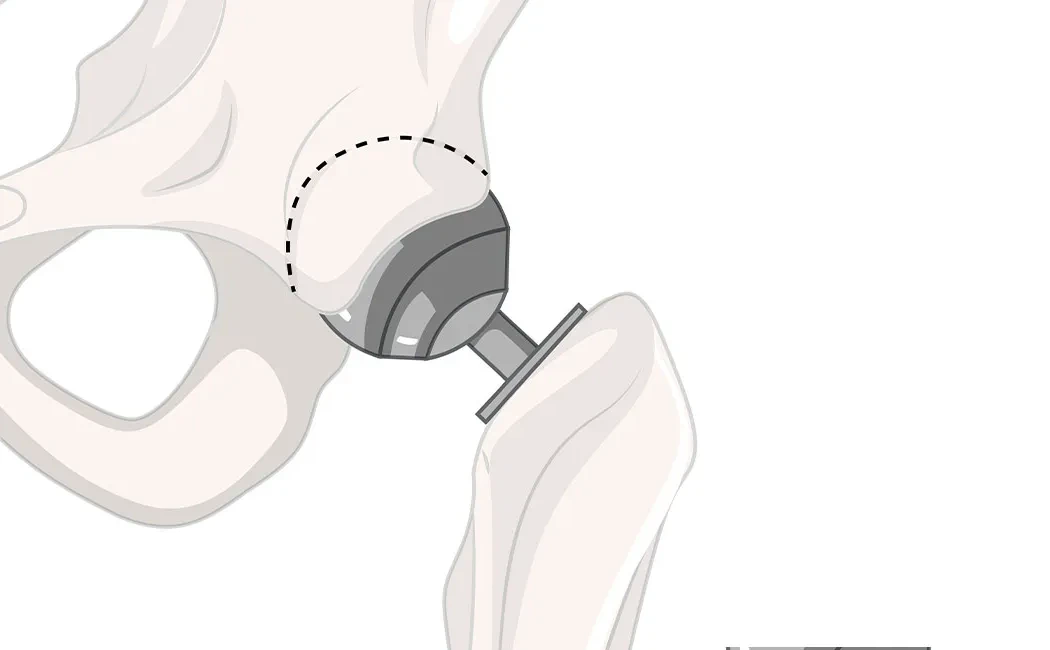
Hip replacement surgeries are among the most effective treatments for improving quality of life in patients with hip joint disorders. Over time, however, complications such as implant loosening, wear, or infection may arise. In these cases, hip prosthesis revision surgery—which involves partial or complete replacement of the existing implant—becomes necessary. This procedure is more complex than the initial surgery and requires thorough evaluation and advanced surgical techniques.
Timing and method of revision surgery are critical to help patients regain a pain-free, mobile life. The operation must be carefully planned to preserve bone stock and restore joint stability. This article explores why revision surgery is required, how diagnosis and treatment procedures are carried out, and key considerations during recovery.
What Is Hip Prosthesis Revision Surgery?
Hip prosthesis revision surgery involves removing a previously implanted hip prosthesis that has failed or caused complications, and replacing it with new implant components. Compared to primary hip replacement, this procedure differs technically and usually takes longer to perform. The condition of the patient’s bone stock and surrounding soft tissues are key factors in surgical planning.
Revision surgery not only replaces the old implant but also aims to restore the biomechanics of the hip joint. For more detailed information, visit our page on hip prosthesis revision and replacement surgery. The goal is to enable patients to return to daily activities without pain.
Why Is Revision Surgery Necessary?
The main reasons for revision include aseptic loosening (loosening without infection), infection, periprosthetic fractures, and recurrent dislocations. Over time, components can wear out and the bond between bone and implant can weaken, causing pain and reduced mobility.
In cases where bone integration is compromised, principles similar to those used in nonunion surgery may apply to support the bone stock. When infection is present, a two-stage approach is usually adopted: first, eliminating the infection, then implanting a new prosthesis.
What Symptoms Suggest the Need for Revision?
Patients often notice new or worsening pain in the operated hip, which may increase with activity or persist at rest. Other signs include leg length discrepancy, difficulty walking, limping, or unusual noises from the prosthesis such as clicking or creaking.
Swelling, redness, or discharge around the joint may indicate infection and require urgent assessment. Recurrent dislocations suggest instability of the implant or imbalance of the surrounding soft tissues, warranting evaluation for revision surgery.
Diagnostic Process: What Tests Are Conducted?
Before deciding on revision surgery, a detailed diagnostic process is undertaken. Alongside physical examination, imaging studies assess the implant’s condition and bone quality. Standard X-rays are the first step to identify loosening, bone loss, and implant positioning. Computed Tomography (CT) scans provide a detailed view of bone stock, while Magnetic Resonance Imaging (MRI) can assist in evaluating soft tissues.
Blood tests such as CRP and sedimentation are used to rule out or confirm infection, sometimes combined with joint fluid aspiration for culture.
Techniques Used in Revision Surgery
The surgical techniques depend on bone quality and existing deformities. Significant bone loss may require specialized revision implants, metal augments, or bone grafts. Expertise in revision surgery for nonunion and malunion is a critical factor for success.
Surgical planning not only involves implant replacement but also correction of leg length discrepancies and restoration of soft tissue balance. Treatment approaches are informed by principles found in hip replacement and coxarthrosis management.
Preoperative Preparation and Patient Evaluation
Thorough preoperative preparation is essential for successful hip prosthesis revision surgery. The patient’s overall health, chronic illnesses (such as diabetes or cardiac conditions), and current medications are carefully reviewed. Smoking cessation is advised when possible, as it negatively impacts bone healing.
Patient selection and implant choice are made based on current approaches to hip replacement to tailor the plan individually.
Recovery and Rehabilitation
Recovery after revision surgery may be slower compared to the primary procedure. Hospital stays typically last several days. Early postoperative care focuses on improving circulation and preventing blood clots through careful mobilization and walking exercises. Weight bearing on the leg may be limited until bone healing is sufficient.
Physical therapy is crucial to regain muscle strength and joint mobility. Patient awareness of home exercise programs and post-hip replacement care contributes to prolonging implant lifespan.
Risks and Potential Complications
As with any surgery, hip prosthesis revision carries risks such as infection, deep vein thrombosis (DVT), leg length discrepancy, nerve injury, and implant dislocation. Patients with previous revision surgeries for nonunion or multiple operations require especially careful risk management.
The surgical team implements precautions to minimize complications. In selected cases, additional treatments like biological therapies for non-healing fractures may be used to support bone healing.
Are There Alternative Treatment Options?
Revision surgery is often unavoidable in cases of mechanical failure or infection. However, if loosening is absent and pain arises from soft tissue issues, conservative treatments such as physical therapy, medications, or injections can be considered. For patients with high surgical risk due to general health, palliative approaches for symptom relief may be appropriate. Each patient’s situation is assessed individually.
References and Scientific Sources
This content was developed using the following international scientific sources and current orthopedic guidelines:
- National Center for Biotechnology Information (NCBI) - PMC
- Mayo Clinic Orthopedic Surgery Resources
- American Academy of Orthopaedic Surgeons (AAOS) Clinical Guidelines
The information provided is for general informational purposes only and does not constitute medical advice. It is not intended to replace professional diagnosis, treatment, or guidance. Diagnostic and treatment decisions should be made only after an in-person consultation with a qualified healthcare provider. Since each patient's clinical condition is unique, surgical and non-surgical treatments may vary accordingly. The content is based on current scientific knowledge and up-to-date medical practices. Do not delay seeking professional care based on the information provided.