In cerebral palsy the brain injury does not progress, but muscle and bone problems can develop with growth. We explain hip displacement, foot and knee deformities, and non-surgical and surgical options.
On this page 8 sections
- What is cerebral palsy and why does it affect bones and muscles?
- Common orthopaedic problems in cerebral palsy
- Assessment: examination, X-rays and gait analysis
- Non-surgical treatment options
- When is cerebral palsy orthopaedic surgery considered?
- Recovery and rehabilitation after surgery
- When should you see a doctor?
- Key points
Cerebral palsy (CP) is a group of conditions that affect movement and posture. It is caused by a non-progressive injury to the developing brain, occurring before birth, around the time of birth or in early childhood. The brain injury itself does not get worse, but as a child grows, muscle stiffness, joint contractures, hip displacement and foot deformities can develop or become more noticeable. Cerebral palsy orthopaedic surgery and non-surgical orthopaedic care are not meant to cure CP; their aim is to protect and improve a child's walking, sitting, comfort and ease of care.
Below we cover the common orthopaedic problems in CP, why regular monitoring matters, the treatment options and the warning signs parents should look out for. Every child is different, and the right plan is decided after examination and imaging.
What is cerebral palsy and why does it affect bones and muscles?
Cerebral palsy is an umbrella term rather than a single disease, and it is reported in roughly 2 to 3 of every 1,000 live births. Known risk factors include premature birth, low birth weight, certain infections in pregnancy and reduced oxygen supply to the brain around birth; in some children no clear cause is found.
The most common type is spastic cerebral palsy. Spasticity means that muscles stay involuntarily tight and stiff. Depending on which parts of the body are involved, doctors use the terms hemiplegia (one side of the body), diplegia (mainly the legs) and quadriplegia (all four limbs). Clinicians also use the GMFCS (Gross Motor Function Classification System), which describes motor ability on five levels: children at level I walk independently, while those at level V need support even to sit and hold their head up.
Orthopaedic problems arise because bones keep growing while spastic muscles cannot lengthen at the same pace. Muscles and tendons gradually shorten (a contracture), and unbalanced muscle forces can change the shape of bones and the position of joints. So although the brain injury is static, musculoskeletal problems can progress throughout childhood.
Common orthopaedic problems in cerebral palsy
Hip displacement and dislocation
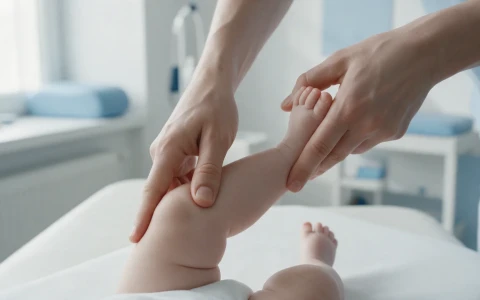
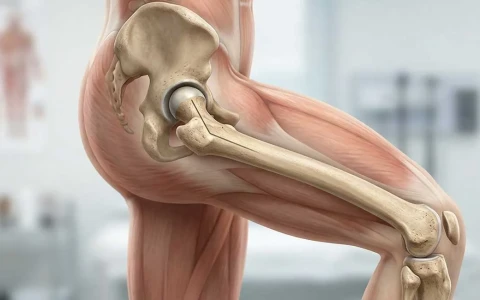
Hip displacement is a major concern in children who cannot walk or who walk with support (GMFCS III–V). Dominant adductor and flexor muscles gradually push the head of the thigh bone out of the socket. Early on this usually causes no symptoms; later it can cause pain, difficulty sitting and problems with nappy changes and personal care. For this reason, regular pelvic X-rays, known as hip surveillance, are recommended for children with CP. The X-ray is used to track the "migration percentage" (Reimers index), which shows how far the femoral head has moved out of the socket.
Foot deformities
The most frequent problem is equinus: tight calf muscles stop the heel reaching the floor, so the child walks on tiptoe. In diplegia and quadriplegia the foot often collapses inwards into a flat, planovalgus position, whereas in hemiplegia an inward-turning equinovarus foot is more typical. These deformities can make shoes and orthoses hard to wear and may cause calluses and pressure sores.
Knee problems and crouch gait
Tight hamstrings, combined with problems at other levels, can produce crouch gait, in which the knees stay bent while walking. This uses far more energy, tires children quickly and may cause pain at the front of the knee in later years.
Rotational problems and the spine
An increased inward twist of the thigh bone (femoral anteversion) and twisting of the shin bone can cause in-toeing and leave the foot pointing in the wrong direction during walking. We cover this in more detail in our article on femoral anteversion. Children who do not walk are also more likely to develop a curvature of the spine; for background, see our article on scoliosis in children.
Assessment: examination, X-rays and gait analysis
Assessment begins with a thorough examination of joint range of movement, muscle stiffness, fixed shortening, selective muscle control and walking. X-rays of the hips, spine and feet are requested as needed, and further imaging may be used to assess leg alignment and bone rotation.
For children who walk, three-dimensional computerised gait analysis, where available, adds valuable information: markers on the body and cameras measure how each joint moves, revealing problems that are hard to spot by eye and showing which levels need treatment.
Managing cerebral palsy is a team effort. Paediatric neurology, physical medicine and rehabilitation, physiotherapy, orthotics and paediatric orthopaedics work together, and neurosurgeons are sometimes involved. For an overview of childhood orthopaedic conditions, see our page on paediatric orthopaedics.
Non-surgical treatment options
Many orthopaedic problems in CP, especially in younger children, are managed without surgery. These measures are usually combined:
- Physiotherapy and home exercises: stretching, strengthening, balance and walking practice help slow the progression of contractures and support function.
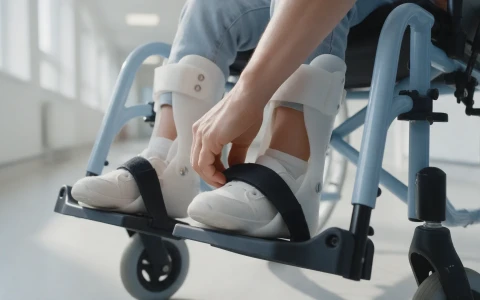
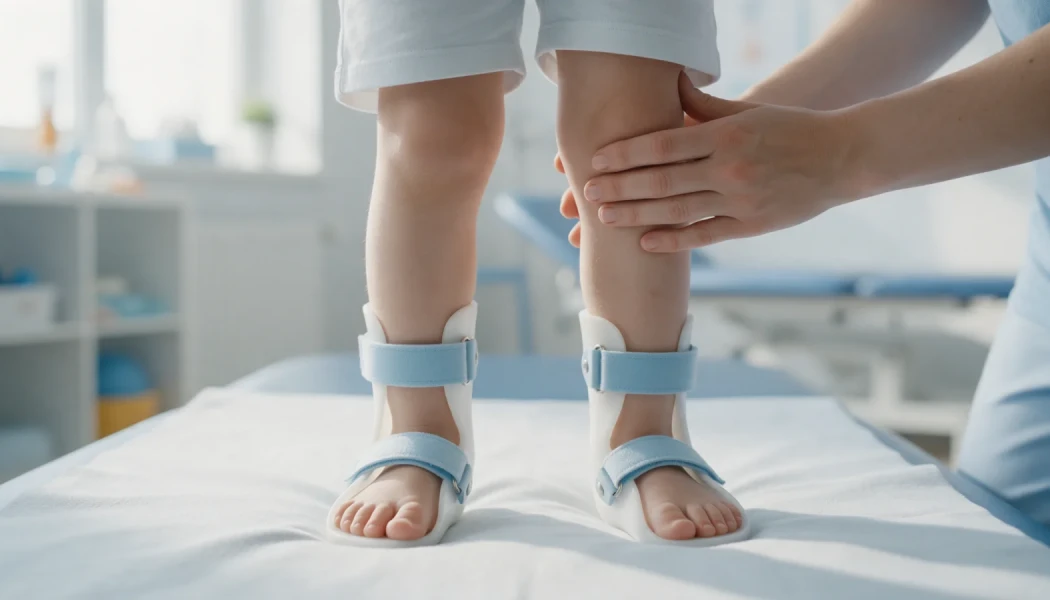
- Orthoses: ankle-foot orthoses (AFOs) hold the foot at a suitable angle and support walking; night splints can help keep muscles on a stretch.
- Botulinum toxin injections: injected into selected muscles, they reduce spasticity for a while. The effect lasts a few months and is most useful when combined with physiotherapy, orthoses or casting.
- Serial casting: a series of casts changed over several weeks to stretch shortened muscles gradually.
- Neurological spasticity treatments: in some children, medicines, implanted medication pumps or selective dorsal rhizotomy may be considered by the relevant specialists.
When is cerebral palsy orthopaedic surgery considered?
Surgery is considered when fixed contractures have developed despite non-surgical care, when hip displacement is progressing, or when bone twists or foot deformities are disturbing walking or causing pain. Options include soft-tissue procedures (lengthening or releasing muscles and tendons, tendon transfers), bone operations such as osteotomy (a controlled cut to realign a bone) and, for advanced foot deformities, joint fusion. The general principles of correcting bone angulation and rotation are described on our leg deformity correction page.
For children who walk, single-event multilevel surgery (SEMLS) is now widely used. Problems at the hip, knee and foot are addressed in one operation, so that the child does not face a new operation and a new period of rehabilitation every year. It is usually planned once the walking pattern has matured, most often between the ages of 6 and 12. Hip operations, on the other hand, may be needed earlier, depending on how the hip is changing.
| Problem | What parents may notice | Commonly used approaches |
|---|---|---|
| Equinus (tiptoe walking) | Heel does not touch the floor, frequent falls | Stretching, AFOs, botulinum toxin, serial casting; calf lengthening if needed |
| Hip displacement | No symptoms at first; later difficulty sitting and pain | Regular X-ray surveillance, soft-tissue release, femoral and pelvic osteotomies |
| Crouch gait | Knees stay bent, tires easily | Physiotherapy, orthoses, hamstring lengthening; distal femoral osteotomy in suitable patients |
| Rotational problems | In-toeing, feet catching on each other | Observation; derotation osteotomy if needed |
| Planovalgus foot | Foot rolls inwards, callus on the inner side | Orthoses; heel bone osteotomy or joint fusion in advanced cases |
Recovery and rehabilitation after surgery
Surgery is only one part of CP care, and much of its benefit depends on the rehabilitation that follows. A cast or splint may be needed for a while, then intensive physiotherapy begins. Regaining strength and adapting to a new walking pattern takes months, and after multilevel surgery the full benefit may take more than a year to show. Family involvement, home exercises and regular use of orthoses make a real difference.
Realistic expectations help: the goal is for the child to walk, sit and be cared for more comfortably within their own potential. Results vary with GMFCS level, muscle control, age and engagement with rehabilitation.
When should you see a doctor?
Keep routine orthopaedic appointments even when all seems well, and ask for an earlier review if you notice:
- Hip pain, or discomfort during nappy changes or sitting, or legs that no longer open as far as before
- Walking getting worse, more frequent falls or knees bending more and more
- Orthoses or shoes that no longer fit; redness, calluses or sores on the feet
- An apparent difference in leg length, leaning to one side when sitting or a curve appearing in the back
- A clear loss of movements the child could previously manage
Assessment should ideally be carried out by a team experienced in paediatric orthopaedics and deformity surgery, in close contact with the child's neurologist and physiotherapist. Prof. Dr. Halil İbrahim Balcı is a faculty member at the Department of Orthopaedics and Traumatology of Istanbul Faculty of Medicine and has published internationally on deformity and paediatric orthopaedics.
Key points
- In cerebral palsy the brain injury does not progress, but muscle and bone problems can change with growth.
- Hip displacement can progress silently; regular pelvic X-rays (hip surveillance) are important.
- Physiotherapy, orthoses, botulinum toxin and casting are often the first steps.
- For fixed contractures and bone deformities, single-event multilevel surgery may be planned in suitable children.
- Treatment decisions are made by a team after examination, imaging and, where appropriate, gait analysis.
Frequently Asked Questions
No. Orthopaedic surgery does not change the underlying brain injury, so it cannot cure cerebral palsy. Its purpose is to correct muscle contractures, bone twists or hip displacement so that a child can walk, sit or be cared for more comfortably. How much difference it makes depends on the child's muscle control, age, GMFCS level and engagement with rehabilitation, and it varies from child to child.
Botulinum toxin is an injection that reduces spasticity in selected muscles for a few months. It can be helpful, particularly in younger children whose muscles have not yet become fixed in a shortened position, when combined with stretching, orthoses and casting. Once a muscle and tendon are permanently shortened, or a bone deformity has developed, injections have a limited effect. Surgical options may then be considered, and the decision is made after examination.
The frequency of hip surveillance depends on the child's age, GMFCS level and previous X-ray findings. In general, for children who do not walk or who walk with support, monitoring starts in early childhood and a pelvic X-ray is often taken every 6 to 12 months. If the hip is found to be moving out of the socket, checks may become more frequent. International hip surveillance programmes follow this principle, and your doctor will set the schedule for your child.
Single-event multilevel surgery is usually planned once the child's walking pattern has matured, most often between the ages of 6 and 12. When surgery is done very early, problems are more likely to recur as the child grows. Planning relies on a detailed examination, X-rays and, where available, computerised gait analysis. Operations for hip displacement are a separate matter and may be needed at a younger age, depending on how the hip is changing.
Recovery happens in stages. After a period in a cast or splint, intensive physiotherapy begins, and many children can stand with support within a few weeks. Regaining muscle strength and getting used to a new walking pattern takes months, however, and after multilevel surgery the full benefit may take more than a year to show. The timescale depends on the extent of surgery and on how fully the child can take part in rehabilitation.
This article is for general information only and does not replace a medical examination, diagnosis or treatment. Treatment options and outcomes vary from person to person.
Related treatment area Adult Leg Deformity Correction: Bow Legs and Knock Knees