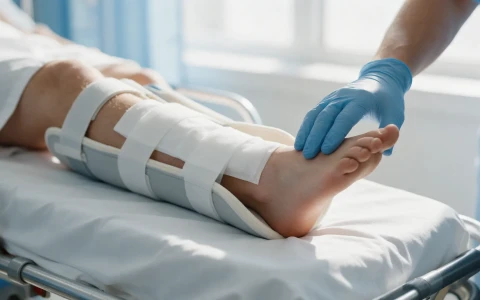
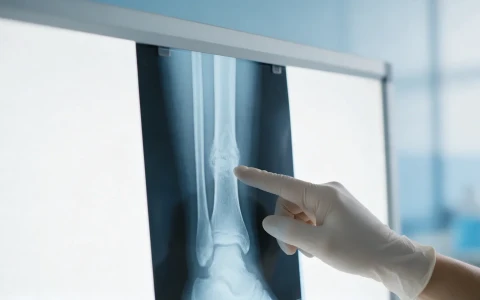
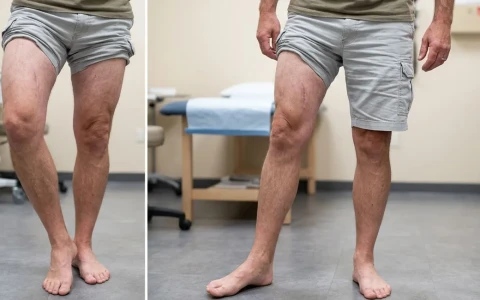
Recovery after a tibia (shin bone) fracture usually takes months. We walk through the healing stages, the factors that affect them, possible problems such as non-union or malunion, and warning signs.
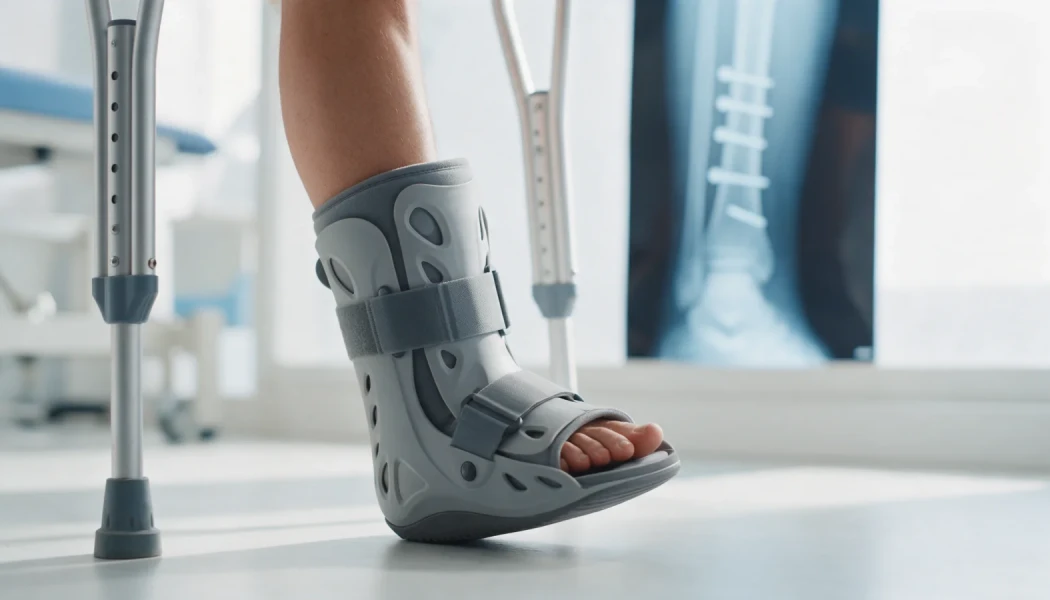
On this page 8 sections
- Types of tibia fracture and how they are treated
- How long does tibia fracture recovery take? A stage-by-stage guide
- How does physiotherapy and rehabilitation progress?
- What affects bone healing?
- What problems can occur after a tibia fracture?
- What can you do to support your recovery?
- When should you see a doctor?
- Key points
Tibia fracture recovery takes time: in adults, a fracture of the shin bone usually takes around 4 to 6 months to unite, longer if the fracture is open, in several pieces or complicated by infection, and usually less in children. Recovery is about more than the bone knitting together; regaining knee and ankle movement, muscle strength and a normal walking pattern are all part of the process. The timescale and the steps involved depend on the type of fracture, the treatment and your general health, and progress is followed with regular check-ups.
The tibia is one of the most frequently fractured long bones in the body, with road traffic accidents, falls from height and sports injuries among the commonest causes. Its front surface lies directly beneath the skin, so open fractures are common, and the blood supply to its lower part is relatively limited. For these reasons the tibia is among the bones most often affected by non-union and malunion.
Types of tibia fracture and how they are treated
Tibial fractures are grouped by location: fractures of the upper end extending into the knee (tibial plateau), fractures of the shaft, and fractures of the lower end extending into the ankle (pilon). This article focuses on shaft fractures, the most common type. Treatment options include:
| Method | Usually chosen for | Effect on recovery |
|---|---|---|
| Cast or functional brace | Closed, minimally displaced and stable fractures | No operation; close X-ray follow-up and a period of restricted weight-bearing |
| Intramedullary nail | Most shaft fractures | Often allows early movement and gradual weight-bearing |
| Plate and screws | Fractures near or into a joint | Weight-bearing may be limited for a while so the joint surface heals well |
| External fixator (including Ilizarov) | Open fractures with severe soft-tissue damage, high infection risk | Can be temporary or definitive; requires pin-site care |
In children, most tibial fractures can be treated in a cast and heal faster than in adults. Fractures that involve a growth plate, however, are followed during growth to check that no length difference or deformity develops.
You can read more about the implants themselves in our article on plates and nails.
How long does tibia fracture recovery take? A stage-by-stage guide
The timeline below is a general guide; the actual course varies from person to person:
| Period | What happens in the bone | Focus during this phase |
|---|---|---|
| First 2 weeks | The inflammatory phase of healing begins | Controlling pain and swelling, keeping the leg raised, wound care, moving toes and joints, walking safely on crutches |
| 2–6 weeks | Soft callus (the first bridge of new bone) starts to form | Weight-bearing as allowed by your surgeon, knee and ankle movement exercises |
| 6–12 weeks | Callus becomes visible on X-ray | Gradually increasing load, strengthening exercises |
| 3–6 months | In many adults the fracture line is bridged | Weaning off walking aids, returning to work and daily activities |
| 6–12 months | The bone remodels and grows stronger | Gradual return to running and sport; ankle swelling can persist for months |
People with desk-based jobs can often return to work sooner, whereas heavy manual work usually has to wait until the bone is strong enough.
How does physiotherapy and rehabilitation progress?
Rehabilitation moves forward in stages with a physiotherapist, according to how the fracture was fixed and how far the bone has healed:
- Early phase: ankle pumps, thigh muscle tightening and straight leg raises, and maintaining knee and ankle movement.
- Middle phase: increasing load with your surgeon's agreement, gait training, balance work and, when appropriate, a static exercise bike.
- Late phase: strengthening the calf and thigh, walking on stairs and uneven ground, and work- or sport-specific training.
Before returning to running and sport, the fracture is generally expected to have united on X-ray, joint movement to have largely returned and muscle strength to be close to that of the other leg. Pain is a useful guide to the pace of rehabilitation.
What affects bone healing?
- The fracture itself: open fractures, multi-fragment fractures and fractures with bone loss heal more slowly.
- Soft-tissue damage and infection: damage to the tissues that nourish the bone, and infection, both delay healing.
- Smoking: reduces the bone's blood supply and can slow union considerably.
- Other conditions: diabetes, vascular disease and poor nutrition.
- Some medicines: tell your doctor about any regular medication, and do not stop any medicine without medical advice.
- Stability and loading: fixation that is not stable enough, or loading the leg differently from what was advised, can affect the process.
What problems can occur after a tibia fracture?
Compartment syndrome
In the first hours and days after a fracture, pressure can build up within the muscle compartments of the leg. Severe pain that keeps increasing despite pain relief, pain that rises sharply when the toes are moved, a rock-hard feeling in the leg and numbness need urgent assessment.
Infection
Especially after open fractures and surgery, wound discharge, redness, fever and increasing pain may point to infection. Because infection can delay bone healing, early assessment is important. In open fractures, early antibiotics and surgical cleaning aim to reduce this risk, and for people with an external fixator, regular pin-site care matters.
Delayed union and non-union
Pain on weight-bearing that persists for months, a feeling of movement at the fracture and no bridging on X-ray suggest delayed union or non-union. Non-union is generally defined as healing that has shown no progress over several months. Identifying the cause, whether insufficient stability, poor biology or infection, is the key to treatment. Our non-union surgery page explains the options.
Malunion
If the fracture heals bent, rotated or shortened, you may notice the foot pointing inwards or outwards, the leg looking crooked, a limp, or pain in the knee or ankle. Marked malalignment can change the load on these joints over the long term. Our article on signs of femur and tibia malunion describes the symptoms, and our malunion surgery page covers treatment. Non-union and malunion surgery are among the professional interests of Prof. Dr. Halil İbrahim Balcı.
Other problems
After intramedullary nailing some people develop pain at the front of the knee. Other possible problems include implants irritating the tissues under the skin, a blood clot in the leg (deep vein thrombosis), stiffness of the knee and ankle and, less commonly, complex regional pain syndrome. Knee pain after nailing often eases with time, although it can be more noticeable in work that involves kneeling.
What can you do to support your recovery?
- Follow your weight-bearing instructions, neither loading too early nor holding back longer than advised, and ask questions at your reviews.
- Do your physiotherapy exercises regularly; keeping the knee and ankle moving early makes later recovery easier.
- Raise the leg during the day and do ankle pumping exercises to control swelling.
- Stop smoking, and eat a balanced diet with enough protein, calcium and vitamin D.
- Follow your team's advice on clot prevention, pain relief and medication.
- Attend your X-ray appointments, and do not remove a brace or boot on your own.
- Check with your surgeon before driving or returning to work.
When should you see a doctor?
- Severe pain that keeps increasing despite pain relief, a very tight leg or numbness in the foot (emergency)
- Pain and swelling in the calf, or sudden breathlessness and chest pain (emergency)
- Fever, redness or discharge from the wound, or the wound opening
- Pain or a feeling of movement at the fracture that persists after several months
- The leg looking bent, the foot turned clearly inwards or outwards, or a difference in leg length
- A new crack or click at the fracture, or a feeling that the implant has broken
Key points
- In adults, a tibial fracture usually takes around 4–6 months to unite; complex fractures can take longer.
- Treatment ranges from a cast to an intramedullary nail, a plate or an external fixator, depending on the fracture.
- Smoking, infection, severe soft-tissue damage and insufficient stability can delay healing.
- Signs of compartment syndrome or a blood clot are emergencies; pain lasting for months should be assessed for non-union.
- Recovery varies from person to person and is followed with regular check-ups.
Frequently Asked Questions
It depends on the type of fracture and how it was fixed. For many shaft fractures treated with an intramedullary nail, surgeons allow early weight-bearing as comfort permits. For fractures near a joint, or those fixed with a plate, weight-bearing may be limited for a period. How much weight you can take, and when, is decided by your surgeon according to your follow-up X-rays.
Swelling of the foot and ankle, particularly at the end of the day, can last for months after the fracture and is often a normal part of recovery. Raising the leg, ankle exercises and, if your team recommends them, compression stockings can help. If swelling increases suddenly, comes with calf pain or the wound becomes red, you should be assessed without delay.
Routine removal is not necessary for everyone. Once the bone has healed, removal may be considered if the implant causes pain or irritation under the skin, if there is infection or if there is another medical reason. Implant removal is an operation in its own right, with its own risks, so the decision is made after union is confirmed, weighing up your symptoms and expectations.
To drive safely you need enough strength and movement to brake hard in an emergency, and you should not be taking medication that affects alertness; this usually takes longer after a right leg fracture. Desk-based work can often be resumed within weeks, whereas heavy manual work needs to wait until the bone is strong enough. Plan the exact timing with your surgeon, and check your insurer's requirements.
The first step is to find out why it has not healed: insufficient stability, poor biology of the bone or a hidden infection. Treatment is planned around that cause, and options include exchanging the nail, plating with bone graft or using an Ilizarov-type external fixator. Addressing risk factors such as smoking is also part of treatment, alongside the surgery itself.
This article is for general information only and does not replace a medical examination, diagnosis or treatment. Treatment options and outcomes vary from person to person.
Related treatment area Malunion Surgery: Fractures That Healed Bent, Twisted or Short