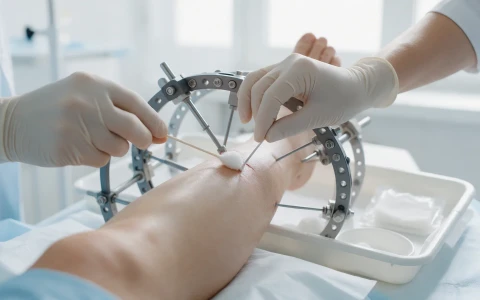
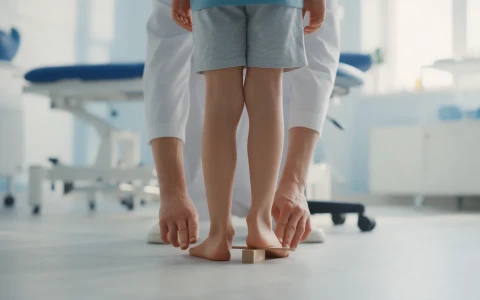
A practical planning guide for people abroad considering limb lengthening in Istanbul: medical assessment, a realistic timeline, documents to bring, communication and follow-up once you are back home.
On this page 8 sections
- Is limb lengthening right for you? Start with a medical assessment
- Before you travel: documents and practical preparation
- How long does limb lengthening surgery in Turkey take? Planning your stay
- Communication and languages
- Daily life in Istanbul during treatment
- Returning home and follow-up
- When should you contact a doctor?
- Key points
Limb lengthening surgery in Turkey is a treatment journey of many months rather than a short trip abroad. If you are considering it in Istanbul, planning matters as much as the operation itself: a thorough medical assessment before you travel, a realistic timeline for the lengthening and consolidation phases, a clear physiotherapy plan, and an agreed arrangement for follow-up once you return home. Whether lengthening is appropriate for you, by how much and with which method can only be decided after examination and imaging, and results vary from person to person.
This guide is written for people who live outside Turkey, including Turkish citizens living abroad, and focuses on practical planning. It is not a substitute for a medical consultation. For background on the procedures themselves, see our limb lengthening surgery page.
Is limb lengthening right for you? Start with a medical assessment
Limb lengthening falls into two broad groups: medical lengthening, for a leg length difference, congenital conditions, shortening after a fracture or skeletal dysplasias such as achondroplasia; and cosmetic (stature) lengthening in healthy adults. The principles of medical lengthening are explained on our medical limb lengthening and leg length discrepancy page.
The assessment looks at your general health, bone quality, leg alignment and joints, whether your growth plates have closed, any existing deformity, smoking and your expectations. Smoking has a marked negative effect on bone healing, and stopping before treatment is strongly advised. The amount of lengthening is limited by what the muscles, nerves, blood vessels and joints can tolerate, and it is decided individually; more is not necessarily safer. The length of treatment, a period of relying on others and time away from work and family also call for psychological preparation.
Questions to ask before you decide
- Who will perform the operation, and who will look after me day to day?
- Which method is proposed for me, and why?
- What amount of lengthening is realistic in my case, and what are the main risks?
- How long will I need to stay in Istanbul, and what happens if the timeline changes?
- How will physiotherapy be organised during my stay?
- How will follow-up work once I am home, and whom do I contact if something goes wrong?
- Which documents will I receive, and in which language?
Before you travel: documents and practical preparation
Medical records to prepare
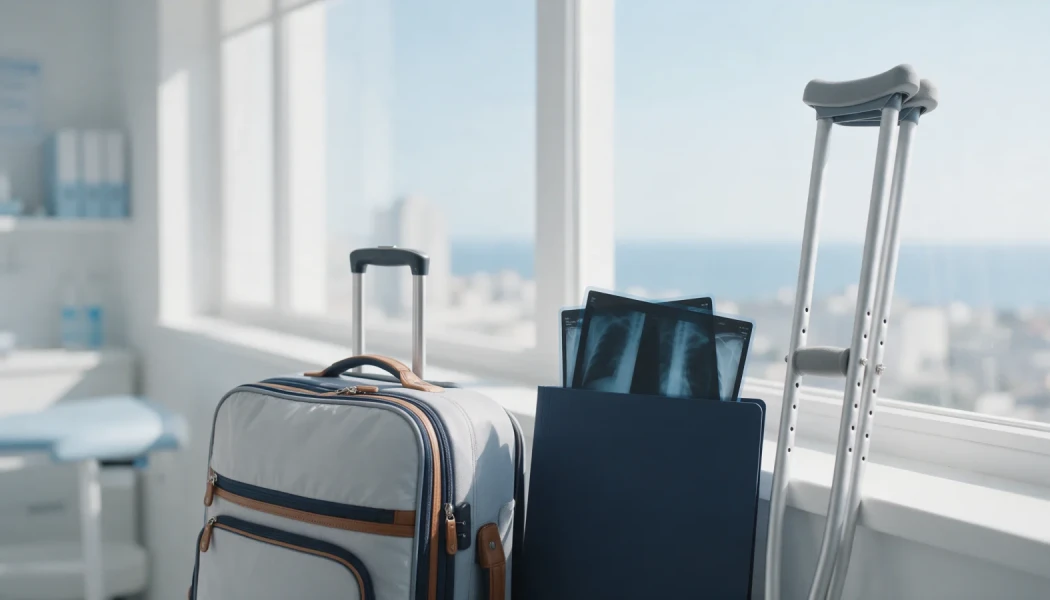
- Standing full-length leg X-rays, ideally with a calibration marker, plus any previous X-rays, CT or MRI scans as digital files
- Operation notes, discharge summaries and implant details if you have had orthopaedic surgery before
- A short summary of your medical history, regular medicines and allergies
- Recent blood test results, if available, and any history of bleeding or clotting problems in you or your family
- Height and leg length measurements taken by your local doctor
Documents in English, French or Turkish can usually be reviewed directly; for other languages, ask in advance whether a translation is needed. Bring the originals with you and keep digital copies somewhere you can always access them.
Travel and accommodation
Depending on your nationality, the length of stay allowed on a visa or visa exemption may be shorter than your treatment plan. Check the current rules with official Turkish consular sources and, if needed, find out in good time which documents are required for a longer stay. Ask your travel insurer whether your policy covers planned medical treatment abroad, possible complications and an unplanned extension of your stay; many standard policies do not cover planned treatment. A flexible return ticket makes it easier to adapt if the plan changes.
How long does limb lengthening surgery in Turkey take? Planning your stay
For most patients, the key planning question is not the date of the operation but the length of the lengthening phase:
| Phase | What happens | Planning considerations |
|---|---|---|
| Preliminary review | Records reviewed, consultation, individual plan | Takes place before you travel |
| Pre-operative assessment | Examination, imaging, blood tests, anaesthetic review | You may need to arrive a few days before surgery |
| Surgery and hospital stay | Operation, pain control, starting to move and physiotherapy | Usually a few days; varies between individuals |
| Latency period | A short pause before lengthening begins | Usually a few days |
| Distraction (lengthening) phase | About 1 mm a day in small increments, roughly 1 cm every 10 days | The rate is adjusted at regular reviews with X-rays; daily physiotherapy is needed |
| Consolidation phase | The new bone hardens | Usually considerably longer than the lengthening phase; part of the follow-up may be arranged at home |
| Frame or nail removal | External fixators come off once consolidation is complete; internal nails are often removed at a later date | May need a separate trip; timing varies |
Because the rate of lengthening is adjusted according to how the new bone and soft tissues respond, many lengthening programmes ask patients to stay near the treating team throughout the distraction phase and often for a period afterwards. Ask for a written, individual timeline, and build some flexibility into your flights and accommodation. Our step-by-step recovery guide describes each phase in more detail.
Communication and languages
Prof. Dr. Halil İbrahim Balcı consults in Turkish, English and French. Ask beforehand how you will communicate with nurses, physiotherapists and other members of the team, and whether interpreting support is available for other languages. Agree on how to send questions during your stay and after you return, and whom to contact out of hours. Written instructions in a language you read comfortably, covering pin care, use of the external device that lengthens an internal nail and your exercise programme, reduce the risk of mistakes.
Daily life in Istanbul during treatment
- Accommodation: choose somewhere close to the treatment centre, with a lift, step-free access and a walk-in shower, where you can move around easily with a walking frame or wheelchair.
- A companion: having a relative or friend with you, especially in the first weeks, makes daily tasks and getting to appointments much easier.
- Physiotherapy: during lengthening, physiotherapy is often daily or several times a week, so allow for travel time across the city. Our physiotherapy guide after limb lengthening explains why it matters so much.
- Device and pin care: if you have an external fixator you will be taught pin care; if you have an internal lengthening nail you will be shown how to use the external device, and the amount of lengthening is checked at your reviews.
- General health: a balanced diet, enough sleep and not smoking all support healing; pain relief and medicines are planned by the treating team.
Returning home and follow-up
The flight home
Agree the timing of your flight with the treating team. Long-haul flights after lower limb surgery can increase the risk of blood clots in the leg, so follow the team's advice on prevention, move your ankles regularly during the flight and stay well hydrated. Ask your airline for wheelchair assistance and suitable seating; some airlines ask passengers who have had recent surgery, or who have an external fixator, for a fitness-to-fly letter. Metal implants can set off airport security scanners, so carry a medical letter describing your implant.
Follow-up in your home country
Before you leave, agree a written follow-up plan covering the X-ray schedule, which views are needed, how to send images securely and whether video reviews are possible. Finding a local orthopaedic surgeon and physiotherapist who are willing to be involved helps the consolidation phase to be monitored safely. Discuss in advance where and when any implant removal will take place.
Documents to take home
- Operation note and discharge summary
- Implant details, such as type, size and serial number
- Digital copies of your pre- and post-operative X-rays
- Your physiotherapy programme and medication list
- The follow-up plan and the treating team's contact details
When should you contact a doctor?
Whether you are still in Istanbul or back home, tell your treating team straight away if you notice any of the following; for emergency symptoms, go first to the nearest emergency department:
- chest pain or sudden breathlessness (emergency)
- pain, swelling or redness in the calf
- fever, or increasing redness, discharge or an unpleasant smell around the pins
- new numbness, tingling or weakness in the leg or foot
- a sudden, marked increase in pain, or being unable to move your toes or ankle
- a rapid loss of knee or ankle movement, or a new bend in the leg
- a loose frame or a problem with the lengthening device
Prof. Dr. Halil İbrahim Balcı spent time at the Paley Institute in the United States as a research fellow in 2014 and as an observer in 2019, and is a member of the Limb Lengthening and Reconstruction Society (LLRS).
Key points
- Limb lengthening in Istanbul is a process of months; plan around the lengthening and consolidation phases rather than the operation date.
- Suitability, the amount of lengthening and the method are decided only after examination and imaging.
- Prepare your X-rays, operation notes, medication and allergy information before you travel.
- Agree the language of communication, written instructions and the follow-up plan for home in advance.
- Contact the team without delay if warning signs of a clot, infection or nerve problem appear.
Frequently Asked Questions
It depends on the method, the planned amount of lengthening and how your body responds. Because lengthening proceeds at about 1 mm a day and the rate is adjusted at reviews, many programmes ask you to stay near the treating team throughout the lengthening phase and for a period afterwards. Ask for a written, individual timeline and keep your return plans flexible in case the schedule needs to change.
In many cases, part of the consolidation follow-up can be arranged at home, with X-rays taken locally and shared with the treating team, supported by a local orthopaedic surgeon and physiotherapist. Some reviews, and the implant removal operation, may still need to take place in Istanbul. This arrangement should be agreed in writing before you leave, including how images will be sent.
Many patients would like their X-rays and reports reviewed before they set off. You can ask at the appointment stage how records should be shared and how an initial consultation can be arranged. A preliminary review can give a general view, but the definitive decision on suitability, method and the amount of lengthening is made only after an in-person examination and any imaging needed.
Prof. Dr. Halil İbrahim Balcı consults in Turkish, English and French. It is worth asking beforehand how you will communicate with other members of the team and whether interpreting support is available for other languages. Receiving your care and exercise instructions in writing, in a language you understand well, is particularly important during the lengthening phase.
The timing of your flight should be agreed with the treating team. Long flights after leg surgery can increase the risk of blood clots, so it is important to follow the team's advice on prevention, move your ankles during the flight and drink enough fluids. Wheelchair assistance, suitable seating and, if required, a fitness-to-fly letter should be arranged in advance.
This article is for general information only and does not replace a medical examination, diagnosis or treatment. Treatment options and outcomes vary from person to person.
Related treatment area Leg Length Discrepancy and Medical Limb Lengthening