A practical guide for anyone living with an external fixator: step-by-step pin-site care, warning signs of infection, and tips for bathing, sleeping, dressing and getting around.
On this page 8 sections
The most important part of living with an external fixator is keeping the points where the pins and wires pass through the skin clean and healthy; regular external fixator pin care helps to reduce the risk of pin-site infection. A few practical adjustments to bathing, sleeping, dressing and getting around can also make the weeks and months in a frame noticeably easier.
This is a general guide for patients and families living with a circular Ilizarov-type frame or a monolateral (rail) fixator. Every centre has its own care protocol, and the one that applies to you is the protocol recommended by your surgical team.
What is an external fixator and why do pin sites matter?
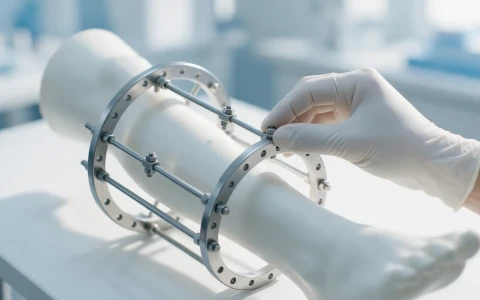
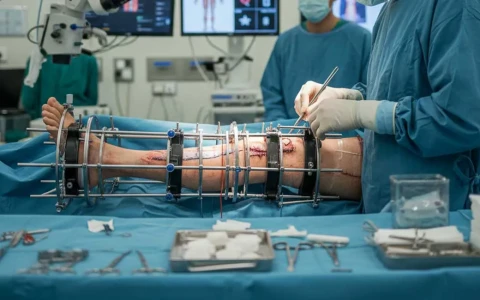
An external fixator is a metal frame that holds the bone from the outside by means of pins and tensioned wires that pass through the skin into the bone. It is used to treat fractures, nonunion and deformities, for bone lengthening and in the management of bone infection. You can read more about where the technique is used on our page about Ilizarov and limb reconstruction surgery.
Every point where a pin crosses the skin, the pin site, is a small opening between the body and the outside world. Skin moving around the pin, sweat and dirt can irritate these sites and make infection more likely. Pin-site infection is a common problem during external fixator treatment, and when it is spotted early it can often be controlled with simple measures. Prof. Dr. Halil İbrahim Balcı is a co-editor of an international Springer textbook on external fixator techniques based on Ilizarov principles.
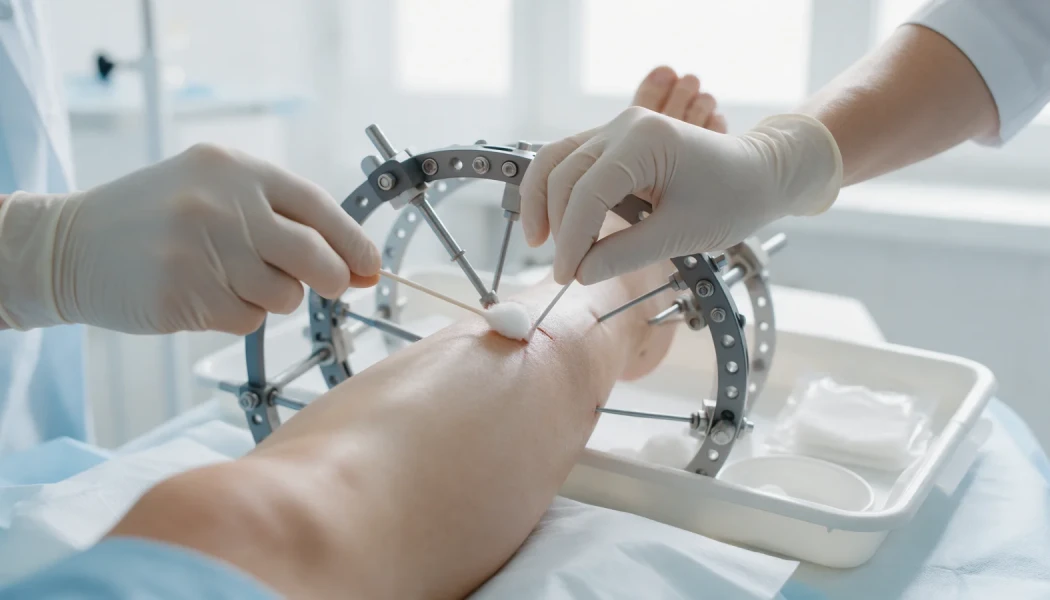
External fixator pin care, step by step
The steps below reflect a general approach used in many centres. The cleaning solution, type of dressing and how often care is done (daily or weekly) are decided by your team:
- Wash your hands thoroughly with soap and water; wear disposable gloves if your team recommends them.
- Look at each pin site for redness, swelling, discharge or any movement of the pin.
- Use a separate sterile gauze swab or cotton bud for each pin. With the solution your team recommends, wipe in one direction, from the point where the pin leaves the skin outwards.
- Leave crusts in place or remove them gently, according to your team's advice; protocols differ on this.
- Dry the pin site and the surrounding skin thoroughly.
- If advised, place a clean gauze or foam dressing around the pin. Gentle compression reduces skin movement around the pin.
- Do not use creams, powders, ointments or cologne unless they have been recommended.
What is usually normal and what to report
| Usually considered normal | Contact your team |
|---|---|
| Slight blood-stained or clear, thin discharge in the first days | Thick, yellow-green or foul-smelling discharge |
| Limited, mild pinkness right around the pin | Redness spreading around the pin, with warmth and swelling |
| A mild pulling feeling on movement | Increasing, throbbing pain around the pin |
| Thin, dry crusting | A pin that moves, clicks or newly hurts when you put weight on it |
Warning signs of pin-site infection
Pin-site infection usually starts on the surface. Contact your team if you notice any of the following:
- redness, swelling and warmth spreading around a pin;
- discharge that becomes thicker, cloudy or smelly;
- pain around a pin that keeps getting worse;
- a pin that feels loose, or new pain at that spot when you walk or put weight on the leg;
- a temperature of 38°C or above, shivering or feeling generally unwell.
In the early stages your team will usually increase the frequency of pin care and, if needed, plan medical treatment. Do not start leftover medicines from a previous illness on your own; the right treatment is decided once your team has assessed the pin site. Because untreated deep infection can spread to the bone, reporting problems early matters.
Bathing and personal hygiene with a fixator
Your team will tell you when you can shower; most allow it once the surgical wounds have sealed. General advice includes:
- Use clean running water and a mild soap. Some teams suggest washing the pins in the shower, while others prefer the frame to be covered with a plastic sleeve.
- After showering, dry the frame and pin sites with a clean towel and then carry out your pin care.
- Use a shower chair, a non-slip mat, a hand-held shower head and grab rails to prevent slips.
- Until the frame is removed and the wounds have closed, avoid sitting in a bath and avoid swimming pools, the sea, lakes, hot tubs, Turkish baths and saunas.
Sweating increases in summer, so take extra care with skin hygiene. Metal parts can heat up in the sun; do not leave the frame in direct sunlight for long periods, and do not apply sunscreen to the pin sites.
Sleeping and resting
Finding a comfortable position in the first nights with a frame can take time. These tips may help:
- Raise the operated leg on pillows slightly above the level of your heart to reduce swelling.
- Protect your other leg by placing a soft pillow between your legs or around the frame.
- A purpose-made frame cover or a clean pillowcase stops the frame catching on the bedding.
- If night pain is disturbing your sleep, mention it at your next review, and take painkillers only as advised.
Clothing, getting around and daily routine
Clothes and footwear
Wide-legged trousers, shorts, skirts and tracksuit bottoms make dressing easier. Trousers with the side seam opened and fitted with Velcro or press studs slip easily over the frame. If the frame extends under the foot, a special sole may be used, and if your team suggests it, raising the sole of your other shoe can make walking feel more balanced.
Mobility and physiotherapy
Your team will tell you how much weight you can put through the operated leg. With crutches or a walking frame, the general rule on stairs is to lead with the good leg going up and with the operated leg coming down. Moving your knee and ankle regularly is important to prevent joint stiffness, particularly during lengthening; our physiotherapy guide explains the exercises in more detail. At home, removing loose rugs, using a night light and keeping everyday items within easy reach all reduce the risk of falls.
If you are undergoing limb lengthening surgery, make the adjustments to the frame exactly as your team has shown you and on the agreed schedule, and keep a record of each one. Never loosen or tighten any screw, nut or connecting part unless your team has told you to.
Diet, smoking and wellbeing
A balanced diet with enough protein, calcium and vitamin D supports bone healing. Smoking slows bone healing and increases the risk of infection, so stopping during treatment is important. Feeling tired or overwhelmed during a long period in a frame is normal. Planning your return to school or work, travel and social life with your team makes the process easier. For advice on the period after the frame, read our article on returning to daily life after Ilizarov lengthening.
Tips for parents of children in a frame
For children, pin care is usually carried out by parents. Doing it at the same time each day in a calm setting, and giving the child small age-appropriate jobs such as getting the gauze ready, makes the routine easier. To avoid knocks to the frame during play, quieter activities such as board games, drawing and reading can take the place of running, climbing and trampolining. Letting teachers know about the frame helps the school plan safe seating and break times.
When should you contact your team straight away?
The following need prompt assessment:
- numbness, tingling, coldness or a blue or pale colour in the fingers or toes, or being unable to move them;
- severe pain that keeps getting worse despite painkillers;
- a broken wire, a loose or broken ring or connecting part, or a pin coming out;
- signs of pin-site infection together with fever and shivering;
- new swelling, pain and redness in the calf.
Sudden breathlessness or chest pain can be a sign of a blood clot; in that case call the emergency services (112 in Turkey) without delay.
Key points
- Regular pin-site care is the foundation of reducing infection risk with an external fixator, following your team's protocol.
- Spreading redness, thick or smelly discharge, increasing pain, a loose pin or fever should be reported to your team.
- Showering is usually possible once wounds have sealed; pools, the sea, Turkish baths and baths are avoided until the frame comes off.
- Raising the leg, suitable clothing and simple changes at home make daily life easier.
- Numbness, colour change, severe pain or damage to the frame need prompt assessment.
Frequently Asked Questions
The frequency varies between centres. Some teams recommend cleaning the pin sites every day, while others suggest care once or twice a week for pin sites that are healed and dry. Care may be needed more often when discharge increases, during hot weather with heavy sweating, or if infection is suspected. The sensible approach is to follow the written protocol your surgical team has given you and to check with them before changing it.
This is generally not recommended. Water in the sea, pools, lakes and hot tubs can carry germs to the pin sites and increase the risk of infection, and skin that stays wet for a long time becomes more easily irritated. Most teams therefore advise staying out of the water until the frame has been removed and the pin wounds have fully closed. In summer, short showers with clean running water and resting in the shade are safer ways to cool down.
In the first days after surgery, a small amount of blood-stained or clear, thin discharge from the pin sites is common and usually lessens over time. A little clear discharge can also appear when you become more active. However, discharge that turns thick, yellow-green or smelly, or that comes with spreading redness and pain, may be a sign of infection. In that case you should contact your team.
Many patients return to school or work with some adjustments once the initial recovery period is over. Timing depends on where the frame is, whether you are allowed to put weight on the leg, pain, travel arrangements and the layout of the school or workplace. Lift access, suitable seating and the chance to raise the leg during breaks make daily life easier. It is a good idea to plan the timing of your return with your team.
Always check with your team before travelling. Sitting still for long periods can increase leg swelling and the risk of blood clots, so your team may advise on the timing of the flight and on preventive measures. Requesting a seat where you can stretch your leg out and doing ankle exercises during the journey both help. Because a metal frame may set off security scanners, carrying a medical letter that explains your treatment can make airport checks easier.
This article is for general information only and does not replace a medical examination, diagnosis or treatment. Treatment options and outcomes vary from person to person.
Related treatment area Limb Lengthening Surgery: Methods, Process, Risks and Suitability