Osgood-Schlatter disease causes pain and a bony lump below the kneecap in active teenagers going through a growth spurt. Its causes, symptoms, treatment and how to return to sport.
On this page 8 sections
Osgood-Schlatter disease is a common, benign and usually self-limiting condition that causes pain, tenderness and swelling over the bony bump just below the kneecap in active, growing children and teenagers. The pain is worse with running, jumping, kneeling and climbing stairs, and eases with rest. For most young people, adjusting activity levels, using ice and following a stretching and strengthening programme are enough to keep symptoms under control, and the pain generally settles once the growth plate closes.
It is particularly common in adolescents who play sports involving running and jumping, such as football, basketball, volleyball, athletics and dance, and it often flares up during summer camps and periods of intensive training. This article explains why Osgood-Schlatter disease develops, how it is distinguished from other causes of knee pain, what treatment involves and how to plan a return to sport.
What is Osgood-Schlatter disease and why does it happen?
The large muscle group at the front of the thigh (the quadriceps) attaches, through the tendon that runs over the kneecap, to a bony prominence at the top of the shin bone called the tibial tuberosity. In growing children this area sits on a patch of growth cartilage (an apophysis) that has not yet turned into bone, and it is less able to withstand pulling forces than mature bone.
Every sprint, jump and sudden stop makes the quadriceps tug on this growth area. Over time this leads to small strains, tenderness and inflammation, and as the body repairs the area it may lay down extra bone, producing a firm lump below the knee. During growth spurts the bones lengthen faster than the muscles and tendons, which become relatively tight and increase the pull. Doctors sometimes call this a "traction apophysitis".
Who gets it?
Osgood-Schlatter disease usually appears during the adolescent growth spurt, at around 10 to 13 years in girls and 12 to 15 years in boys. Some children have it in both knees. The main factors that increase the risk are:
- sports involving running, jumping and quick changes of direction (football, basketball, volleyball, athletics, gymnastics, dance)
- a period of rapid growth
- tightness in the front and back thigh muscles
- a sudden increase in training time or intensity, such as summer camps or busy tournament periods
- too little rest, or playing the same sport all year round without a break
What are the symptoms?
- pain over the bony bump a few centimetres below the kneecap
- tenderness when the area is pressed, with visible swelling or a hard lump
- pain that increases with running, jumping, squatting, kneeling and climbing stairs, and eases with rest
- symptoms that come and go over weeks or months and flare up during heavy training
Osgood-Schlatter disease does not usually cause fever, swelling of the whole knee, redness or locking. If any of these are present, another cause should be looked for.
How is it diagnosed, and how does it differ from other knee pain?
The diagnosis is usually made from the history and a physical examination. An X-ray is requested to rule out other causes if the pain is on one side only, persists at rest or at night, or the findings are not typical; ultrasound or MRI is needed only in selected cases. It is worth remembering that knee pain in teenagers has many possible causes, and knee pain does not always mean a meniscus tear.
| Condition | Where it hurts | Typical age | Distinguishing feature |
|---|---|---|---|
| Osgood-Schlatter disease | Bony bump below the kneecap | 10–15 years | Activity-related pain, prominent lump |
| Sinding-Larsen-Johansson syndrome | Lower tip of the kneecap | 10–13 years | Same pulling mechanism, pain slightly higher up |
| Patellar tendinopathy (jumper's knee) | Tendon between kneecap and shin bone | Late teens and young adults | More common after the growth plates have closed |
| Patellofemoral pain | Around and behind the kneecap | Adolescence | Worse after sitting for long periods and going downstairs |
| Pain referred from the hip (e.g. slipped capital femoral epiphysis) | Vague pain around the knee and thigh | 10–16 years | Limp, reduced hip movement |
The last row matters: some hip conditions in adolescents are felt as pain in the knee. A child with knee pain and a limp should always have the hip examined as well.
Osgood-Schlatter treatment: what helps?
The aims of treatment are to relieve pain and keep the young person active until growth is complete. Complete rest is rarely necessary; what matters is managing load sensibly.
- Activity modification: temporarily cut back on the jumping and sprinting that clearly aggravate the pain, while continuing activities that do not hurt, such as swimming.
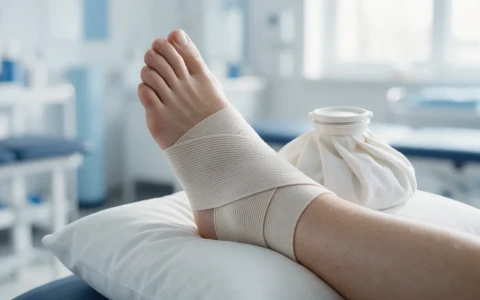
- Ice: after training, an ice pack wrapped in a towel can be applied to the sore area for 15 to 20 minutes.
- Stretching and strengthening: regular stretching of the front and back thigh muscles, together with hip and core strengthening, helps reduce tension on the tendon. A programme set by a physiotherapist is useful.
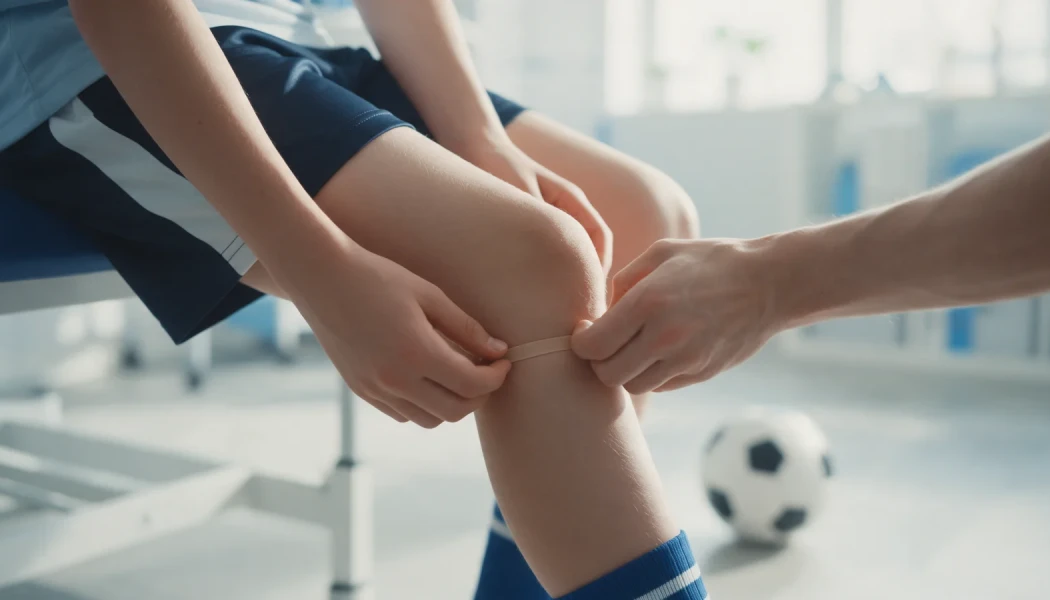
- Supports: a thin strap worn just below the kneecap (an infrapatellar strap) eases pain during activity for some children, and knee pads protect the area in sports that involve kneeling.
- Pain relief: ask your doctor which pain relief, if any, is appropriate. Steroid injections into this area are generally avoided.
When can my child return to sport?
Rather than a fixed date, return to sport follows a plan guided by pain. A practical approach is to score pain from 0 to 10: if pain stays mild during activity and is back to its usual level by the next morning, training can be increased gradually. If pain rises noticeably or is still there the next day, the load is reduced for a while. Warming up properly, increasing intensity in small weekly steps and building in rest days are all part of the plan.
Can it be prevented?
Because the growth spurt itself cannot be stopped, Osgood-Schlatter disease cannot always be prevented, but there are ways to lower the risk and reduce the severity of symptoms. Coaches can ease the training load slightly during periods of rapid growth, children can be encouraged to try a range of sports rather than specialising in one all year round, and breaks between seasons help the body recover. Regular stretching, hip and core strengthening, suitable sports shoes and training on surfaces that are not too hard all reduce the load on the front of the knee. Creating an atmosphere in which a child feels able to mention pain rather than hide it also helps the problem to be recognised early.
Is surgery ever needed for Osgood-Schlatter disease?
Surgery is very rarely needed in growing children. Symptoms usually settle within 12 to 24 months as the growth plate closes. The lump below the knee may remain noticeable for life but usually does not hurt, although some people continue to find kneeling uncomfortable.
If a small separate fragment of bone within the tendon keeps causing pain after growth has finished, removing it surgically may be considered in suitable patients. Occasionally, the bony prominence can be pulled away during a jump or landing (a tibial tubercle avulsion fracture), which needs urgent assessment. Injuries of this kind fall within the field of sports surgery.
When should you see a doctor?
Your child should be examined by an orthopaedic specialist if they have any of the following:
- pain that wakes them at night or continues at rest
- swelling of the whole knee, redness, warmth or fever
- a limp or difficulty putting weight on the leg
- sudden severe pain during a jump or landing, with difficulty straightening the knee
- the knee locking or giving way
- pain in the hip, groin or thigh, or stiffness of the hip
- symptoms that do not improve after a few weeks of modified activity
Assessment should take into account both growth-related problems and sports injuries, which is why experience in paediatric orthopaedics is valuable in reaching the right diagnosis. For other knee problems in young athletes, see our article on common knee injuries in athletes.
Key points
- Osgood-Schlatter disease is a strain of the growth area below the kneecap caused by repeated pulling of the thigh muscles in active, growing children.
- Pain is worse with running, jumping and kneeling; diagnosis is usually clinical, with an X-ray when needed.
- Treatment involves activity modification, ice, stretching and strengthening, and supports where helpful.
- Symptoms usually ease as the growth plate closes, and surgery is rarely required.
- Night pain, a limp, fever or sudden severe pain suggest another problem and need examination.
Frequently Asked Questions
In most children, symptoms come and go for around 12 to 24 months and ease considerably as the growth plate begins to close. During this time pain may flare up with heavy training and settle during quieter periods. The duration varies from person to person, depending on how quickly the child is growing, how intensive their sport is and how well they follow their exercise programme. Pain that lasts longer than expected should be re-examined to rule out other causes.
Many children can carry on playing, with an adjusted training load, as long as pain stays at a manageable level. Temporarily reducing jumping and sprinting drills, using ice after training and stretching regularly all help. If pain causes a limp, wakes the child at night or is still severe the following day, it is time to take a break and have the knee examined. The right level of activity is agreed with the doctor and physiotherapist for each child.
Although the pain and tenderness fade over time, the hard lump below the knee often remains. It is formed by extra bone laid down while the growth area heals and usually causes no health problems. Some people find kneeling for long periods uncomfortable. If the lump is still clearly painful after growth has finished, examination and imaging can show whether a separate fragment of bone is present and whether any further treatment is worth considering.
A thin strap worn below the kneecap can spread the pulling force of the tendon a little and, in some children, ease pain during activity. In sports that involve kneeling, a knee pad protects the tender area from knocks. These supports do not solve the problem on their own, however; they are most useful alongside stretching, strengthening and sensible management of training load. The most suitable type of support can be recommended after examination.
Generally, no. Osgood-Schlatter disease affects a small growth area where the tendon attaches, not the main growth plates responsible for the lengthening of the long bones. It is therefore not expected to affect a child's height or leg length. The rare avulsion fractures of the tibial tuberosity are a separate matter, and whether they involve the growth plate is assessed through orthopaedic examination and imaging.
This article is for general information only and does not replace a medical examination, diagnosis or treatment. Treatment options and outcomes vary from person to person.
Related treatment area Paediatric Orthopaedics: Common Bone and Joint Problems in Children