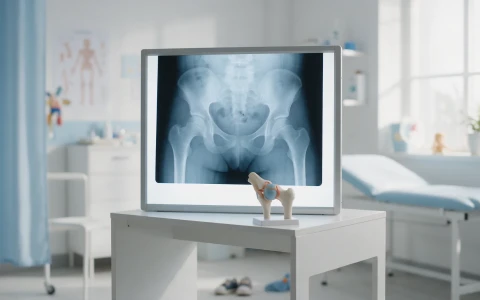
When is infant hip ultrasound done for developmental dysplasia of the hip, how are the results read, how does the Pavlik harness work and how do you care for a baby wearing one?

On this page 8 sections
- What is developmental dysplasia of the hip and who is at higher risk?
- When and how is infant hip ultrasound done?
- How are ultrasound results read? The Graf classification
- What is a Pavlik harness and how does it work?
- Daily life with a Pavlik harness: practical tips for parents
- Why is follow-up important after the harness?
- When should you see a doctor?
- Key points
A Pavlik harness is a soft orthosis used for babies with developmental dysplasia of the hip (DDH). It holds the hips bent and gently turned outwards, helping the top of the thighbone (the femoral head) to settle into the hip socket and the socket to develop normally. Hip dysplasia is usually picked up through examination and hip ultrasound in early infancy, and many babies diagnosed early can be treated with a harness of this kind without surgery. How long the harness is worn, and how often the baby is checked, depends on the examination and ultrasound findings.
This guide explains, from a parent's point of view, when and why hip ultrasound is done, what the terms in the report mean and how to manage everyday life while your baby wears a Pavlik harness. Treatment of hip dislocation in older children is a separate topic.
What is developmental dysplasia of the hip and who is at higher risk?
Developmental dysplasia of the hip is a problem of hip development in which the socket (acetabulum) is shallow or the femoral head does not sit fully within it. It covers a wide spectrum, from mild immaturity to a hip that is completely out of joint. Because it does not cause pain in infancy, parents usually notice nothing unusual, which is why examination and ultrasound screening matter.
The risk is higher in babies with:
- A breech position in the later weeks of pregnancy
- A parent or sibling who had hip dysplasia
- Female sex, and first-born babies
- Reduced fluid around the baby in the womb
- A twisted neck (torticollis) or certain foot shape differences
- Tight swaddling with the legs straight and pressed together
However, many babies with hip dysplasia have none of these risk factors, so it is important to follow the examination and screening programme recommended by your doctor even if your baby has no risk factors.
When and how is infant hip ultrasound done?
In a newborn, the femoral head is still made mostly of cartilage, so it does not show clearly on an X-ray. Ultrasound, by contrast, shows the cartilage, the shape of the socket and the position of the femoral head without radiation, which is why it is used to assess the hips in early infancy.
Hip ultrasound is usually requested between 4 and 6 weeks of age. Practice varies between countries: in Turkey hip ultrasound is widely performed as part of routine baby check-ups, whereas elsewhere it may be offered only to babies with risk factors. Natural looseness of the hip in the first weeks often settles by itself, so a scan done too early can lead to unnecessary treatment. If the examination shows a hip that can be moved out of the socket, however, the doctor may request ultrasound sooner. Ultrasound remains useful until around 4-6 months; after that the femoral head begins to turn into bone and an X-ray is preferred.
During the scan the baby lies on their side, images of each hip are taken within a few minutes and both hips are assessed separately. A baby who has been fed and is settled makes the scan easier.
How are ultrasound results read? The Graf classification
The method most often used for infant hip ultrasound is the Graf method. It measures the alpha angle, which reflects the bony roof of the socket, and the beta angle, which reflects its cartilage roof. Together with the baby's age, these measurements place the hip into a type.
| Graf type | What it broadly means | General approach |
|---|---|---|
| Type I | Mature, normally developing hip | No treatment needed |
| Type IIa | In a baby under three months, a hip that is not yet fully mature for age | Usually a repeat scan after a few weeks |
| Type IIb | Delayed development in a baby over three months | Treatment is usually advised |
| Types IIc and D | Clearly shallow socket; in type D the femoral head has begun to move off centre | Treatment is advised |
| Types III and IV | The femoral head lies outside the socket (dislocated hip) | Treatment is needed; in some babies methods other than a harness are considered |
The report gives a separate type for the right and left hips; a result such as "right hip type I, left hip type IIa" means the two hips are at different stages of development, and follow-up is planned accordingly. This table is only a general guide. Treatment decisions are based not only on the angles but also on the examination, the baby's age and changes on follow-up scans.
What is a Pavlik harness and how does it work?
A Pavlik harness consists of a chest strap, shoulder straps and soft stirrups that hold the baby's legs. The straps are adjusted so that the hips are bent to roughly a right angle and allowed to fall outwards within a safe range. The harness does not hold the legs rigidly; the baby can still kick within limits, and this movement helps to guide the femoral head into the socket and deepen it.
The Pavlik harness is generally used in babies under six months. The first check is usually soon after it is fitted, and ultrasound is used to confirm that the femoral head is moving into the socket. If the hip does not settle as expected within a few weeks, the doctor may change the plan; options include a firmer brace, or a closed reduction under anaesthetic followed by a cast.
How long the harness is worn full time varies from baby to baby. It is typically worn full time for several weeks to a few months and then weaned gradually as the hip develops. Because the strap angles are set carefully to protect the blood supply to the femoral head and avoid pressure on nerves, they should be changed only by the treating team.
Daily life with a Pavlik harness: practical tips for parents
It is natural for both baby and family to need a few days to adjust, and most babies get used to the harness quickly. The tips below are general; always follow your team's instructions on matters such as whether the harness may be removed:
- Strap settings: do not change the position or length of the straps yourself. The team may mark the straps so you can check that nothing has slipped.
- Nappy changes: change nappies without removing the harness. Lift your baby by supporting the bottom with one hand; never pull the legs up by the ankles. Place the nappy so that it sits underneath the straps.
- Dressing: put a thin cotton vest with soft seams under the harness, and knee-length socks under the stirrups to protect the skin. Choose loose clothing on top that does not squeeze the legs together.
- Skin care: check the creases in the groin, behind the knees, at the neck and under the arms every day. Do not apply powder or lotion under the straps.
- Bathing: unless your doctor allows it, do not remove the harness; a sponge bath can be used during this period.
- Sleep: place your baby on their back to sleep, as usual.
- Carrying and feeding: choose positions in which the legs can stay apart. Make sure the legs are not pressed together in a car seat or baby carrier, and ask your team about suitable options.
Why is follow-up important after the harness?
Even when the ultrasound or X-ray looks normal at the end of harness treatment, the hip continues to develop for years. Follow-up X-rays are therefore recommended after infancy, around walking age and at later intervals advised by your doctor. The aim is to detect, in good time, the occasional case in which a shallow socket becomes apparent later, and to plan treatment if it is needed.
For more on late-diagnosed hip dislocation and treatment options in older children, see our articles on what happens if hip dislocation is not diagnosed early and current treatment of hip dislocation in children.
When should you see a doctor?
Have your baby assessed if you notice:
- Clearly uneven thigh or buttock creases, or legs that look different in length
- One leg opening out less than the other during nappy changes
- Risk factors without a hip ultrasound having been done yet
- A limp, favouring one side or a waddling walk once your child starts walking
If your baby is in a harness, contact the treating team promptly if:
- Your baby does not kick one or both legs, or does not straighten the knees
- There are sores, blisters or redness on the skin that does not settle
- A strap breaks or slips, or the harness no longer fits
- Your baby is constantly unsettled in the harness for no obvious reason
Prof. Dr. Halil İbrahim Balcı's clinical interests include paediatric orthopaedics and childhood deformities. In hip dysplasia, the treatment plan is tailored to each baby after reviewing the examination and ultrasound findings with the family.
Key points
- Infant hip ultrasound is usually done at 4-6 weeks and helps detect hip dysplasia early.
- The Graf classification sorts ultrasound results into types; treatment decisions also depend on the examination and the baby's age.
- The Pavlik harness is a soft orthosis that keeps the hips bent and apart, helping the femoral head settle into the socket.
- Strap settings should be changed only by the treating team, and simple rules make nappy changes, dressing and skin care easier.
- Hip development should continue to be monitored with regular check-ups after the harness.
Frequently Asked Questions
Hip ultrasound is most often done between 4 and 6 weeks after birth. Natural looseness in the first weeks often settles on its own, so an earlier scan can be misleading. However, if the examination shows that the hip can be moved out of place, or the doctor feels it is needed, the scan may be requested sooner. Follow the timing advised by the doctor who checks your baby.
In the first phase of treatment the Pavlik harness is usually worn day and night, in other words full time. Whether it can be removed briefly, for example for bathing, is decided by the treating doctor and may differ from baby to baby. As the hip develops, wearing time is reduced gradually at follow-up visits. It is important not to remove the harness or alter its settings on your own.
A correctly adjusted Pavlik harness holds the legs at a set angle without forcing them and still lets the baby move. Some babies are unsettled for the first few days while they get used to it, and most adapt within a few days. If your baby is constantly unsettled for no clear reason, develops skin sores or stops moving the legs, contact the treating team straight away.
Soft clicks heard when a baby's hip is moved usually come from ligaments and soft tissues and do not, on their own, mean hip dysplasia. However, if a click comes with reduced hip movement, uneven skin creases or a difference in leg length, or if the doctor has concerns on examination, an ultrasound is arranged. If you are worried, it is sensible to have your baby examined.
Traditional tight swaddling, with the legs wrapped straight and pressed together, can increase the risk of hip dysplasia. With hip-healthy swaddling, the baby's legs can stay bent at the hips and fall outwards, and the fabric does not restrict movement at the hips and knees. If you swaddle, choose methods that wrap only the upper body or leave plenty of room for the legs.
This article is for general information only and does not replace a medical examination, diagnosis or treatment. Treatment options and outcomes vary from person to person.
Related treatment area Paediatric Orthopaedics: Common Bone and Joint Problems in Children