
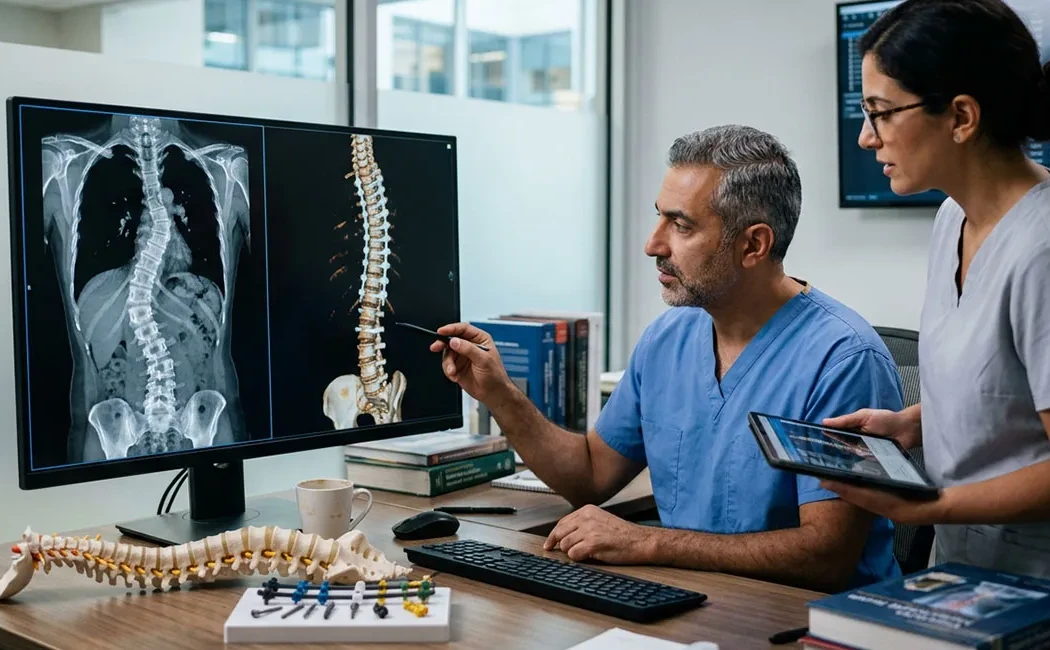
Deformity surgery and correction methods encompass advanced medical approaches used to treat structural abnormalities in the musculoskeletal system. Bone curvatures, shortening, or rotational deformities can cause significant functional loss by disturbing the load distribution across joints, beyond mere cosmetic concerns. Left untreated, these issues may lead to early-onset osteoarthritis and lasting movement restrictions.
This specialized field of orthopedic surgery demands a deep understanding of biomechanical principles and meticulous surgical planning. Treatment ranges from minimally invasive techniques to extensive reconstructive surgeries depending on the deformity’s complexity. A detailed analysis of the patient’s anatomy and a multidisciplinary approach are essential for successful outcomes.
Introduction to Deformity Surgery
Deformity surgery and correction techniques consist of procedures aimed at restoring the normal anatomical alignment of the skeletal system. This surgical discipline addresses a broad range of pathologies, from congenital anomalies to deformities acquired post-trauma. The primary goal is to correct the mechanical axis of the limb, eliminate abnormal joint loading, and restore pain-free, functional mobility.
According to the American Academy of Orthopaedic Surgeons (AAOS), well-planned corrective surgeries significantly improve patients’ quality of life and can delay the need for joint replacement. Even millimeter deviations in the lower extremities, where body weight bearing dynamics are critical, can cause substantial long-term joint damage.
Bone Deformities: Causes and Classification
Bone deformities are classified based on their etiology and geometric features. This classification guides the treatment strategy. Deformities may occur in a single plane or present as complex multiaxial forms.
Congenital and Acquired Deformities
Deformities are divided into congenital (present at birth) and acquired types. Congenital deformities may appear as bone deficiencies, like fibular hemimelia, or developmental dysplasias. Early intervention in these cases is critical for preserving growth potential in children.
Acquired deformities typically result from trauma with improper healing, infections (such as osteomyelitis), metabolic diseases, or tumor resections. Bones that heal in malaligned positions cause malunions, a common source of deformity requiring surgical correction. Treatment may involve malunion surgery. Growth plate injuries in children also represent a significant acquired cause of progressive deformities.
Angular, Rotational, and Length Discrepancies
Deformities can be angular (varus/valgus), rotational (internal/external torsion), or translational (displacement). Limb length discrepancies often accompany these abnormalities. For example, “bow-legged” (genu varum) or “knock-knee” (genu valgum) deformities disrupt the knee’s load distribution.
In complex cases, angular deformities may coexist with rotational misalignments and shortening. Such multiplanar deformities require three-dimensional computed tomography and specialized radiological assessments for accurate analysis.
Diagnostic Process in Deformity Surgery
Accurate diagnosis is the foundation of successful surgical treatment. The diagnostic process begins with a thorough physical examination and detailed patient history. The surgeon evaluates gait pattern, joint range of motion, and neurovascular status. This is followed by imaging studies to fully characterize the deformity.
In addition to standard X-rays, long-leg orthoroentgenograms are considered the gold standard for assessing the mechanical axis and determining the Center of Rotation of Angulation (CORA). Computed tomography (CT) is used to evaluate bone stock and rotational deformities, while magnetic resonance imaging (MRI) provides information about soft tissues, cartilage, and ligament integrity.
Preoperative planning protocols, such as those at the Mayo Clinic, require mathematical assessment of the deformity’s apex, magnitude, and plane to identify the optimal osteotomy level for lower extremity deformity surgery.
Correction Methods: Surgical and Non-Surgical Options
The treatment approach for deformities depends on the patient’s age, severity of the deformity, and symptoms. Not every case necessitates surgery; however, progressive deformities causing significant functional impairment often require operative intervention.
Surgical Methods
Surgical correction usually involves an osteotomy—controlled cutting and realignment of the bone. The corrected bone is stabilized with various fixation devices during healing. Common techniques include:
1. Internal Fixation: Using plates, screws, or intramedullary nails for bone stabilization.
2. External Fixation (Ilizarov and Hexapod Systems): Preferred for complex multiplanar deformities and limb lengthening. Circular fixators allow gradual postoperative adjustments and can be combined with bone lengthening surgery.
3. Combined Techniques: Hybrid methods integrating internal and external fixation advantages.
Recent technological advances include the use of robotic systems and computer-assisted navigation in deformity surgery, enabling millimeter-level precision.
Radiographic images before and after surgery objectively demonstrate treatment success. The example below shows X-rays from a deformity correction case.
Non-Surgical Methods
Conservative treatments may be appropriate for mild deformities or patients at higher surgical risk. Physical therapy, muscle strengthening exercises, and customized orthotics can relieve symptoms. Joint unloading strategies and bracing may be applied prior to joint-preserving surgeries, but their corrective effects are limited when mechanical axis distortion is pronounced.
Pediatric Deformity Surgery
Deformities in children require management with consideration of ongoing growth. Procedures targeting growth plates (physes) can enable gradual self-correction over time through hemiepiphysiodesis—a minimally invasive "guided growth" technique.
Specifically, lower extremity deformities in childhood may directly impact walking development. Complex conditions such as congenital femoral deficiency or fibular hemimelia are addressed by combining reconstructive surgeries and lengthening procedures within congenital deformities and surgical solutions. Timing is a crucial determinant of successful pediatric treatment.
Surgical Procedure and Recovery
Deformity surgery encompasses a comprehensive process from preoperative preparation through rehabilitation. Clear communication between surgeon and patient is vital to set realistic expectations. For prolonged treatments involving fixators or lengthening, psychological preparation for limb lengthening surgery is recognized as part of care.
Postoperative management includes monitoring bone healing (consolidation) and implementing intensive physical therapy to maintain joint mobility. Weight-bearing protocols vary according to the surgery type and implant stability as directed by the surgeon.
Risks, Complications, and Precautions
Like all surgeries, deformity correction carries specific risks such as infection, nerve injury, vascular damage, or anesthesia-related complications. Orthopedic risks include nonunion (failure of bone healing) or incomplete correction, potentially requiring additional nonunion surgery.
Common challenges in limb reconstruction surgery include joint stiffness and pin site infections in external fixator users. Minimizing these risks demands strict adherence to sterilization, smoking cessation, and regular medical follow-up. Scientific literature (PubMed, TOTBİD) shows patient compliance directly affects complication rates.
When performed by experienced specialists under appropriate indications, deformity surgery and correction techniques regain patients’ mobility and improve their quality of life.
The content on this website is intended for general informational purposes only and does not constitute professional medical advice, diagnosis, or treatment. Always consult a qualified healthcare professional with any questions you may have regarding your health. Do not delay seeking medical care or discontinue treatment based on the information provided here. Medical practices may vary from person to person.