
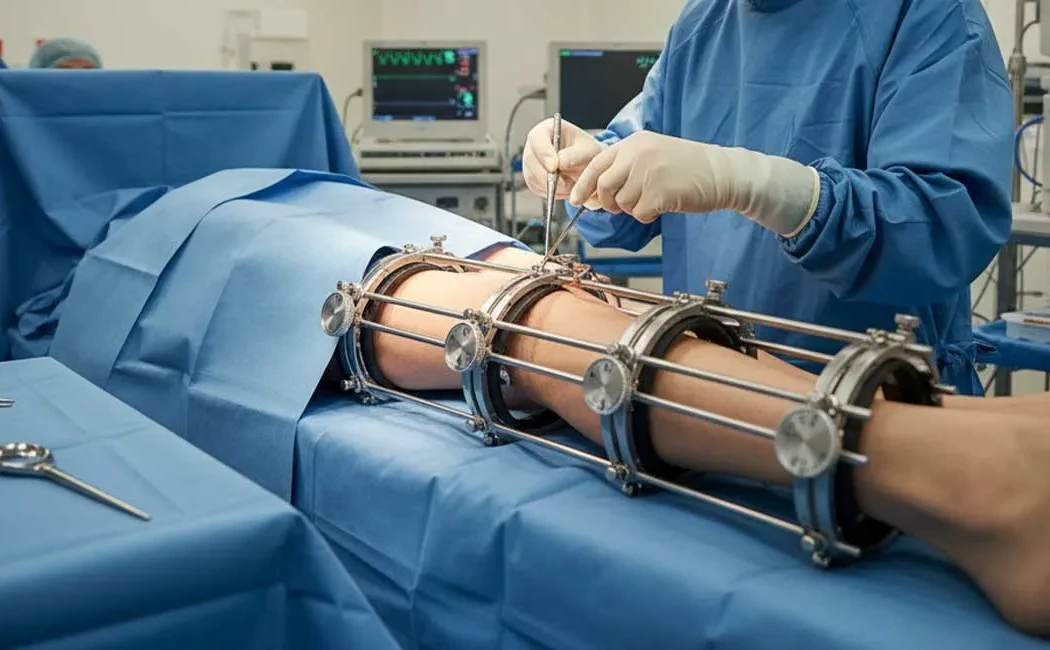
Leg lengthening surgery is a comprehensive treatment involving advanced surgical techniques and a lengthy rehabilitation period, performed for both aesthetic concerns and medical necessities. One of the primary questions patients ask before deciding on this procedure is the cost of leg lengthening surgery. However, the cost cannot be summarized with a fixed figure, as it depends on several factors ranging from the patient’s anatomical structure to the chosen technological method.
According to the regulations of the Turkish Ministry of Health and related legal provisions, sharing explicit pricing information for health services online is not appropriate. Therefore, this article covers the key medical and technical factors that determine leg lengthening surgery costs, outlines the components of the process, and identifies the main cost elements. Our goal is to help patients evaluate the financial aspects of this complex process more consciously.
What is Leg Lengthening Surgery?
Leg lengthening surgery involves surgically cutting the bone (osteotomy) and gradually separating the bone ends by a controlled daily increment (usually about 1 mm per day) with specialized devices. During this separation, new bone tissue called “callus” forms between the bone ends. This process is applied not only to treat medical conditions such as leg length discrepancy and dwarfism (achondroplasia) but also in cosmetic leg lengthening requests.
This surgery requires not only lengthening the bone but also ensuring that muscles, nerves, and blood vessels adapt to the elongation. For more detailed information about the treatment scope, please visit our lower extremity deformity surgery page.
Factors Affecting Leg Lengthening Surgery Costs
The overall cost of leg lengthening surgery covers the extended period from preoperative preparation to final recovery.
Surgical Technique Employed
The primary factor determining cost is the surgical technique applied. Today, various methods such as Ilizarov (circular fixators), Holyfix (monolateral fixators), LON (lengthening over nail), and fully internal magnetic nails (PRECICE, STRYDE) are used. As technology advances, implant costs increase, especially for imported magnetic nail systems, which are significantly affected by foreign exchange rates. For detailed information on different techniques, see bone lengthening surgery details.
Hospital and Clinic Selection
The hospital’s equipment level, intensive care standards, and provided comfort play a crucial role in pricing. Choosing fully equipped hospitals with high sterilization standards to minimize infection risk is critical for patient safety and strongly influences cost.
Surgeon’s Experience and Expertise
Leg lengthening and deformity correction surgery require specialized expertise in orthopedics and traumatology. The surgeon’s academic background, case experience, and international qualifications (such as training at Paley Institute) directly affect treatment success. Procedures managed by experienced teams reduce complication risks and potential additional costs in the long term.
Hospital Stay and Rehabilitation
Postoperative hospital stay varies between 3 to 7 days depending on the method and the patient's condition. However, the major cost element begins after discharge — the rehabilitation process. Regular physical therapy sessions are necessary throughout the bone lengthening period to prevent muscle tightness and maintain joint mobility. These treatments must be accounted for in the budget. For insights into recovery, visit our article on exercise and recovery after leg lengthening surgery.
Additional Expenses and Possible Complications
Beyond the surgery fee, additional costs should be anticipated. These include regular X-ray monitoring, dressing supplies, painkillers and antibiotics, special nutrition plans, and accommodation costs for patients coming from outside the city or abroad. Occasionally, complications like delayed bone healing or infection may require further interventions. For management of such risks, visit nonunion surgery and treatment.
Cost Variations by Technique
Each leg lengthening method has distinct advantages and cost profiles.
- Ilizarov Technique: The oldest and most established method, using external circular fixator rings. It tends to be less expensive than other techniques but is less comfortable. For detailed process information, see Ilizarov technique for leg lengthening.
- Combined Method (LON): Utilizes both external fixator and internal nail systems. Frequently preferred as it reduces the duration the external device is worn. Cost falls in a mid-range level.
- Motorized Nail (Precice/Stryde): Fully internal nails controlled externally to lengthen the bone without any external frame, enhancing comfort and cosmetic outcome. Due to advanced technology and imported implants, this is the most expensive option. Read more at new technologies in extremity lengthening surgery.
These methods are applicable not only to the legs but also to arm lengthening procedures. Similar principles affect upper extremity lengthening and deformity correction, leading to different costs based on the surgical plan.
Insurance Coverage and Legal Status
A common patient inquiry is whether insurance covers this surgery. In general, cosmetic leg lengthening procedures (performed for aesthetic reasons) are not covered by state insurance (SGK) or private health insurance; they are classified as elective cosmetic surgery, and all costs must be borne by the patient.
However, in medically necessary cases such as leg length discrepancies due to trauma, bone infection-related losses, congenital anomalies, or significant differences in leg length, the procedure may be partially or fully covered by insurance. This requires a detailed medical report. For information on cosmetic procedure outcomes and permanence, see cosmetic leg lengthening surgery results and permanence.
This content is provided by Prof. Dr. Halil İbrahim Balcı for general informational purposes only and is not intended as medical advice. The information presented is not sufficient on its own for personal diagnosis or treatment decisions. Prices and treatment options for limb lengthening surgery may vary depending on the clinical condition of the patient. Due to Ministry of Health regulations, our website does not disclose exact pricing information. A definitive diagnosis, treatment planning, and cost details require an in-person examination by a qualified physician. Please consult a licensed healthcare professional before making any medical decisions and do not delay necessary care.