
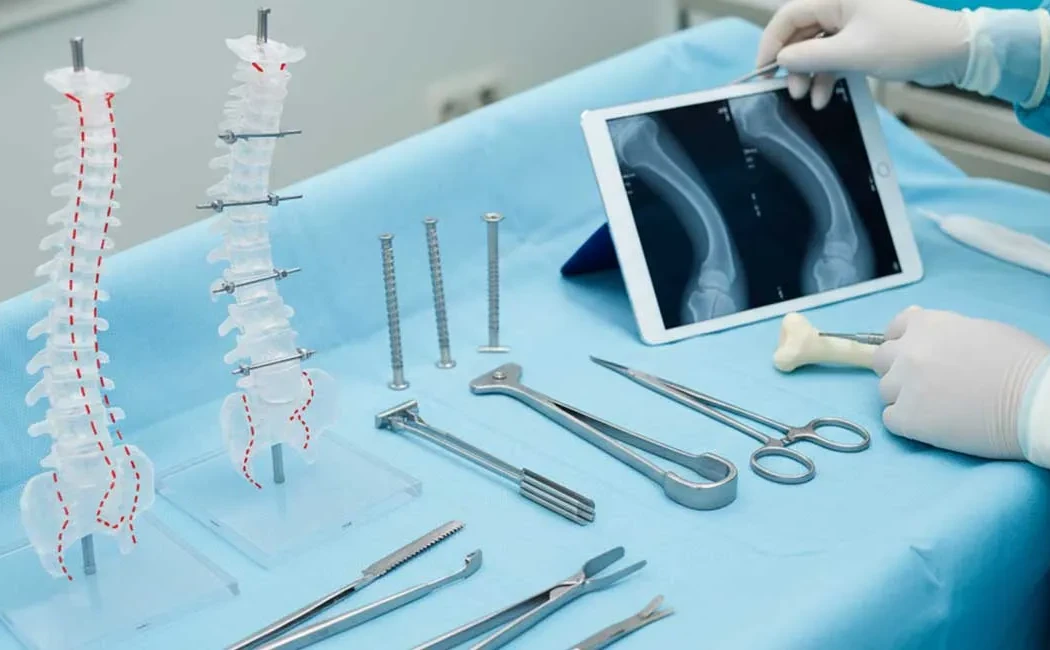
Deformities in the musculoskeletal system can significantly impair mobility and quality of life. Deformity surgery encompasses advanced orthopedic procedures aimed at correcting bone curvatures, torsions, shortening, or deficiencies. These may be congenital anomalies or develop post-trauma, constituting the core focus of this surgical field.
Orthopedic deformity corrections offer more than cosmetic improvement; they restore biomechanical joint balance, preserving long-term joint health. Treatment starts with thorough clinical evaluation and radiological imaging.
What Is Deformity Surgery?
Deformity surgery involves surgically correcting anatomical irregularities in bones and soft tissues, aiming to restore near-normal alignment. This surgical specialty addresses complex problems in both children and adults, focusing on restoring limb function, reducing pain, and correcting mechanical axis deviations.
Surgical planning involves identifying the Center of Rotation of Angulation (CORA). Bone angles, length, and rotation are carefully measured. Treatment may range from a simple osteotomy to multi-stage procedures including bone lengthening and complex reconstruction.
Causes of Bone Deformities
Bone deformities stem from diverse causes; accurate diagnosis is crucial for selecting appropriate treatment strategies.
- Congenital Causes: Developmental issues in utero causing conditions like fibular hemimelia (absence of fibula) or congenital femoral deficiency.
- Post-Traumatic Causes: Malunion of fractures or injury to growth plates leading to asymmetric bone growth.
- Infections: Bone infections such as osteomyelitis damaging growth cartilage and causing deformities.
- Metabolic Disorders: Conditions like rickets due to vitamin D deficiency leading to softened, bowed bones.
- Neuromuscular Diseases: Disorders such as cerebral palsy or spina bifida causing muscle imbalance and secondary bone deformities.
Types and Classification of Deformities
Deformities are classified based on the affected plane and deformation characteristics. This classification guides surgeons in selecting appropriate correction techniques. The following diagram summarizes common deformity types and their structural features.
Common types include:
- Angular Deformities: "Bow legs" (Genu Varum) or "knock knees" (Genu Valgum) seen in the frontal plane.
- Rotational Deformities: Abnormal rotation along the bone’s axis causing inward or outward foot positioning.
- Length Discrepancies: One limb shorter than the other (limb length inequality).
- Complex Deformities: Combined angular, rotational, and length discrepancies, such as in Blount disease.
Diagnostic Process and Imaging Techniques
Accurate diagnosis is essential for successful deformity surgery. A detailed medical history and physical examination are performed, assessing joint range of motion, gait analysis, and limb length.
Imaging modalities facilitate mathematical analysis of deformities:
- Orthoradiogram: Full-length standing X-rays from hip to ankle, considered the gold standard to assess mechanical axis deviation.
- Computed Tomography (CT): Provides 3D evaluation of rotational deformities and joint irregularities.
- Magnetic Resonance Imaging (MRI): Examines cartilage, ligaments, and soft tissues.
Surgical Techniques Used in Deformity Correction
Surgical approaches depend on the pathology location and severity, divided into acute (single-stage) or gradual (staged) corrections. The instruments and methods vary accordingly.
Osteotomy
Involves controlled bone cutting and realignment, fixed with plates, screws, nails, or external fixators. Detailed techniques for upper extremity lengthening and deformity correction can be found on our upper extremity lengthening and deformity surgery page. Procedures targeting leg deformities are explained under lower extremity deformity surgery.
External Fixation (Ilizarov and Computer-Assisted Systems)
This involves stabilizing the bone externally using devices, often preferred for complex multiplanar deformities and bone lengthening. Hexapod fixators offer computer-assisted millimetric adjustments.
Intramedullary Nailing
Correction via metal rods inserted into the bone marrow canal. Magnetic expandable nails allow bone lengthening and deformity correction without external devices.
Bone Lengthening and Correcting Limb Discrepancies
Bone lengthening is a key aspect of deformity surgery, promoting new bone growth to equalize limb length or increase height through distraction osteogenesis. More information is available on our bone lengthening surgery page.
Procedures using Ilizarov or combined methods report high success rates. For clinical outcomes, please see Ilizarov deformity correction success rates.
Postoperative Recovery and Physical Therapy
The postoperative phase is as important as the surgery itself. Healing involves bone union, soft tissue adaptation, and regaining functional capacity. Rehabilitation plays a crucial role.
Postoperative care recommendations include:
- Weight Bearing: Load the limb according to surgeon’s instructions and timing.
- Wound Care and Hygiene: In external fixation cases, cleaning pin sites is vital to prevent infection.
- Physical Therapy: Regular supervised exercise to maintain joint mobility and strengthen muscles.
Potential Risks and Complications in Deformity Surgery
As with any surgery, deformity correction carries inherent risks, which can be minimized through meticulous planning and surgical expertise.
- Infection: May involve superficial or deep bone infections.
- Nerve and Vascular Injury: Possible temporary or permanent damage due to nerve stretch during correction.
- Nonunion or Malunion: Bone may fail to heal or heal improperly, requiring additional treatment. Relevant procedures include malunion surgery and nonunion surgery.
- Joint Stiffness: Prolonged immobilization may cause limited joint movement.
Deformity Surgery in Children and Specialized Approaches
Pediatric deformities require different management due to their growth potential. Less invasive growth modulation techniques, such as hemiepiphysiodesis, temporarily halt growth on one side of the growth plate, allowing self-correction. More advanced cases might need osteotomy and fixation.
Patient Selection, Age Factors, and Expectations
Successful deformity surgery depends on appropriate patient selection and realistic expectations. Age, bone quality, smoking status, and overall health influence recovery. Further details on age-related outcomes can be found in age factors in deformity surgery.
Managing expectations is especially important for cosmetic procedures like height lengthening. For long-term results, see cosmetic height lengthening outcomes. When performed under suitable indications and by experienced teams, deformity surgery can meaningfully improve quality of life.
This content is intended for general informational purposes only and does not constitute medical advice. It is not a substitute for professional diagnosis, treatment, or consultation. Medical evaluation and management should be conducted through direct, in-person examination by a qualified healthcare provider. Individual clinical conditions vary, and surgical or non-surgical treatments may differ accordingly. The information provided is based on current scientific knowledge and accepted medical practices. Do not delay seeking professional medical care based on this content.