
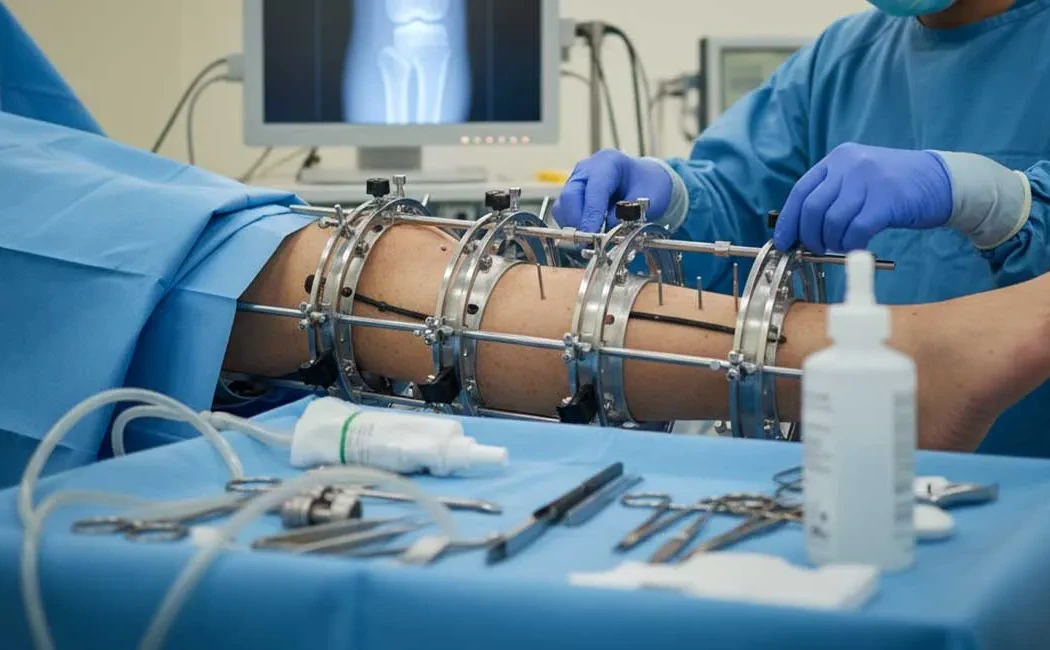
Bone lengthening surgery is a complex surgical procedure that leverages the body’s natural healing capacity to extend bones and soft tissues. Based on the principle of "distraction osteogenesis" in orthopedics and traumatology, the procedure is applied to treat congenital or acquired limb length discrepancies as well as for cosmetic height increase. Successful outcomes depend not only on surgical technique but also heavily on postoperative rehabilitation.
This guide provides a detailed overview of the bone lengthening surgery process, the techniques used, and important considerations during recovery.
What is Bone Lengthening Surgery?
Bone lengthening surgery involves surgically cutting the bone (osteotomy) and gradually separating the two bone ends using specialized devices. During this gradual separation, new bone tissue forms in the gap. This process extends not only the bone but also the surrounding muscles, nerves, blood vessels, and skin. For more comprehensive insights, please visit our detailed bone lengthening surgery information page.
Medical and cosmetic purposes
This surgical intervention is broadly categorized into two groups: reconstructive (corrective) and cosmetic. Medically necessary cases include treatment of limb length discrepancies caused by poliomyelitis sequelae, trauma-related bone loss, growth plate damage due to infections, or congenital anomalies. Cosmetic applications aim to symmetrically lengthen both legs in individuals affected by short stature and related psychosocial challenges (constitutional shortness). Although the biological principles are consistent across applications, planning differs significantly.
Who is suitable for the surgery?
Bone lengthening surgery is applicable for adults whose growth plates have closed as well as for selected children with deformities. Candidates should have adequate bone quality, be non-smokers (since smoking adversely affects bone healing), and be psychologically prepared for a prolonged rehabilitation period. When evaluating lower extremity deformities and treatment options in children, the child’s growth potential and whether the deformity is progressive are crucial factors.
Bone Lengthening Methods
With technological advancements, the methods used in bone lengthening surgery have diversified. The most suitable method is selected according to the patient’s anatomy, desired lengthening, and expectations. These methods are thoroughly discussed under lower extremity deformity surgery and lengthening techniques. In addition to legs, applications targeting arm bones are also available, such as upper extremity lengthening and deformity correction.
Ilizarov Method
The Ilizarov method forms the foundation of bone lengthening surgery and uses circular external fixators. Metal rings are placed externally around the limb and attached to the bone with fine wires. This system allows both lengthening and correction of angular deformities when present. Gaining familiarity with the Ilizarov method bone lengthening process helps patients adapt to life with the device. Despite higher risks of infection and discomfort compared to other methods, it remains the gold standard for complex deformities.
LON (Lengthening Over Nail) Technique
The LON technique combines an external fixator with an intramedullary nail inserted inside the bone. Lengthening is done via the external fixator, and after the desired length is achieved, the internal nail is locked to maintain stability, allowing early removal of the external device. This approach significantly reduces the patient’s time with an external frame and improves comfort. However, careful attention is necessary to avoid intramedullary infection.
PRECICE System
This method uses fully implanted magnetic lengthening intramedullary nails without external wires or devices. Lengthening is precisely controlled millimeter by millimeter by generating a magnetic field via a handheld remote controller. Advantages include lower infection risk, minimal scarring, and greater mobility during recovery.
Surgical Process and Phases
Bone lengthening surgery is a long-term treatment, not limited to the surgical procedure itself. This process is outlined in the following flowchart which summarizes the critical sequential phases.
Preparation and pre-assessment
Before surgery, detailed radiological imaging (orthoroentgenogram) is performed. The patient’s bone structure, leg length discrepancy, and any deformities are measured down to millimeters. Blood tests, anesthesia clearance, and psychological evaluations are also part of this phase. Realistic expectations and patient cooperation are as important as surgical technique for successful treatment.
Surgical intervention
The surgery is performed under general anesthesia. Depending on the chosen method, an osteotomy is made and fixation devices (external fixator or nail) are applied. Minimally invasive approaches are preferred to reduce soft tissue damage and enhance healing speed. Operating times vary between 2 and 4 hours depending on technique and whether one or both limbs are treated.
Distraction phase and consolidation
After approximately 5-7 days of latency following surgery, the lengthening phase begins. Typically, the bone is lengthened at a rate of 1 mm per day (4 increments of 0.25 mm). Once the target length is reached, distraction is stopped and the consolidation phase begins, during which the new bone solidifies.
Physical therapy and rehabilitation
Since muscles and tendons are stretched during lengthening, rigorous physical therapy is mandatory to prevent joint stiffness. Following the postoperative bone lengthening care recommendations, stretching exercises and walking protocols should be strictly adhered to.
Risks and Complications
As with any surgical procedure, bone lengthening surgery carries potential risks. Effective risk management depends on an experienced surgical team and patient cooperation.
Infection and wound issues
In methods using external fixators, infections at wire insertion sites can occur. These are generally managed with wound care and oral antibiotics. Deep bone infections (osteomyelitis) are rare but serious and may require surgical intervention. Strict hygiene adherence reduces this risk significantly.
Nonunion and deformities
Sometimes the formation of new bone is slower than expected or absent (nonunion). In such cases, additional treatments are planned based on the relationship between nonunion surgery and lengthening procedures. Bone bending may also develop during lengthening due to muscle imbalance; therefore, regular X-ray monitoring is essential.
Pain and nerve injury
Stretching of nerves during lengthening can cause numbness or tingling sensations. If these symptoms occur, the lengthening rate may need to be slowed. Pain management is supported with medication. Detailed information is available in our bone lengthening surgery postoperative pain management guidelines.
Conclusion and Informational Note
Bone lengthening surgery, when performed with appropriate indications and an expert team, can significantly improve patients’ quality of life. For patients concerned about the permanence of cosmetic bone lengthening results, it should be noted that the achieved length and bone structure are completely natural and permanent. However, the process requires patience and discipline.
The information provided is for general informational purposes only and does not constitute medical advice. It is not intended to replace individual diagnosis, treatment, or consultation with a healthcare professional. Diagnosis and treatment should always be based on a face-to-face examination by a qualified physician. Since each patient's clinical condition is unique, surgical and non-surgical treatments may vary accordingly. The content is based on current scientific sources and up-to-date medical practices.