
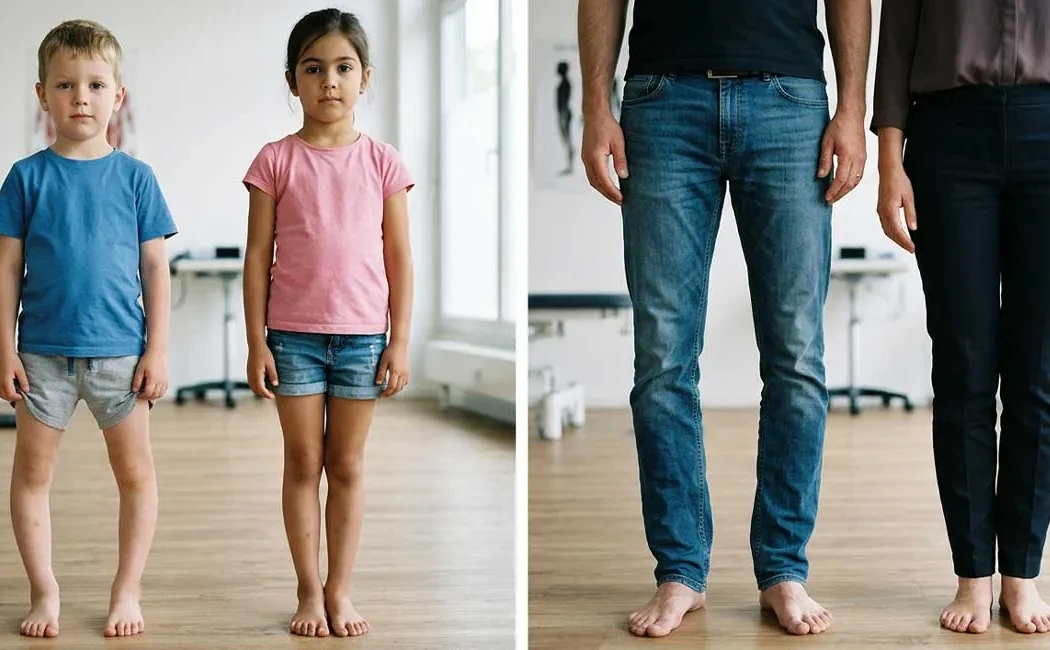
Lower limb deformities are orthopedic conditions that can cause both aesthetic concerns and serious functional problems. Commonly referred to in medical literature as Genu Valgum and Genu Varum, the treatments for x o leg correction vary considerably depending on the patient’s age and whether skeletal growth is complete. Interventions harnessing growth potential in childhood substantially differ in technique and recovery from reconstructive surgeries performed in adulthood.
This article reviews the causes of leg deformities, treatment protocols applied in children and adults, and surgical methods underpinned by scientific evidence. Our aim is to provide a comprehensive guide for patients and families researching treatment options.
What Is X and O Leg Correction?
Leg correction procedures aim to restore the mechanical axis of the lower limb, balancing the load on joints and achieving normal anatomical alignment. Proper alignment reduces the risk of joint osteoarthritis and improves walking mechanics.
Genu Valgum (X Leg) and Genu Varum (O Leg)
Malalignments of the knee joint are broadly categorized into two types. Genu Valgum (X leg) is characterized by knees that touch or are close together while the ankles remain apart. Conversely, Genu Varum (O leg) refers to knees being apart while the ankles touch or are close together.
These deformities can be congenital or develop later in life. In particular, X and O leg deformities in children may be part of normal development or indicate underlying metabolic bone diseases.
Physiological vs. Pathological Bowing
Not all leg curvature requires surgical intervention. Mild curvatures observed at specific age ranges during childhood are considered "physiological" and often self-correct with growth. However, if the deformity is unilateral, worsens with age, or fails to improve within expected timeframes, it is considered "pathological." The diagnostic and treatment decision process is summarized in the flowchart below.
Correction Methods for X and O Legs in Children
Because the skeletal system in children is still developing, treatment strategies focus on utilizing growth potential. Management of lower limb deformities in children can often be performed using less invasive methods compared to adults.
Hemiepiphysiodesis: Growth Plate Modulation
Hemiepiphysiodesis is the most common approach for children with open growth plates. This technique involves temporarily slowing growth on the side of the growth plate causing the deformity, while the opposite side continues to grow, allowing gradual correction over time.
Also known as “guided growth,” this method typically employs devices such as the eight-plate implant. After the procedure, children quickly resume daily activities without the need for casting.
Importance of Early Intervention
Timing is critical in deformity surgery. Interventions performed before growth plates close can correct the deformity without requiring bone cutting (osteotomy). Early diagnosis of common deformities in children significantly reduces treatment complexity and risk. Early treatment helps normalize skeletal development and prevents future joint damage.
Approaches to Correcting X and O Legs in Adults
With skeletal maturity reached and growth plates closed, growth modulation techniques are no longer applicable in adults. Therefore, lower limb deformity surgery in adults requires direct bone structural correction.
What Is Osteotomy and How Is It Performed?
The primary correction method in adults is osteotomy, a controlled surgical bone cut to realign angular deformities. The repositioned bone is stabilized using plates and screws, intramedullary nails, or external fixators such as the Ilizarov device.
This procedure shifts the load from the damaged region of the knee to healthier zones, reducing pain and potentially postponing or eliminating the need for joint replacement.
Surgical Planning and Recovery
Adult deformity correction requires meticulous preoperative planning. In some cases, simultaneous bone lengthening surgery is performed to correct leg length discrepancies.
Recovery varies depending on the osteotomy type and fixation method, typically lasting between 3 and 6 months. Physical therapy is an essential component throughout rehabilitation.
Comparison of Treatment Methods for Children and Adults
The key difference between the two patient groups lies in the biological potential utilized. Children benefit from guided growth using their natural growth capacity, while adults require mechanical reconstruction.
Risks, Complications, and Important Considerations
As with all surgeries, leg correction procedures carry risks. These include infection, nerve injury, or healing problems potentially necessitating revision surgery for nonunion. Management of bone infections is crucial to address rare but serious complications such as osteomyelitis.
In adults, untreated deformities can lead to progressive joint damage and increase the complexity and risk of post-knee replacement complications.
The information provided herein is for general informational purposes only and does not constitute professional medical advice, diagnosis, or treatment. Always consult a qualified healthcare professional with any questions regarding your health. The content may not be suitable for your individual circumstances and should not be applied without the supervision of a medical professional. Do not delay seeking medical care based on the information provided.