
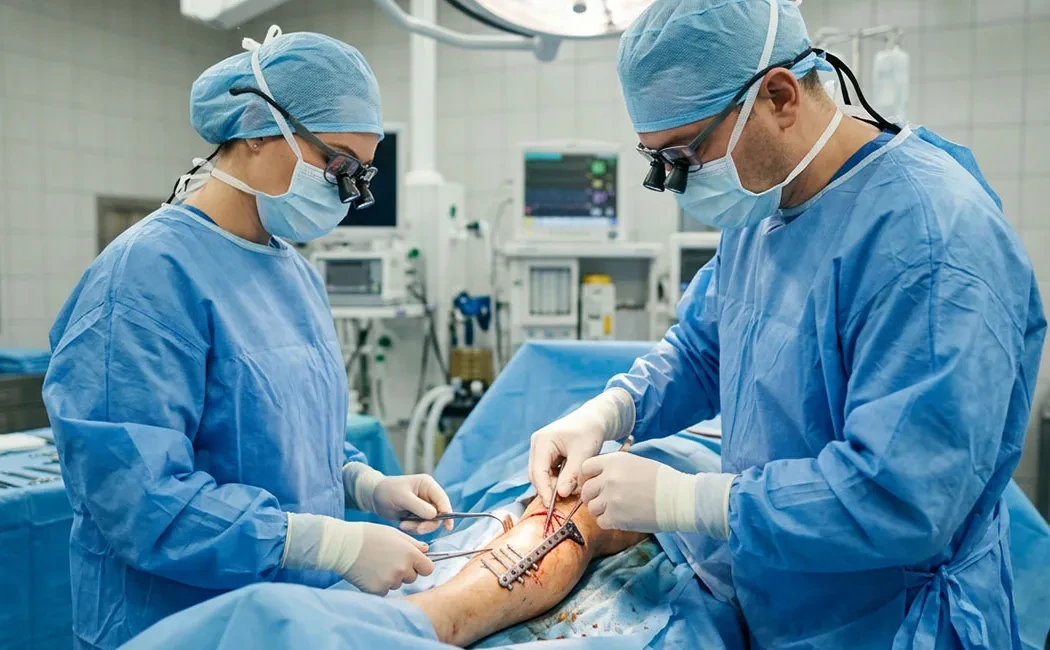
Bone healing is a complex process involving biological and mechanical factors. However, in some cases, this process does not proceed as expected, resulting in the bone healing in a position that does not align with its natural anatomy. Medically referred to as "malunion," this condition is commonly known as improper healing. Malunion surgery encompasses advanced orthopedic procedures aimed at correcting deformities, shortening, or functional loss caused by bones healing in an incorrect position. These surgeries aim to improve the patient’s quality of life and preserve joint health.
What is Malunion?
Malunion occurs when a fractured bone heals, but in a deformed alignment that deviates from its original anatomical structure. This condition goes beyond cosmetic concerns; it disrupts load distribution over joints, causing pain and restricted movement. For more comprehensive information, you can visit the malunion treatment methods page. It should not be confused with nonunion, where the bone does not heal at all; this requires a different approach, as detailed in nonunion surgery treatment methods.
How Does Malunion Occur?
Malunion often results from inadequate alignment (poor reduction) during initial fracture treatment or insufficient fixation during the healing process. Infections, poor bone quality, or premature weight bearing before healing completes can also contribute. According to sources like PubMed and the AAOS, trauma severity and soft tissue damage further increase the risk.
Types of Malunion
Malunions are classified by the nature of deformity: angular deformities (bone heals crooked), rotational deformities (bone heals twisted around its axis), and shortening (bone segments overlap, reducing length).
What is Malunion Surgery?
Malunion surgery involves controlled resection of the deformed bone (osteotomy), repositioning it to the correct anatomical alignment, and rigid fixation. The goal is to restore biomechanical balance. Technical details of this procedure can be found on the malunion surgery detailed information page.
What is Corrective Osteotomy?
Corrective osteotomy is the surgical cutting and realignment of the malformed bone. During this procedure, bones are adjusted to predetermined angles and can be lengthened with bone grafts if necessary.
Who is a Candidate?
This surgery is recommended for patients who experience impaired daily activities, chronic pain, or limited joint range of motion due to malunion. It’s also indicated when a deformity threatens to cause adjacent joint wear (arthritis). Patient selection involves multidisciplinary evaluation considering age, activity level, and overall health status.
Surgical Procedure and Techniques
Meticulous preoperative planning is essential for success. Thanks to modern surgical options, even complex deformities can be corrected with high precision. Upper extremity deformities are treated with deformity correction and osteotomy surgery, while principles of lower extremity deformity surgery apply for leg and ankle problems.
Preoperative Assessment
Before surgery, the patient’s deformity is thoroughly analyzed using CT scans and orthoradiographs (full-length bone X-rays). This evaluation defines the exact osteotomy location and angle.
Surgical Techniques and Implants
Stable fixation is required to ensure bone healing in the new position. Plates and screws, intramedullary nails, or external fixators like the Ilizarov device may be used.
Contemporary Surgical Approaches
Advancements such as 3D printing allow patient-specific cutting guides, and computer-assisted navigation systems improve surgical precision and reduce operation time.
Postoperative Recovery
Post-surgical care is as critical as the surgery itself. Patients’ compliance during the malunion surgery recovery process significantly affects outcomes.
Immobilization and Bone Healing
A period of restricted or partial weight-bearing is usually necessary to allow bone healing. Casts, splints, or specialized walking boots are typically used. Healing time varies from six weeks to several months depending on correction extent and patient biology.
Physiotherapy and Rehabilitation
Physiotherapy is essential to restore muscle strength and joint mobility weakened by immobilization.
Complications and Precautions
Signs of infection such as swelling, redness, or increased pain around the surgical site should be closely monitored. Smoking is contraindicated during bone healing as it delays the process.
Risks of Malunion Surgery
As with any surgery, malunion correction carries risks including infection, nerve injury, implant failure, or failure of the bone to heal (nonunion). Revision surgeries may be required in certain cases, detailed on the revision surgery for malunion page. Careful patient selection and surgical planning, considering factors from successful nonunion surgery, help minimize complications.
Conclusion and Disclaimer
Malunion surgery is an effective treatment option that corrects functional and cosmetic issues, improving patients’ quality of life. When planned and performed by experienced teams, satisfactory results can be achieved. However, outcomes vary by individual.
Information provided here is for educational purposes only and is not a substitute for professional medical advice, diagnosis, or treatment. Always consult a qualified orthopedic and traumatology specialist for health concerns.
The content on this website is provided for informational purposes only and does not constitute medical advice. It is not a substitute for professional diagnosis or treatment by a qualified healthcare provider. Always seek the advice of a physician or other qualified health professional with any questions you may have regarding your health. The website administrators and authors are not liable for any issues arising from the misinterpretation or application of the information provided. Do not delay seeking medical care based on the content of this site.