
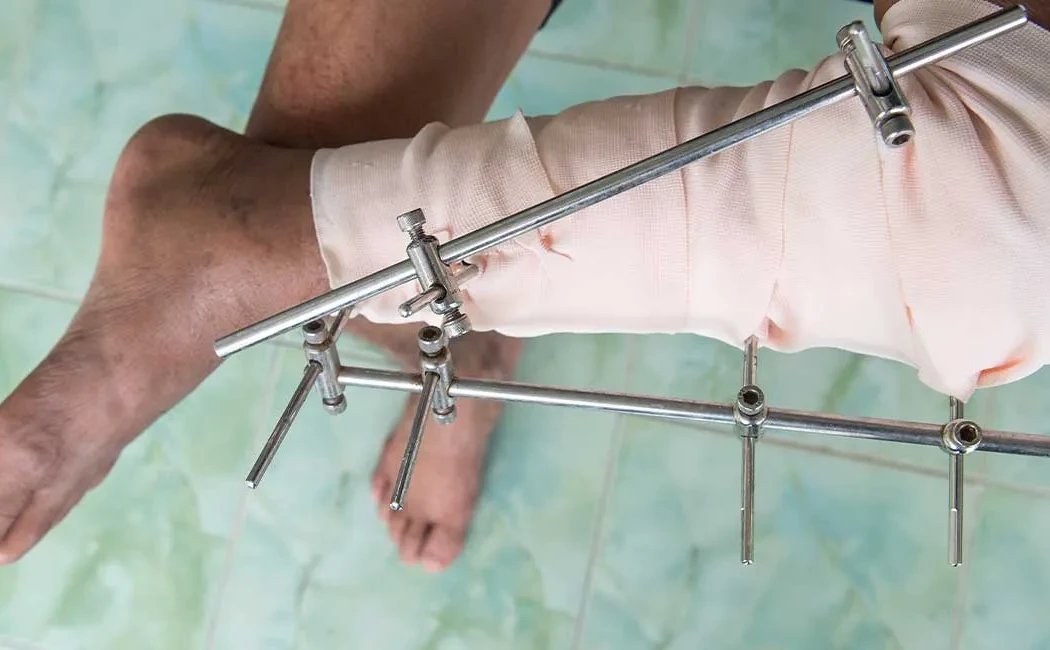
Limb lengthening surgery is a complex orthopedic procedure performed to treat congenital anomalies, post-traumatic deformities, or shortening conditions. It is fundamentally based on a biological process known as “distraction osteogenesis.” In this process, a controlled bone cut (osteotomy) is made, and the bone segments are gradually separated, allowing new bone tissue to regenerate in the gap. With technological advancements, various methods have been developed to improve patient comfort and reduce complication risks.
This guide addresses the limb lengthening procedures, modern and classical methods used, candidate suitability criteria, and recovery stages from an academic perspective. Treatment decisions and planning must be individualized and managed by a multidisciplinary team.
Overview of Limb Lengthening Surgery
Limb lengthening surgery was introduced to modern medicine in the mid-20th century by Soviet doctor Gavriil Ilizarov. The primary aim is to correct limb length discrepancies or meet cosmetic desires for height increase. This surgery is not limited to bone lengthening but requires the harmonious extension of muscles, nerves, vessels, and skin alongside bone as a comprehensive reconstructive process.
The procedure utilizes the bone’s regenerative capacity to form new tissue. The length and rate of distraction are usually adjusted daily (commonly 1 mm per day) considering the patient’s age, bone quality, and soft tissue tolerance. This delicate process directly correlates with the surgeon’s experience and patient compliance.
Methods Used
Advancements in technology have diversified the devices used in limb lengthening and deformity correction. The patient’s anatomical structure and socio-economic factors heavily influence method choice.
LON (Lengthening Over Nail) Method
The LON (Lengthening Over Nail) method combines both an external fixator and an intramedullary nail. The lengthening is performed using the external fixator, while the nail inside the bone supports the newly formed bone after the lengthening phase is complete. For detailed information, please visit our bone lengthening surgery page.
A key advantage of the LON method is the significant reduction in the external fixator’s wear time. After completion of distraction, the fixator is removed, transferring load-bearing to the intramedullary nail. This enhances patient comfort and helps reduce infection risks earlier compared to traditional methods.
Precice Method
The Precice method employs a fully internal magnetic system, with no external apparatus visible on the skin. Lengthening is achieved by remotely controlling a telescopic nail inside the bone through an external magnetic controller (ERC). Because it avoids external hardware disrupting skin integrity, the infection risk is lower, and aesthetic outcomes tend to be superior.
Precice nails are preferred where patient comfort is paramount; however, due to the magnetic mechanism’s sensitivity, weight-bearing may be limited until bone healing completes. As a high-tech approach, cost considerations may differ from other options.
Ilizarov Method
The Ilizarov method is the classical approach that forms the foundation of limb lengthening surgery, utilizing circular external fixators. Wires and pins pass through the skin into the bone for fixation and lengthening. The Ilizarov technique for lengthening remains the gold standard, especially in complex deformities, due to its ability to correct bone in three-dimensional space.
The main drawback is that the external apparatus remains on the limb throughout the lengthening and consolidation phases, which may affect patient comfort and carries infection risks at pin sites. Despite this, it remains an important cost-effective choice with strong biological healing capacity.
Comparison of Methods
Surgical method selection is based on patient expectations and clinical indications. Each technique presents unique advantages and limitations. The diagram below illustrates the technical differences among these methods.
While the LON method shortens treatment duration, the Precice method provides superior comfort and cosmetic results. The Ilizarov technique offers versatile correction capabilities. When comparing Precice and Ilizarov techniques, factors such as daily activity levels and bone quality should also be considered. Scientific evidence shows all three methods achieve successful outcomes when properly indicated.
Candidate Selection and Suitability Criteria
Limb lengthening surgery is not suitable for every patient. Candidates must be physically and psychologically prepared for this demanding process. Generally, cosmetic height lengthening is performed on individuals with closed growth plates, while congenital shortening can be addressed in childhood. For upper limb lengthening and deformity correction, or lower limb procedures, bone density, smoking status, and chronic illnesses are thoroughly evaluated. More information can be found on our upper extremity lengthening and deformity correction surgery page.
Surgical Procedure and Recovery Phases
The surgical process begins with detailed preoperative planning. During surgery, controlled osteotomy is performed, and the selected device is implanted. Recovery involves three main phases: latency (waiting), distraction (lengthening), and consolidation (bone healing).
During distraction, the bone is lengthened approximately 1 mm daily. Joint spaces and soft tissue tension are closely monitored in line with lower extremity deformity surgery principles. In the consolidation phase, the new bone hardens and gains load-bearing capacity.
Risks and Complications
As with all surgical interventions, limb lengthening carries potential risks that vary with surgical technique and biological response.
Common issues include pin site infections (notably with Ilizarov and LON), joint stiffness, and delayed or non-union of the new bone. Non-union treatment may require additional surgical procedures to address insufficient bone healing of biological or mechanical origin. Rare but serious complications include deep vein thrombosis and nerve injuries.
Rehabilitation and Physical Therapy
Effective rehabilitation is essential to the successful outcome of surgery. Because muscles and tendons stretch slower than bone, tension and joint mobility limitations may occur. Postoperative care and rehabilitation for limb lengthening surgery emphasize the importance of guided stretching and strengthening exercises performed under the supervision of a physiotherapist.
Patients are encouraged to bear weight and walk as permitted by their physician to stimulate bone healing (osteogenesis). The rehabilitation process continues until the patient can fully resume normal daily activities.
New Technologies and Developments
Technological advancements in orthopedic surgery have made lengthening devices more comfortable and reliable. Motorized nails, remote-controlled systems, and adjuvant therapies accelerating biological healing bring significant progress to new technologies in limb lengthening surgery. Additionally, computer-assisted planning and 3D modeling techniques enhance the precision of deformity correction.
This content is intended for general informational purposes only and does not constitute medical advice. It should not replace individual diagnosis, treatment, or guidance by a healthcare professional. Diagnostic and therapeutic processes must be planned following face-to-face examination by a qualified physician. As each patient’s clinical condition differs, surgical or non-surgical applications may vary accordingly. The information provided is based on current scientific literature and up-to-date medical practices.