
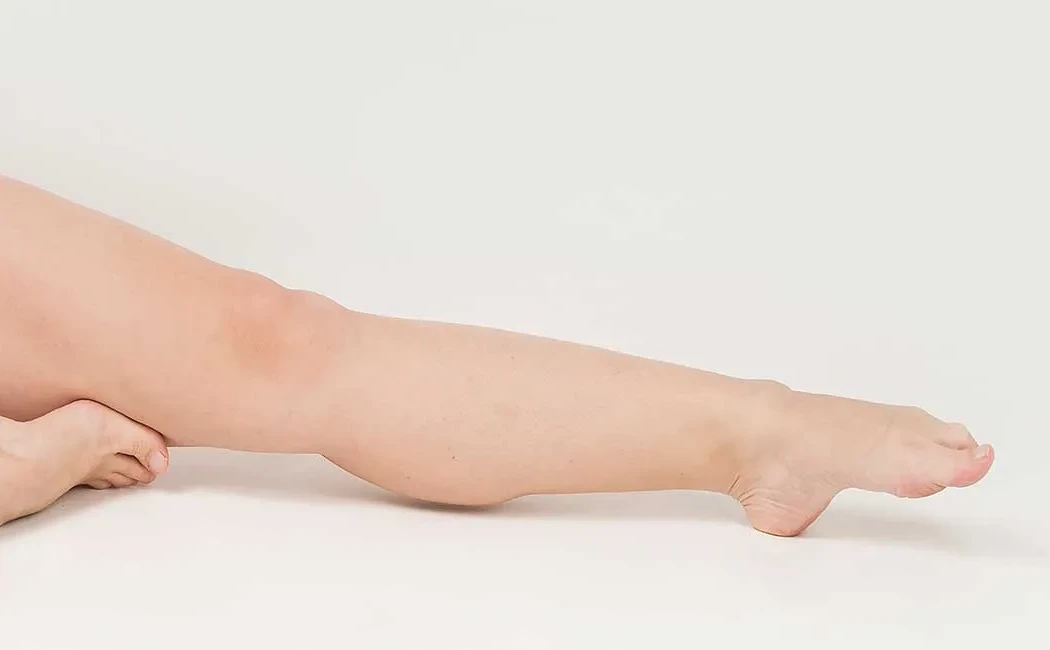
Leg deformities are orthopedic conditions characterized by abnormal anatomical alignment of the lower limbs, which can cause aesthetic concerns as well as significant functional impairment. These often manifest as curvature, torsion, or discrepancies in bone length. Deviation from the natural mechanical axis of the leg disrupts load distribution on the knee, hip, and ankle joints, potentially leading to early osteoarthritis.
In orthopedics and traumatology, leg deformities are commonly encountered and can originate from congenital anomalies or result from improper healing post-trauma. Treatment strategies depend on the deformity’s origin and whether the patient's skeletal growth has been completed. A scientific and evidence-based approach aims to improve patients’ quality of life and preserve joint health.
What Are Leg Deformities?
Leg deformity refers to angular or rotational malalignments occurring in the femur (thigh bone) or tibia (shin bone). Normally, a mechanical axis runs from the hip joint through the center of the knee to the ankle. Deviation from this axis, termed "mechanical axis deviation," causes uneven stress on specific joint areas.
Deformities may be uniplanar (curvature in one plane) or multiplanar (combined curvature and rotation). Patients often present with gait difficulties, early fatigue, joint pain, or leg length differences.
Causes of Leg Deformities
The etiology of leg deformities is diverse, ranging from genetic to environmental factors. Accurate identification of underlying causes is critical for effective treatment planning.
Broadly categorized, the causes include:
- Congenital Causes: Bone deficiencies like fibular or tibial hemimelia and congenital curvatures.
- Developmental Disorders: Conditions affecting growth plates such as Blount disease or rickets (vitamin D deficiency).
- Post-Traumatic Conditions: Malunions or nonunions following fractures.
- Infections: Childhood bone infections (osteomyelitis) damaging growth plates.
- Tumors: Bone tumors or deformities following tumor-related surgeries.
Types and Classification of Deformities
Deformities are classified by the bone’s spatial position and angulation direction. Angular deformities are most common and often referred to as bowlegs or knock-knees in lay terms.
- Genu Varum (Bowlegs): Legs curve outward in a bow shape; knees are apart while ankles touch.
- Genu Valgum (Knock-knees): Knees touch while ankles are apart.
- Rotational Deformities: Bones rotated along their own axis (in-toeing or out-toeing).
- Limb Length Discrepancy: One leg shorter than the other, usually accompanies angular deformities.
Diagnostic Methods
Accurate treatment begins with precise diagnosis. The evaluation starts with a comprehensive physical examination, including gait analysis, joint range of motion, and mechanical axis assessment.
- Full-Length Standing Radiograph (Orthoroentgenogram): Captures the entire leg from hip to ankle on a single film and is fundamental for mechanical axis measurements.
- Computed Tomography (CT): Particularly useful for assessing rotational deformities and intra-articular problems.
- Magnetic Resonance Imaging (MRI): Critical for detecting cartilage, ligament, and soft tissue injuries.
Surgical and Non-Surgical Treatment Options
Treatment approach depends on patient age, deformity severity, and symptoms. Mild or non-progressive deformities, especially in children, may be managed with observation and orthotic devices. However, surgery is often necessary in skeletally mature individuals or severe cases.
Surgical treatment aims to restore the mechanical axis, protect the joints, and recover function. Specialist assessment is essential. For more information on lower limb deformity surgery, refer to Lower Limb Deformity Surgery. Additionally, review details about the relationship between age and surgical success in deformity correction in the article Success Rates of Deformity Surgery by Age.
Techniques Used in Deformity Surgery
Surgical methods allow either acute (one-time) or gradual correction of deformities.
- Acute Correction (Osteotomy): Bone is cut and realigned, then fixed using plates, screws, or nails.
- Gradual Correction: Employs Ilizarov or computer-assisted external fixator devices (hexapod systems) for progressive realignment over time.
These techniques are also commonly applied to correct limb length discrepancies. Procedures such as Bone Lengthening Surgery and Leg Deformity Treatment are frequently combined.
Postoperative Recovery and Rehabilitation
Post-surgery recovery is as important as the operation itself. Recovery duration varies depending on the technique used. Weight-bearing may be delayed with plate-screw fixation, while patients with external fixators often begin controlled weight-bearing as early as the day after surgery.
Physiotherapy is crucial for preserving joint range of motion and strengthening muscles. The return to sports must be carefully managed, especially for athletes. Rehabilitation following deformity surgery requires a discipline similar to recovery after meniscus repair; see Meniscus Repair Rehabilitation Process for detailed information.
Complications and Risk Management
As with all surgeries, leg deformity corrections carry risks, including infection, nerve injury, vascular damage, and problems with bone healing.
- Nonunion: Failure of the bone to heal within the expected time frame. This may necessitate revision surgery; see Nonunion Surgery and Related Complications for more details.
- Malunion: Healing of the bone in an incorrect position, often requiring corrective surgery. Management strategies are discussed in Malunion Surgery and Treatment Methods.
Additional conditions such as Nonunion in Femur Fractures and Surgical Approaches also warrant careful risk assessment.
Pediatric Leg Deformities
Leg deformities in children differ from adults due to the presence of growth plates, making their course dynamic. Some varus deformities, for example, normal bowlegs up to age 2, are physiological and resolve spontaneously, while others require treatment.
See the article Pediatric Lower Limb Deformities for detailed information. Early intervention, including minor procedures like hemiepiphysiodesis (guided growth), can correct problems effectively. Moreover, approaches detailed in Rare Bone Diseases and Pediatric Orthopedics are essential for managing deformities associated with complex syndromes.
Treatment of leg deformities requires a multidisciplinary and long-term follow-up approach. With accurate diagnosis, appropriate surgical techniques, and effective rehabilitation, successful outcomes are achievable.
The information provided herein is for general informational purposes only and does not constitute medical advice. It is not intended to replace individual diagnosis, treatment, or professional consultation. Diagnosis and treatment should be determined solely through an in-person evaluation by a qualified physician. As each patient's clinical condition varies, surgical and non-surgical treatments may differ accordingly. Please consult a healthcare professional for any medical concerns and do not delay seeking appropriate medical care.