
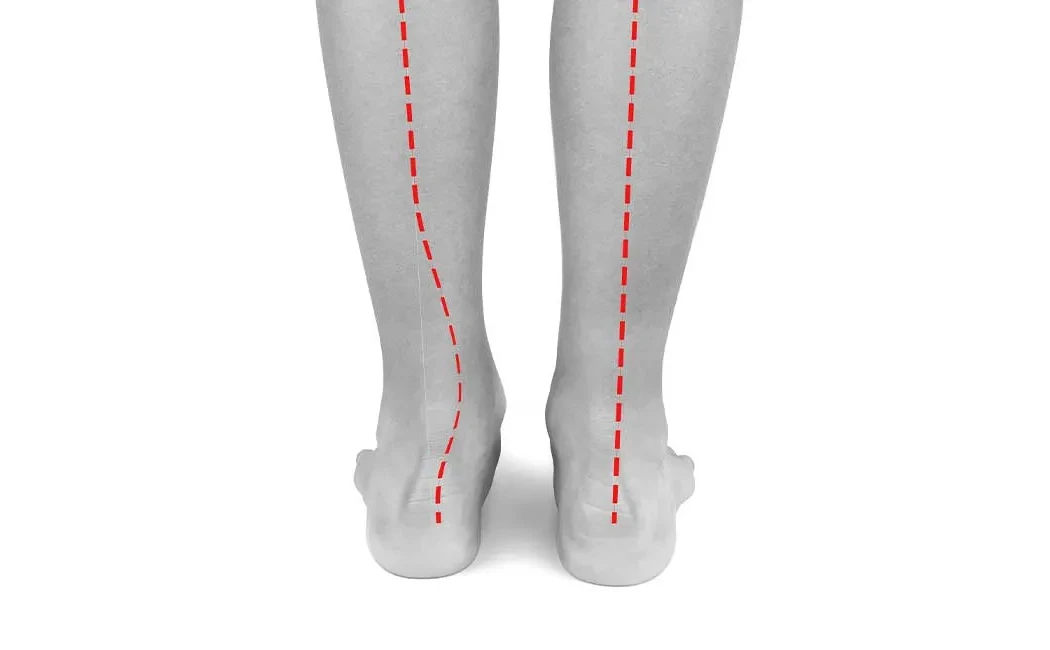
Leg deformity is an orthopedic condition that extends beyond cosmetic concern and can cause significant functional effects on the musculoskeletal system. Mechanical axis abnormalities in the legs lead to uneven load distribution on the knee and ankle joints, causing cartilage wear over time. Leg deformity surgery aims to correct this mechanical axis, relieve existing pain, and prevent future joint damage.
In orthopedics and traumatology practice, advances in deformity surgery and limb reconstruction offer patients various treatment options. Surgical decisions consider the patient's age, deformity severity, and the extent of joint involvement. The primary goal is to restore the leg’s natural anatomical structure and improve the patient’s quality of life.
What is Leg Deformity?
Leg deformity refers to misalignment of the leg bones (femur and tibia) from their normal position. Normally, a mechanical axis passes through the center of the hip, knee, and ankle joints. Deviation of this axis either inward or outward causes visible shape irregularities and biomechanical problems.
Difference Between Genu Varum and Genu Valgum
In medical literature, leg deformities are primarily categorized as Genu Varum and Genu Valgum. Genu Varum, commonly called “bow legs,” is characterized by knees standing apart while the ankles touch. This results in more load on the inner side of the knee.
Genu Valgum, known as “knock knees,” involves knees touching while the ankles remain apart. In this deformity, the load focuses on the outer part of the knee. Both conditions, if untreated, create asymmetric pressure on joint surfaces, potentially leading to meniscal tears and cartilage damage.
Causes of Leg Deformity
Leg deformities may be congenital or develop later. Genetic factors, metabolic bone diseases such as rickets due to vitamin D deficiency, and skeletal dysplasias are among the congenital or developmental causes.
Acquired deformities typically arise from improper bone healing after trauma, infections, or growth plate injuries. Childhood fractures affecting growth plates may cause asymmetric growth and deformities.
When is Leg Deformity Surgery Necessary?
The decision for surgery is made after detailed clinical and radiological assessments. Mild deformities may be monitored, while significant mechanical axis deviations often require surgical intervention. Leg deformity surgery is generally recommended in cases of:
1. Pain and functional loss: Experiencing pain and movement limitation in the knee, hip, or ankle during walking.
2. Progressive deformity: Increase in deformity severity over time.
3. Risk of joint damage: Deformity that significantly raises the risk of early osteoarthritis.
4. Cosmetic concerns: Considered alongside functional needs when deformity affects psychological well-being.
Surgical Techniques: Osteotomy and Advanced Methods
The primary surgical treatment for leg deformities is osteotomy. Depending on deformity complexity, various techniques within lower limb deformity surgery are employed. In some cases, correction is combined with bone lengthening and deformity surgery to address leg length discrepancies.
How is Osteotomy Surgery Performed?
Osteotomy involves controlled cutting of the bone to realign it. The surgeon identifies the deformity center and makes a bone cut (osteotomy) at that point, adjusting the angle to correct the alignment. The corrected bone is stabilized using plates, screws, or nails. This procedure aims to restore the normal load-bearing axis of the leg and reduce joint stress.
Ilizarov Method and External Fixators
For complex deformities, multi-planar corrections, or bone lengthening needs, the Ilizarov technique or modern external fixators (external devices) may be preferred. After cutting the bone, an external frame is placed on the leg, allowing gradual correction during healing by adjusting the device.
Preoperative and Postoperative Process
Before surgery, thorough analysis is performed. Long-leg X-rays (orthoradiograms) are taken to calculate deviation angles, with surgical planning done digitally or on diagrams.
Physical Therapy and Rehabilitation
Effective rehabilitation is key to postoperative success. Physical therapy starts early to maintain muscle strength and joint mobility during bone healing. Joint-preserving exercises play a crucial role in speeding the patient’s return to daily life.
Recovery Timeframe and Expectations
Recovery time varies depending on the surgical technique and patient biology. Bone healing usually occurs within 6 to 12 weeks. Patients may use crutches or walkers during this period. Full functional recovery and return to sports may take several months.
Risks, Complications, and Long-Term Outcomes
As with all surgeries, leg deformity correction carries risks such as infection, bleeding, nerve injury, and bone healing complications. Procedures for malunion and deformity correction may be required if the desired angle is not achieved initially. In cases of nonunion, nonunion treatment and deformity surgery protocols apply.
Understanding common challenges in limb reconstruction is important for managing patient expectations. However, surgeries performed by experienced surgeons with appropriate techniques typically have high success rates.
Pediatric Cases: Treating Leg Deformities in Children
Leg deformities in children require a different approach than adults. Since growth plates remain open, less invasive methods like guided growth (hemiepiphysiodesis) can be employed. Specialized management of childhood deformities is critical for future skeletal health.
Treatment of bow legs and knock knees in children utilizes growth potential. In some cases, congenital deformity surgery in childhood requires more extensive reconstruction.
Joint Health Preservation and Functional Benefits
The most important long-term benefit of leg deformity surgery is prolonging the lifespan of the joints. Correcting the mechanical axis can delay or eliminate the need for knee replacement surgery. In this context, joint-preserving surgeries and deformity treatment are closely interrelated. Timely intervention enables patients to maintain an active, pain-free lifestyle.
This content is intended for general informational purposes only and does not constitute medical advice. It is not a substitute for professional diagnosis, treatment, or consultation. Diagnosis and treatment plans should be made exclusively following an in-person examination by a qualified healthcare provider. Since each patient's clinical condition is unique, surgical or non-surgical procedures may vary accordingly. The information provided is based on current scientific research and up-to-date medical guidelines. Do not delay seeking medical attention or disregard professional advice based on the content presented.