
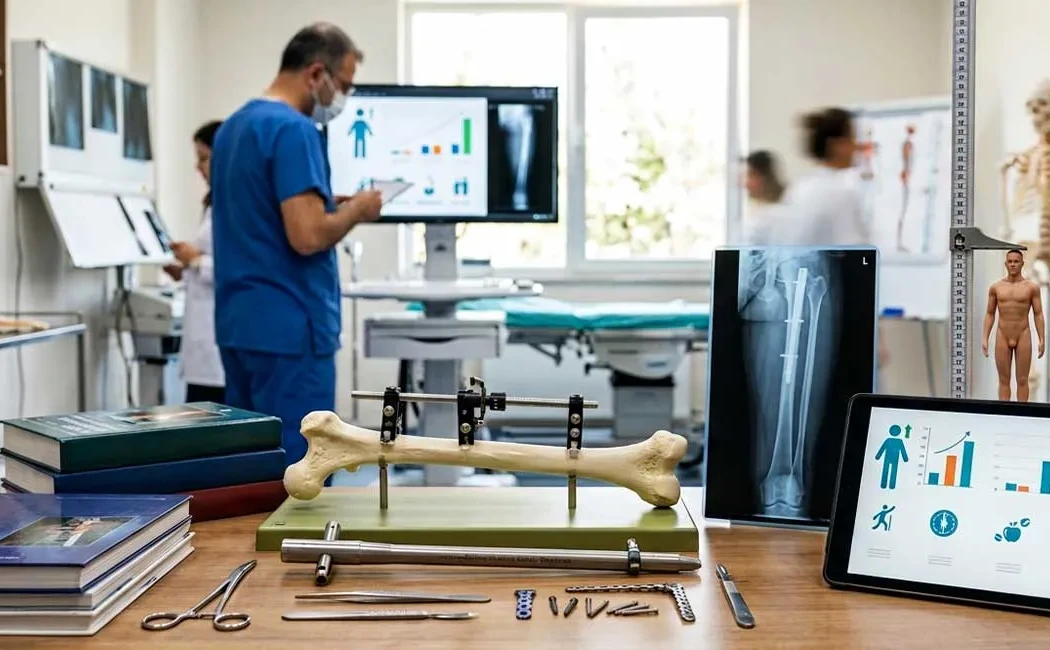
Technological advancements in limb reconstruction and deformity surgery now offer patients various treatment options through different height lengthening methods. Techniques used for correcting short stature or for aesthetic height increase vary based on the mechanical principles applied, healing duration, and patient comfort expectations. This guide provides a scientific overview of the technical details, advantages, and disadvantages of Ilizarov, PRECICE 2, LON, and combined methods.
Understanding the basic differences between height lengthening surgical methods is critical for patients and physicians to develop the most suitable treatment plan. Each technique offered under the bone lengthening surgery service follows distinct biomechanical principles and healing protocols.
Overview of Height Lengthening Methods
Height lengthening surgery is fundamentally based on the principle of osteogenesis (bone formation). The bone is carefully cut (osteotomy), and the gap is gradually increased to allow new bone tissue to form. Current methods are classified based on whether fixation is applied internally or externally. Choice of method depends on the patient’s anatomy, desired lengthening amount, cost factors, and lifestyle expectations.
Ilizarov Method
The Ilizarov method is a classical technique forming the basis of height lengthening surgery, long used and well-established. It involves the use of rings placed outside the bone connected to each other by thin wires anchored to the bone. The Ilizarov method offers biological advantages especially in complex deformity corrections and in cases with infection risk.
The main benefit of this approach is its lower cost compared to more modern technologies and the ability to correct deformities in three dimensions. However, external fixation devices remain attached to the limb for extended periods, which may cause patient discomfort and increased risk of pin-site infections. Regular dressing and care are essential during the Ilizarov method treatment process.
PRECICE 2 Method
With technological progress, PRECICE 2 has been developed as a modern method featuring an intramedullary nail fully implanted inside the bone with no external devices visible. Lengthening is controlled externally with a magnetic remote controller (ERC) that activates a gear mechanism inside the nail.
The most prominent advantage is the absence of an external fixator, minimizing infection risk and maximizing patient comfort. Patients experience a more comfortable lengthening phase with fewer scars. The downside is a higher cost due to advanced technology. This system, listed among new technologies and devices, is especially suitable for patients prioritizing aesthetics and quicker return to work.
LON (Lengthening Over Nail) Method
The LON method is a hybrid technique combining a traditional external fixator with an internal intramedullary nail. Lengthening occurs externally via the fixator, while the internal nail supports the bone internally after fixator removal. Once the lengthening process is complete, the external device is removed, and recovery continues with internal support only.
A key advantage of the LON method is the significantly shorter duration of external fixation, improving patient comfort and accelerating return to daily activities. However, the combined use of external fixator and internal nail requires careful monitoring to reduce the slightly higher risk of deep infection compared to methods using only external fixators.
Combined Method
The combined method, similar in principle to LON, may include various technical variations. Its main goal is to reduce the duration of external fixation and provide internal support for bone healing. This approach allows simultaneous height lengthening and angular corrections in patients needing lower limb deformity surgery.
Similarly, combined techniques can be applied in more specific areas like upper limb lengthening surgery. This method offers a more comfortable process compared to the Ilizarov technique and is more cost-accessible than full implant methods like PRECICE.
Technical Comparison Table
Each method offers distinct pros and cons based on patient profile. When comparing PRECICE and Ilizarov, factors like cost, comfort, and risk should be considered. Additionally, height lengthening surgery costs vary significantly depending on the technology used.
Recovery Process and Rehabilitation
Success in height lengthening surgery depends not only on the operation but equally on postoperative care. The recovery period is divided into the active lengthening phase and the bone consolidation phase. Intensive physical therapy exercises are essential to maintain joint mobility and muscle strength throughout.
Following postoperative care recommendations helps prevent possible complications. Patients should avoid factors that impair bone healing, such as smoking, and maintain a diet rich in protein and calcium.
Risks and Complications
Like all surgeries, height lengthening procedures carry risks including infection, nerve or vascular injury, joint stiffness, nonunion, or premature bone healing. Joint contractures, a common challenge in limb reconstruction, can develop without proper physical therapy.
Minimizing risks requires an experienced surgical team, appropriate method selection, and full patient adherence to the treatment protocol. Early intervention in case of complications is crucial to prevent lasting damage.
This content is intended solely for general informational purposes and does not replace professional medical advice, diagnosis, or treatment. Always consult a qualified healthcare provider with any questions regarding your health. The information provided here is not suitable for creating a personal treatment plan. Medical conditions vary from person to person and treatment requires individual assessment. Do not delay seeking medical care based on the information presented.