
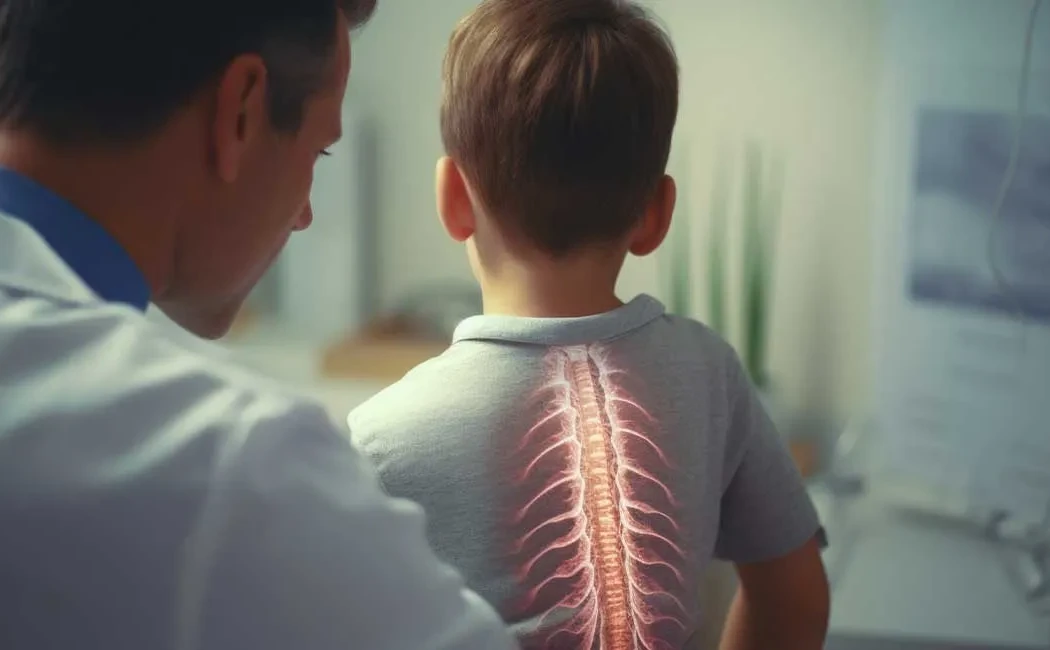
Scoliosis in children is defined as an abnormal lateral curvature of the spine that arises during the developmental phase, requiring specialized attention. Treatment strategies for scoliosis generally depend on factors such as the degree of curvature, the child’s age, rate of growth, and risk of progression. Surgical treatment is typically reserved for severe and progressive cases. This article provides comprehensive information on when surgical intervention is necessary in pediatric scoliosis treatment.
Diagnosis and Evaluation of Scoliosis
Scoliosis in children is most often diagnosed during routine check-ups or when parents notice unusual back appearance. Physical examination assesses the symmetry of the shoulders and shoulder blades, asymmetry of the waist, and spinal curvature. Radiographic imaging measures the spinal curve angle using the Cobb method, which helps identify the type of curvature and growth potential. This evaluation plays a crucial role in planning treatment.
Treatment Options Based on Severity
The choice of treatment is influenced by the degree of curvature and the child's growth status. Mild scoliosis (Cobb angle 10-20 degrees) is usually managed with monitoring and preventive measures. Moderate curvatures (20–40 degrees) often warrant brace treatment aimed at halting progression. However, when the curvature surpasses 40 degrees or rapidly progresses, surgery becomes a consideration. This is because severe curvatures can negatively affect respiratory and cardiovascular functions and reduce quality of life.
Indications for Surgery
Several factors inform the decision to perform surgery for scoliosis in children:
- Curvature degree: Curvatures exceeding 40-50 degrees, especially in growing children, carry a high risk of progression, warranting surgical intervention.
- Rapid progression: Particularly in younger children with rapidly advancing curves, surgery is necessary to control the deformity.
- Respiratory and circulatory problems: Surgery may be performed to improve quality of life when the curvature compromises lung capacity.
- Failure of brace treatment: If bracing fails to stop or worsens the curvature, surgery is considered.
Special conditions such as neuromuscular scoliosis: In scoliosis associated with neurological or muscular diseases, surgery may be indicated earlier.
Surgical Methods and Techniques
The goals of scoliosis surgery in children are to correct the spinal curvature, halt its progression, and preserve spinal function as much as possible. The most commonly employed surgical methods today include posterior spinal fusion, anterior-posterior combined approaches tailored to curvature severity and patient age, and growing rod systems. Advances in Ilizarov techniques and limb reconstruction contribute particularly to managing complex deformities. Early rehabilitation and follow-up after surgery improve overall treatment outcomes.
Non-Surgical Alternatives and Monitoring
In children with less severe curvatures, bracing and physical therapy remain important. Braces are designed to stabilize the spinal curve and prevent progression. Regular monitoring helps track curve development and timely identification of the need for surgery.
Risks and Complications of Surgery
As with any surgical procedure, scoliosis surgery carries risks such as infection, bleeding, neurological injury, and stiffness. Therefore, surgical decisions should be made by experienced orthopedic and trauma specialists within a multidisciplinary framework.
Surgical intervention in pediatric scoliosis is preferred when the risk of progression is high and quality of life is compromised. Early diagnosis, appropriate treatment planning, and consistent follow-up maximize the child’s functional development.