
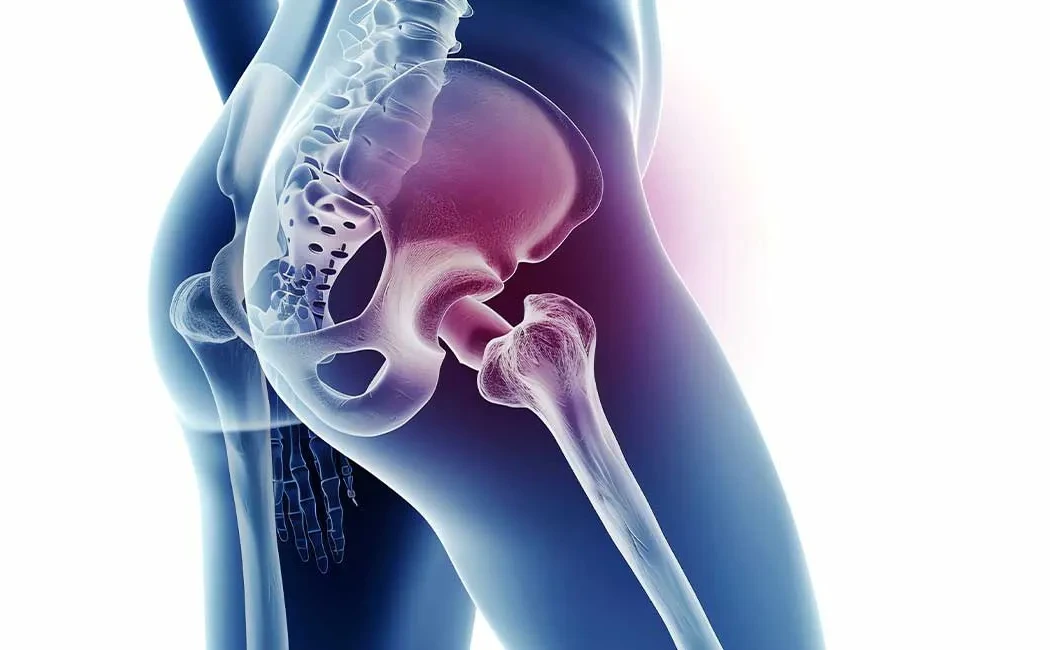
Osteoarthritis in the hip joint is a chronic degenerative disease characterized by the gradual wearing down and damage of the joint cartilage. This condition causes the joint surfaces to lose their normal structure and function, leading to pain, limited movement, and decreased quality of life. Prof. Dr. Halil İbrahim Balcı, an expert in Orthopedics and Traumatology, shares his experience and the latest treatment approaches regarding hip osteoarthritis.
The primary cause of hip osteoarthritis is the deterioration of the joint cartilage. Normally, cartilage tissue reduces friction between joint surfaces and provides load-bearing capability. However, aging, joint trauma, genetic predisposition, obesity, and some metabolic diseases can lead to cartilage damage. As this process progresses, deformities in the bone ends and osteophyte formation become apparent.
Symptoms of hip osteoarthritis usually develop slowly. In the early stages, patients especially experience pain and stiffness in the hip after long walks or climbing stairs. The pain may sometimes radiate to the groin and the front side of the thigh. As the disease advances, pain persists even at rest and during the night. Hip movements become restricted, particularly with difficulties in internal and external rotation. Joint stiffness and movement limitations can severely affect daily activities.
The diagnosis process involves a detailed physical examination and patient history. X-ray imaging is the primary method to evaluate the stage of the disease; joint space narrowing, bony outgrowths (osteophytes), and subchondral sclerosis are visible. If necessary, magnetic resonance imaging (MRI) is used to assess the condition of soft tissues, cartilage, and surrounding structures.
The priority in treating hip osteoarthritis is to improve the patient's quality of life and reduce pain. Treatment options are divided into two main groups: conservative and surgical therapies.
The conservative treatment approach includes lifestyle changes, medication, and physical therapy. Patients should be advised on weight management to reduce joint load. Nonsteroidal anti-inflammatory drugs (NSAIDs) may be used to control pain. Physical therapy programs aim to maintain joint range of motion and strengthen surrounding muscles. Using a cane for support during walking may also be recommended.
In advanced stages of the disease, surgical treatment might become necessary. The most commonly performed procedure is hip prosthesis surgery. Total hip arthroplasty replaces the joint surfaces with artificial components, significantly reducing pain and improving function. The success of prosthesis surgery depends heavily on correct patient selection, surgical technique, and postoperative rehabilitation.
Alternative surgical methods include osteotomy (bone cutting and alignment surgeries) and arthroscopic surgery, which are generally preferred in early stages or special cases. Additionally, the development of non-invasive methods holds potential to expand future treatment options.
In summary, early diagnosis and appropriate management of hip osteoarthritis lead to significant improvement in patients' quality of life. Developing a treatment plan based on the clinical experience of Prof. Dr. Halil İbrahim Balcı and current literature is critical to maintaining patients' functional independence.