
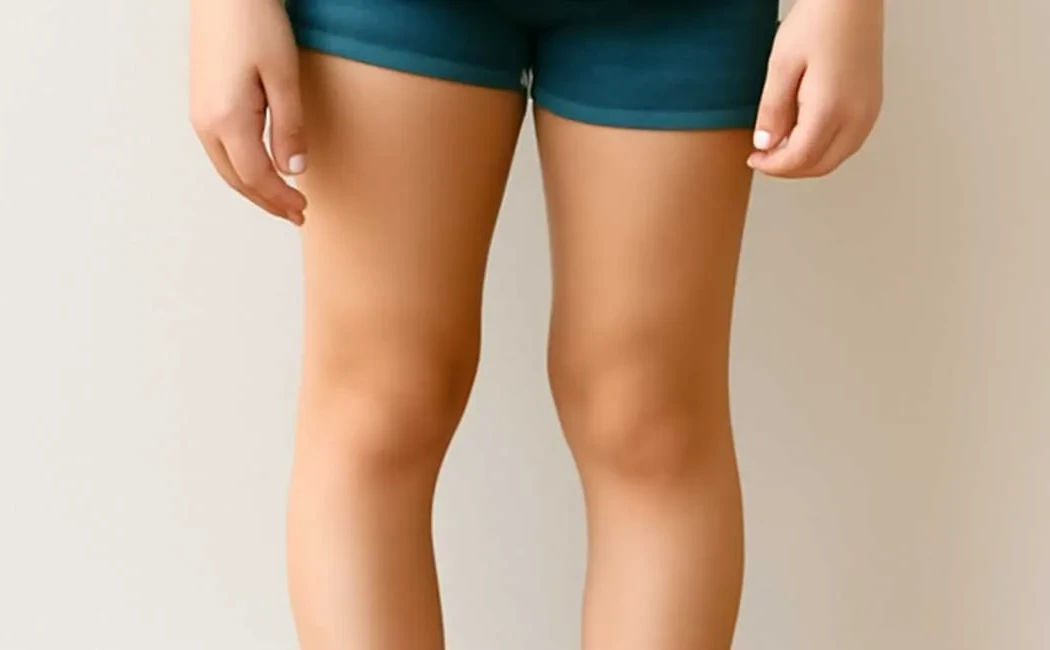
Knee deformities during childhood are commonly encountered orthopedic issues. The most frequent deformities are defined as bowlegs (varus deformity) and knock knees (valgus deformity). These conditions can affect children's daily activities and long-term quality of life, making early diagnosis and appropriate treatment crucial.
Why do knee deformities develop?
Knee shape abnormalities in children are often related to the growth process. Typically, there are certain phases during childhood where knees naturally diverge or converge. For instance, newborns generally have a bowleg appearance, between 2 to 3 years knock knees develop, and by ages 7 to 8, the knees usually align straight naturally.
However, pathological conditions may be present outside this physiological development. Nutritional deficiencies (such as rickets caused by vitamin D deficiency), genetic factors, metabolic diseases, congenital bone disorders, and traumatic effects can lead to persistent knee deformities. Additionally, infections, tumors, or growth plate injuries may cause degenerative knee curvatures.
What is Bowlegs (Varus Deformity)?
In bowlegs, the knees are spaced apart while the ankles are close together, giving the appearance of outwardly turned knees. This condition is often a physiological phase commonly observed after newborn period. But if the varus deformity persists beyond age 2, progresses, or is unilateral, it may be pathological. Rickets, Blount's disease, and hip-knee-ankle deformities are notable causes.
What is Knock Knees (Valgus Deformity)?
Knock knees are characterized by knees that are close together while ankles remain apart. This is considered a normal part of development especially between ages 2 and 4. Nevertheless, valgus deformity continuing after ages 7-8 or severe cases are abnormal and may require treatment. Factors such as impaired growth plate regulation, metabolic diseases, and bone infections may contribute.
Symptoms and Diagnostic Methods
Initial symptoms of knee deformities usually include visible shape abnormalities and irregular walking patterns. Observations may include limb length discrepancies, twisted legs during walking, or pain. Advanced cases might develop joint stiffness, muscle imbalance, and disability.
Diagnosis begins with a thorough history and physical examination. Radiographs are essential to determine the severity of deformity. If needed, computed tomography (CT) and magnetic resonance imaging (MRI) are used to assess growth plate damage, bone structure, and soft tissues.
Treatment Methods
Treatment varies depending on the type, severity, cause of deformity, and the child’s age. Conservative methods often suffice in early stages.
Conservative Treatment
Monitoring is usually recommended for children under 2 as physiological deformities often resolve spontaneously. Correcting vitamin D and calcium deficiencies and ensuring proper nutrition are critical. Corrective exercises, orthopedic insoles, or night splints may provide support but have limited effectiveness. Medical treatment is prioritized in metabolic diseases like rickets.
Surgical Treatment
Surgical options are considered if the deformity persists or worsens after age 7-8, or if functional loss and pain are present. Early interventions targeting growth plates (guided growth) can correct knee curvature. External fixators such as the Ilizarov method and osteotomy techniques realign bones.
The goal of surgical treatment is to restore natural knee biomechanics and prevent future arthritis and deformities. This process requires close follow-up and a multidisciplinary approach by an experienced orthopedic and traumatology surgeon.
Post-Treatment Care and Follow-Up
Regular check-ups are necessary after treatment. Physiotherapy aims to strengthen knee and leg muscles and maintain joint mobility. Periodic surgical interventions might be needed during growth.
To summarize, identifying knee deformities early and timely intervention improve the child's quality of life. Awareness among families and healthcare professionals about limb shape abnormalities is strongly advised.