
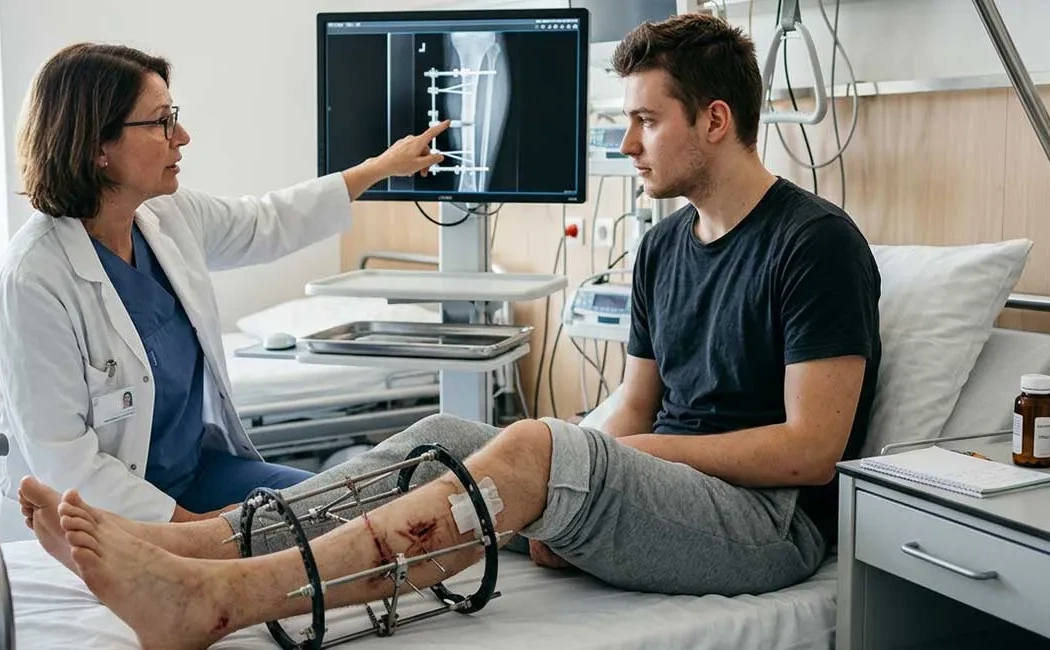
Limb lengthening surgery is a complex orthopedic procedure performed not only for aesthetic reasons but also to correct limb length discrepancies and for reconstructive purposes. Like any surgical intervention, it carries certain risks and potential complications. The risks of limb lengthening surgery vary depending on factors such as the surgical technique used and the patient’s overall health. Therefore, it is crucial to evaluate the entire process transparently and scientifically before deciding on surgery.
This article explores the possible side effects, risk factors, and how to manage these risks in detail. Our goal is not to alarm patients but to raise awareness about potential scenarios to prepare them thoroughly for the treatment. Scientific literature and clinical experience indicate that early recognition and proper management of complications significantly improve treatment outcomes.
What is Limb Lengthening Surgery?
Limb lengthening surgery involves the controlled cutting of the bone (osteotomy) followed by gradual separation of bone ends using external or internal devices. The body generates new bone tissue (distraction osteogenesis) within this gap. For a more foundational and procedural overview, please visit our Bone lengthening surgery service page.
This process requires not only bone extension but also adaptation of muscles, nerves, blood vessels, and soft tissues to the increased length. This adaptation challenge can lead to various risks.
Common Risks and Complications
Despite surgical advancements, limb lengthening procedures maintain a risk of complications. Documented and clinically encountered Complications of extremity lengthening surgery are classified into minor (manageable) and major (requiring additional surgery) categories.
Infection Risk
Infection is particularly common with external fixators, often manifesting as "pin site infection." The pin sites provide a route for bacteria from the skin to the bone. Deep tissue or bone infection (osteomyelitis) is rarer but a serious condition requiring extensive treatment. Adhering to sterile dressing protocols and hygiene practices is crucial to minimize this risk.
Nerve Damage and Sensory Loss
Nerves can become stretched during elongation, leading to temporary or, rarely, permanent damage. The peroneal nerve in the leg is especially susceptible. Patients may experience numbness, tingling, or foot drop. Adjusting the lengthening speed or temporarily halting the process can usually manage these issues.
Bone Nonunion
Nonunion refers to insufficient bone regeneration or failure of the bone ends to heal together. If this occurs, additional treatment under Nonunion surgery service may be necessary. Optimizing biological and mechanical factors to support bone healing is essential. For further details, see our article on Factors contributing to success in nonunion surgery.
Joint Stiffness and Limited Mobility
Muscles may lengthen more slowly than bones, causing tension around adjacent joints such as the knee or ankle, which may restrict movement. Without regular physiotherapy and stretching exercises, these restrictions can become permanent joint contractures.
Blood Clots and Circulatory Issues
Surgical trauma and immobility increase the risk of deep vein thrombosis (DVT). A clot traveling to the lungs (pulmonary embolism) can be life-threatening. Therefore, postoperative use of anticoagulants and early mobilization protocols are standard precautions.
Factors Influencing Risk
Every patient’s risk profile differs. The likelihood of complications depends on patient-specific and surgical variables.
Age, General Health, and Nutrition
Younger patients without chronic illnesses generally have a higher bone healing capacity. Conditions like diabetes, metabolic bone diseases, or deficiencies in vitamin D or calcium can slow healing and elevate complication risks. Adequate protein and mineral intake are critical for recovery.
Smoking and Alcohol Use
Smoking impairs microcirculation and is among the most significant risk factors delaying bone healing. Nicotine inhibits angiogenesis and markedly increases the risk of nonunion. Complete cessation before and throughout the healing period is strongly recommended.
Surgical Technique Applied
The technique used (Ilizarov, Holyfix, Combined method, or Magnetic Nails) alters the risk profile. For example, fully internal methods may have a reduced infection risk compared to external devices but present different technical challenges.
In some cases, biological treatment approaches may be incorporated to accelerate healing.
Prevention and Management of Complications
While it is impossible to eliminate all risks, they can be managed effectively with appropriate strategies.
Mechanical problems such as malunion can be corrected with Malunion surgery. The primary goal, however, is prevention.
Preoperative Preparation
Comprehensive radiological assessments, laboratory tests, and psychological evaluations should be conducted. Patients must fully understand the process challenges and set realistic expectations.
Postoperative Care and Follow-Up
The recovery period after discharge is as crucial as the surgery itself. Full patient adherence to Post-limb lengthening surgery care guidelines is necessary. Additionally, pain management protocols detailed in Pain management after limb lengthening surgery should be followed for a comfortable recovery.
Importance of a Multidisciplinary Expert Team
Limb lengthening surgery demands a multidisciplinary team including the surgeon, physiotherapist, nurse, and dietician. Early detection of nerve compression or infection can prevent permanent damage with prompt expert intervention.
Long-Term Effects and Psychological Aspects
Apart from physical risks, the prolonged treatment period can impose psychological stress on patients. Extended immobility, social isolation, and chronic pain may lead to depression. Long-term biomechanical alignment is vital for joint health. While successful surgery can improve quality of life, poorly managed cases may result in chronic pain or dissatisfaction.
Conclusion and Disclaimer
Limb lengthening surgery is an advanced yet significant medical intervention. The risks of limb lengthening surgery can be minimized when performed by skilled professionals on well-informed patients. Decision-making should consider not only cosmetic outcomes but also functional results and potential complications. This information is for educational purposes only; always consult a specialized physician for personalized evaluation.
The content on this website is provided for general informational purposes only and is not intended as professional medical advice, diagnosis, or treatment. Always consult your physician or a qualified healthcare professional regarding any health-related questions or concerns. Do not delay seeking medical care or disregard professional advice based on the information presented here. Results of medical procedures may vary from person to person.