
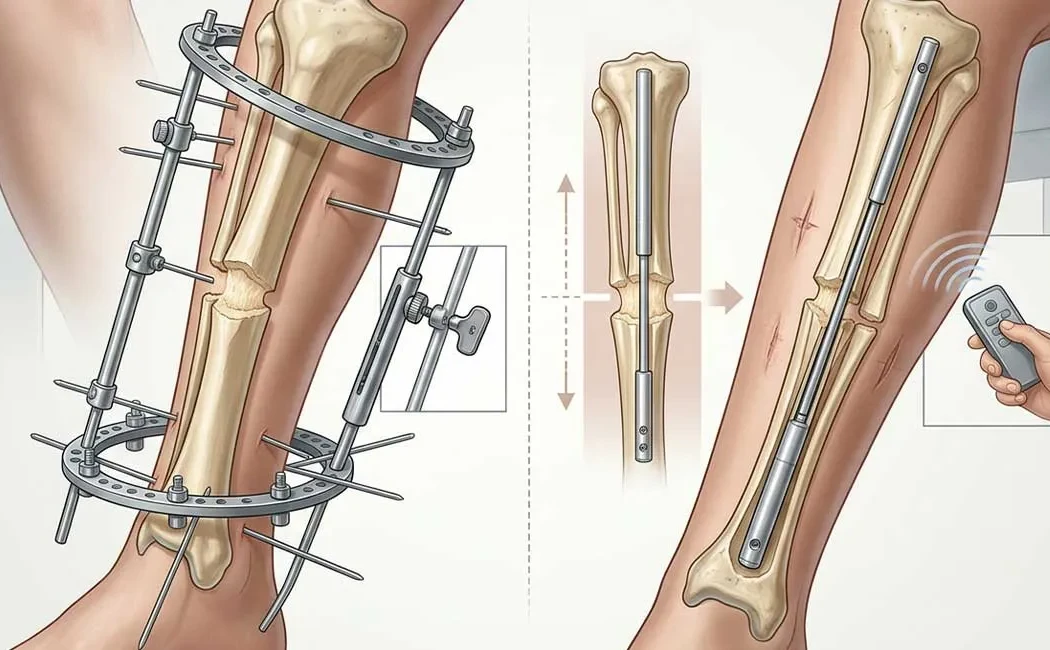
Heightening surgery is a complex orthopedic procedure performed to correct limb length discrepancies or address cosmetic concerns related to short stature. Modern heightening techniques have diversified with technological advances, providing patients various options. The process involves surgically cutting the bone (osteotomy) and gradually separating the segments (distraction). The body forms new bone tissue in the gap, resulting in lengthening.
Determining the most suitable method for a patient requires understanding the mechanisms, advantages, and potential risks of each surgical technique. For a general overview, our bone lengthening surgery service page details basic procedures. Before deciding on surgery, conducting thorough research on heightening surgical methods and completing the psychological preparation process before heightening surgery are crucial for treatment success.
Introduction to Heightening Surgery
Heightening surgery is based on the biological phenomenon of “distraction osteogenesis.” This principle involves controlled bone breaking and gradual lengthening at approximately 1 mm per day, during which new bone tissue forms in the gap. The treatment consists of three main phases: surgery, distraction (lengthening), and consolidation (hardening). The chosen method depends on factors such as age, bone quality, presence of deformities, and socioeconomic considerations.
Ilizarov Method
The Ilizarov method is the oldest and most widely known technique forming the foundation of heightening and deformity correction surgeries. Developed by Russian surgeon Gavriil Ilizarov, this method uses circular external fixators fixed to the bone via wires and pins.
Lengthening is achieved by turning the nuts on the external device. It is preferred in complex deformity cases and when there is a high risk of infection. However, the bulky design and external wires reduce patient comfort compared to other methods. For detailed technical information, and to help patients adapt to this method, see Ilizarov technique lengthening process.
Precice (Motorized Nail) Method
The Precice method incorporates a fully internal system with no external apparatus visible outside the body. It uses a telescopic nail inserted into the bone marrow canal. Lengthening is controlled externally via a magnetic remote controller (ERC) that turns gears inside the nail.
The major advantages of Precice include reduced infection risk and maximum patient comfort. With no external wounds or wires, movement is easier and scarring minimal. However, it is a high-cost option and may not be suitable for all anatomies.
Holyfix Method
Holyfix is considered a modern, lighter alternative to the Ilizarov system. Instead of ring fixators, it uses a monolateral rail system attached to one side of the bone. It is lighter and easier to use than Ilizarov but still requires an external device worn on the body.
Care of pin sites is essential to prevent infection in Holyfix as well. The system provides biomechanical stability, and the device is removed once lengthening is complete. Its cost typically falls between Precice and Ilizarov.
Comparison of Surgical Techniques
When selecting a heightening method, the pros and cons of each technique must be carefully evaluated. For example, Precice offers superior comfort, whereas Ilizarov has cost advantages and excels in correcting complex deformities. The comparison of Precice and Ilizarov methods considers infection risk, weight bearing capacity, and return to daily activities.
Recovery and Rehabilitation
Success in heightening surgery depends not only on a successful operation but also on disciplined rehabilitation. Recovery has two phases: lengthening and bone consolidation. Adhering strictly to postoperative care guidelines minimizes complications.
Physical therapy is critical to maintain joint mobility and build muscle strength. Patients should be informed about safe sports practices after heightening and avoid strenuous activity without physician approval. Healing time varies per individual, but full bone healing typically takes 6–12 months (recovery time after heightening surgery).
Potential Risks and Complications
As with any surgery, heightening procedures carry risks such as infection (particularly with external fixators), nerve and vascular injuries, joint stiffness, delayed or premature bone healing.
Minimizing risks requires regular medical follow-up and strict hygiene.
Conclusion and Disclaimer
Heightening methods can yield successful outcomes when applied with careful patient selection and a skilled surgical team. The choice of technique is closely tied to the patient’s medical condition, expectations, and lifestyle. This article aims to raise general awareness about surgical techniques. Definitive treatment planning and method selection must be done in consultation with a specialized orthopedic surgeon.
All information provided is for general informational purposes only and does not constitute medical advice. The content is not a substitute for professional diagnosis, treatment, or guidance. Diagnostic and treatment decisions should be made solely after an in-person consultation with a qualified healthcare provider. Since each patient's clinical situation is unique, surgical or non-surgical treatments may vary accordingly. The information is based on current scientific evidence and medical practices at the time of publication.