
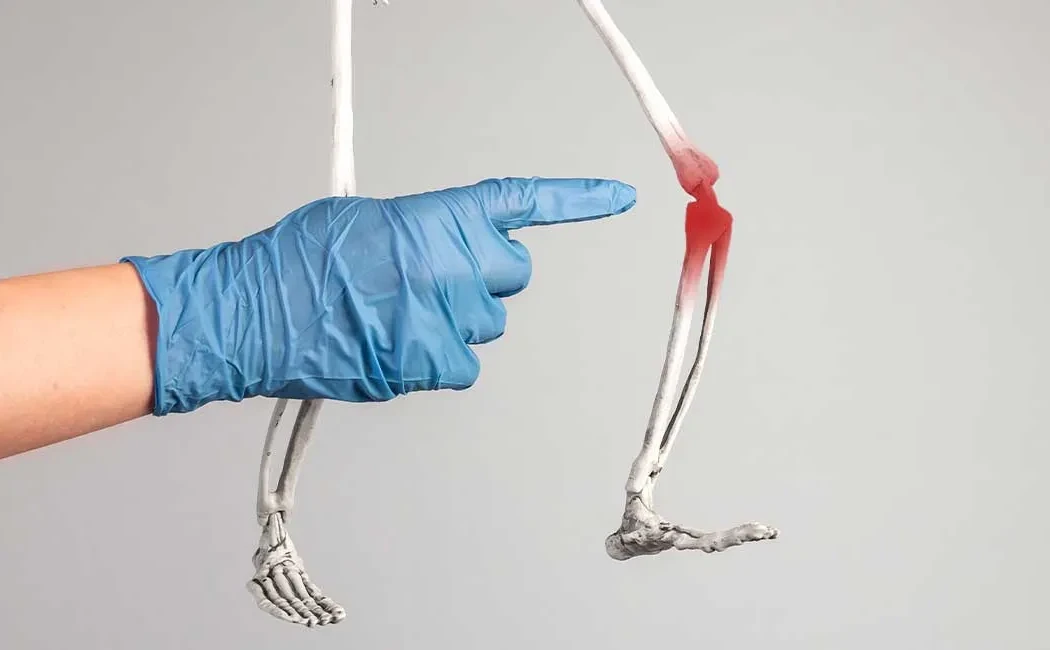
Deformity surgery is a comprehensive orthopedic discipline aimed at correcting shape abnormalities, curvatures, and limb length discrepancies within the musculoskeletal system. Bone deformities, whether congenital or acquired due to trauma, infection, or other causes, can significantly affect an individual's quality of life. These surgical procedures restore bones to their normal anatomical alignment, improving functional capacity and preserving joint health over the long term.
Known also as bone curvature surgery, these procedures range from simple corrections to complex reconstructive surgeries. The primary goals of treatment are to alleviate pain, eliminate mobility restrictions, and enable patients to return to daily activities healthily. Advances in medical technology and surgical techniques have made it possible to successfully manage many deformities once considered difficult to treat.
What Is Deformity?
Deformity refers to a deviation of bones or joints from their normal anatomical structure. This deviation may involve rotation around the bone's own axis, bending sideways (angulation), or shortening. Such deformities disrupt the body’s load-bearing mechanics and create uneven stress distribution on joints, potentially leading to secondary issues like osteoarthritis over time.
Deformities can occur in a single plane or may involve complex multi-planar structures, such as when a bone is both bent and shortened simultaneously. Analysis of these cases requires detailed radiological imaging and physical examination. Accurate diagnosis is critical in determining the appropriate treatment strategy.
Why Is Deformity Surgery Needed?
Deformity surgery is often considered when conservative treatments such as physiotherapy or orthotic devices fail. The main indication is mechanical axis correction and joint function preservation. A poorly healed fracture or congenital structural abnormality may cause excessive stress on adjacent joints, resulting in early joint damage.
Additionally, significant leg length discrepancies can threaten spinal health. Gait disturbances, chronic pain, and cosmetic concerns also influence the decision to undergo surgery. Progressive deformities detected in childhood require timely intervention to avoid harm to growth potential.
Which Types of Deformities Are Treated Surgically?
Deformity surgery addresses a broad range of orthopedic conditions, including bone curvatures linked to metabolic diseases like rickets, Blount disease, residual effects of developmental hip dysplasia, and malunions following trauma. Conditions such as hip impingement syndrome may also involve bone structure abnormalities necessitating surgical correction.
In advanced cases with joint damage, hip replacement combined with deformity surgery may be considered. However, the primary objective is to preserve the joint and correct biomechanical axes whenever possible.
Methods Used in Deformity Surgery
Surgical techniques for deformity correction vary depending on the type, location of the deformity, and patient age.
Corrective Osteotomy
Corrective osteotomy involves controlled cutting of the bone (osteotomy), repositioning it correctly, and stabilizing it with plates, screws, nails, or external fixators. This method is the gold standard for fixing angular deformities. Experience and precision are crucial to avoid complications such as malunion or nonunion.
Ilizarov Technique
The Ilizarov method uses a circular external fixator frame to gradually correct deformities and lengthen bones. This approach relies on slow tissue stretching to stimulate new bone formation (distraction osteogenesis) and is effective for complex, multi-plane deformities. It is also applied in bone lengthening procedures.
Limb Lengthening Techniques
These methods correct limb length discrepancies using internal magnetic nails or combined external and internal fixation. Common in lower limb deformity surgery, these techniques also apply to upper limb lengthening and deformity correction for shortening or curvature of the arms.
Surgical Process and Preparation
Preoperative preparation begins with a thorough clinical evaluation and detailed radiological planning. Factors such as patient's overall health, smoking status, and bone quality are reviewed. Surgical planning involves precise measurements to determine the center of rotation of angulation (CORA) and the exact correction site.
At this stage, the possibility of joint-preserving surgeries is also assessed to maximize functional benefits while minimizing risks.
Postoperative Recovery and Rehabilitation
The postoperative phase is as crucial as the surgery itself. Bone healing and soft tissue adaptation require time.
Patient education on post-limb-lengthening precautions significantly reduces complication risks. Physiotherapy plays a vital role in maintaining joint mobility and regaining muscle strength. Weight-bearing protocols vary depending on the surgery type and implants used, and are determined by the surgeon.
All information provided is for general informational purposes only and does not constitute medical advice. Content is not intended to replace professional diagnosis, treatment, or guidance. Diagnosis and treatment should be planned exclusively after an in-person consultation with a qualified healthcare provider. Since each patient's clinical condition is unique, surgical or non-surgical interventions may vary accordingly. The information presented is based on current scientific sources and up-to-date medical practices.