
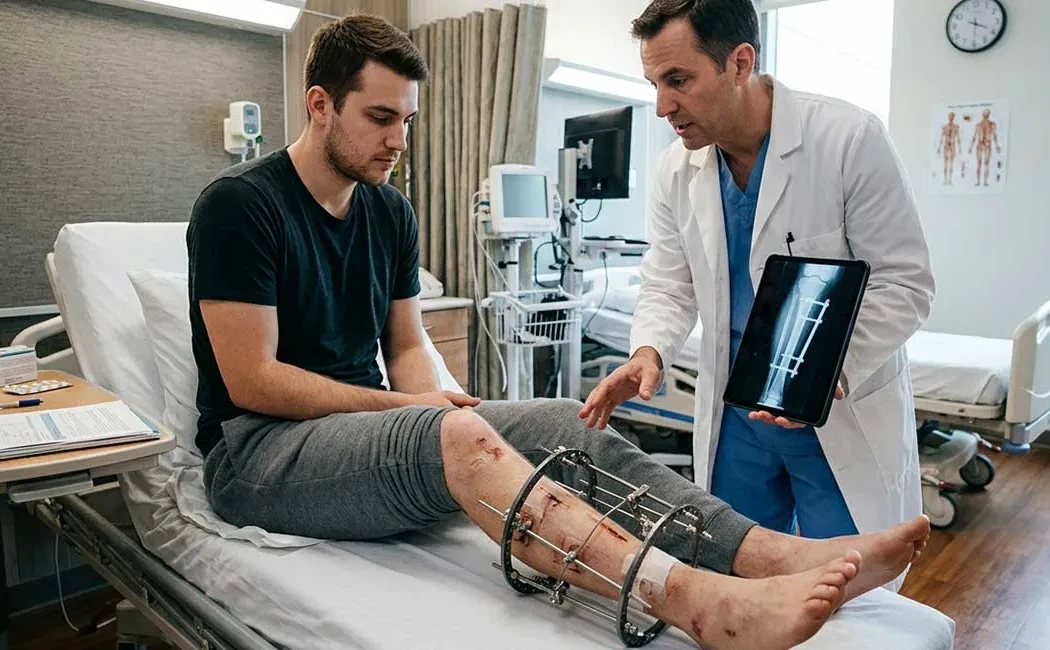
Cosmetic height lengthening has increasingly become a topic in aesthetic surgery and orthopedics, yet it remains a complex procedure requiring serious medical and ethical consideration. Traditionally used to treat limb length discrepancies, dwarfism, or post-traumatic deformities, lengthening surgery techniques are now also applied to individuals seeking to increase their height for aesthetic reasons. This process is not just a surgical intervention but a challenging journey involving prolonged rehabilitation and recovery.
Known in medical literature as "esthetic limb lengthening," cosmetic height lengthening aims to improve psychosocial well-being by altering body proportions. However, potential risks and complications should not be overlooked. The decision-making process must carefully weigh the physical burden of surgery against the expected aesthetic benefit based on scientific evidence.
What Is Cosmetic Height Lengthening?
Cosmetic height lengthening is a surgical procedure performed voluntarily by individuals without functional impairment or pathological conditions (such as dwarfism or leg length discrepancy) to increase their height. Controlled osteotomy (bone cutting) is performed on the thigh (femur) or shin (tibia) bones, followed by gradual lengthening with devices placed between bone segments. This procedure is based on the principle of distraction osteogenesis, where new bone tissue forms between separated bone ends through the body's natural healing process.
Differences Between Medical Necessity and Cosmetic Lengthening
Although the surgical principles for medically indicated and cosmetic lengthening are similar, the purpose and patient profiles differ fundamentally. Medical lengthening prioritizes restoring walking function and painless joint structure, while cosmetic cases focus on shaping body proportions according to personal aesthetic preferences.
Medical lengthening treatments may be covered by insurance and follow specific protocols, whereas cosmetic procedures are elective surgeries with similar risk profiles but more complex expectation management.
Who Is Suitable for Cosmetic Height Lengthening?
This surgery is not suitable for everyone. Candidates must have completed bone growth (closed growth plates), be in good general health to tolerate surgery, and avoid habits such as smoking that impair bone healing. Psychological readiness for the long and demanding process is also critical. For detailed criteria, see Patient Selection for Cosmetic Height Lengthening.
How Is Cosmetic Height Lengthening Surgery Performed?
Height lengthening surgery involves four main phases: preoperative planning, surgical intervention, lengthening period, and consolidation (bone healing). During surgery, the bone is surgically cut, and a device (external fixator or intramedullary nail) is implanted to facilitate lengthening. Distraction typically begins about 5-7 days after surgery at a rate of 1 mm per day (4 increments of 0.25 mm).
Once the targeted length is achieved, the consolidation phase begins to allow newly formed bone to harden and bear weight. During this period, devices continue to stabilize the bone.
Devices and Techniques Used (Ilizarov, Internal Nail, etc.)
Advancements in technology have diversified the techniques for height lengthening. Common methods include the traditional Ilizarov technique (ring external fixators), combined methods (LON – Lengthening Over Nail), and fully intramedullary magnetic nails (e.g., Precice).
Fully internal devices offer advantages such as no external hardware and lower infection risk, improving patient comfort. Each method, however, has distinct pros and cons. For detailed information on the techniques offered at our clinic and our bone lengthening surgery services, consulting with specialists is advised.
Recovery Process and Physical Therapy
Effective rehabilitation is a critical factor for surgical success. Intense physical therapy is required during lengthening to help muscles and soft tissues adjust to the increasing bone length. Skipping exercises can lead to joint stiffness and limited mobility.
Strict adherence to post-operative care instructions following limb lengthening surgery minimizes complication risks. Additionally, managing pain during recovery with appropriate post-lengthening pain management strategies improves patient comfort.
Risks and Complications of Cosmetic Height Lengthening Surgery
Like any surgery, cosmetic height lengthening carries specific risks. These vary depending on the technique used, amount of lengthening, and individual patient factors. Common complications include pin-site infections, joint stiffness, nerve compression, and deep vein thrombosis (blood clots).
Severe complications such as nonunion (failure of bone healing) may require additional surgery. For details, see Nonunion Surgery Information. Addressing common patient concerns related to cosmetic height lengthening risks and long-term outcomes in Are the results permanent? is essential for setting realistic expectations.
Ethical Considerations: Is Aesthetic Lengthening Appropriate?
From a medical ethics standpoint, performing surgery on a healthy body is controversial. The principle of "first, do no harm" requires physicians to protect patients from potential risks. It is vital to assess whether the patient’s perception of short stature might have psychological roots such as body dysmorphic disorder. If expectations are unrealistic or obsessive, surgery may not be ethically justified. Consequently, a multidisciplinary approach, involving both orthopedists and psychiatrists, is standard practice.
Lengthening Surgery in Dwarfism and Congenital Shortness
Lengthening surgery for individuals with achondroplasia (dwarfism) or other skeletal dysplasias is reconstructive and functional rather than cosmetic. Surgery in these cases aims not only to increase height but also to correct associated bone deformities. Similarly, upper limb lengthening and deformity correction surgery plays a crucial role in treating congenital anomalies. Here, surgery is necessary to enable independence in daily activities.
Conclusion and Information Notice
Cosmetic height lengthening can yield successful outcomes with careful patient selection, an experienced surgical team, and disciplined rehabilitation but carries significant risks. Individuals considering this route for aesthetic reasons must fully understand the challenges and possible complications. Decisions should be based on scientific data and expert opinions to safeguard both physical and mental health.
This content is provided for general informational purposes only and does not constitute medical advice. It is not a substitute for professional diagnosis, treatment, or consultation. Diagnosis and treatment should be planned only after an in-person examination by a qualified healthcare professional. Each patient’s clinical condition is unique, and surgical or non-surgical interventions may vary accordingly. The information presented here is based on current scientific knowledge and up-to-date medical practices. Do not delay seeking professional medical care based on this content.