
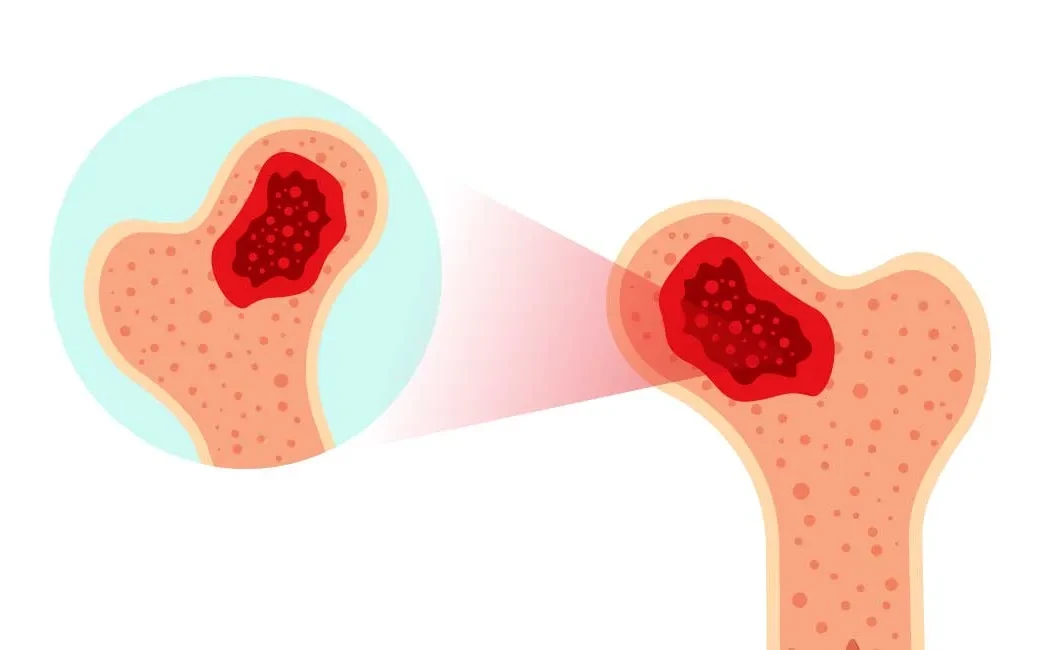
Bone tumors are abnormal growths of cells in osseous tissue, that is, bone tissue. In children, bone tumors are seen in different types compared to adults and often have the potential to be malignant (cancerous). Therefore, early diagnosis and accurate identification of bone tumors in children are critical steps for successful treatment.
Bone tumors are mainly classified as primary tumors and metastatic tumors. Primary bone tumors originate directly in the bone and often include malignant types such as osteosarcoma and Ewing's sarcoma. Benign forms of bone tumors are rarely seen.
Symptoms of bone tumors in children may not be obvious in the early stages. However, the following signs can indicate an ongoing or problematic condition:
- Pain: The most common symptom. Initially, pain may be intermittent but can become constant and severe over time. Night pain should especially raise concern.
- Swelling or a palpable mass: A swelling or lump may be present in the region of the tumor.
- Restricted movement: Decreased motion of the affected bone or joint.
- Bone weakening and vascular-soft tissue signs: The tumor can cause weakening of the bone, making fractures more likely.
- General symptoms: Fever, weight loss, and fatigue may occur in some malignant tumors.
Early diagnosis of bone tumors requires detailed evaluation and advanced imaging methods. Physical examination focuses on swelling, tenderness, and limited movement as key indicators. X-rays serve as the initial imaging technique to locate the tumor and detect changes in the bone. However, advanced imaging methods such as Magnetic Resonance Imaging (MRI) and Computed Tomography (CT) are typically used for detailed assessment. A biopsy is mandatory for definitive diagnosis, allowing histopathological examination to determine tumor type.
Early diagnosis significantly impacts treatment success in bone tumors. When identified early, treatment options such as surgery, chemotherapy, and radiotherapy can be utilized more effectively. Delayed diagnosis, especially in malignant bone tumors, may lead to metastasis (spread of cancer) and complicate treatment. This can reduce quality of life and treatment success.
The importance of early diagnosis has increased with multidisciplinary approaches in pediatric orthopedics and oncology. Children's bone anomalies and complaints of pain should be carefully monitored, and particularly chronic, unexplained pain and swellings must be evaluated by specialists promptly.
In children diagnosed with bone tumors, treatment planning considers tumor type, extent, and the patient’s overall health. External fixation systems like the Ilizarov method and limb reconstruction surgeries are applied to restore function in patients with bone loss after tumor removal.
In summary, bone tumors in children are serious diseases requiring careful evaluation. Early diagnosis and multidisciplinary treatment approaches play a crucial role in improving children's quality of life.