
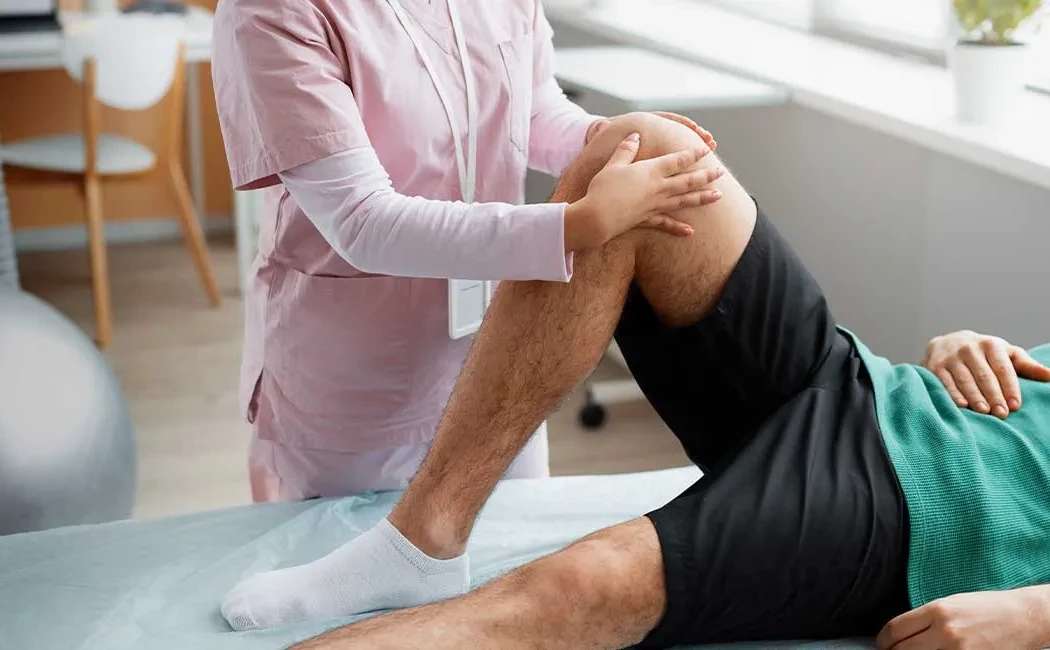
Knee replacement surgery is a widely used surgical procedure for patients with advanced joint damage, aiming to reduce pain, restore functional losses, and improve quality of life. However, the success of the surgery is not limited to the surgical technique alone; it is also directly related to the physical therapy and rehabilitation carried out in the postoperative period. Physical therapy is essential for the long-lasting durability of the knee prosthesis, preserving the range of motion, and enabling the patient to effectively return to daily life.
Early Postoperative Rehabilitation
Rehabilitation begins immediately after surgery, typically within 24 hours, with passive and active movements. Guided by physical therapy specialists, exercises aimed at increasing the range of motion of the knee joint are introduced in this initial phase. Additionally, the patient is encouraged to sit in bed or beside it, and simple musculoskeletal exercises are designed to strengthen the leg muscles. The goals during this period are to prevent joint stiffness, reduce swelling and pain, and support early prosthesis adaptation.
The physical therapy program commonly includes passive range of motion exercises for the knee, as well as ankle and hip joint movements. Pain control is supported by cold applications and analgesic medications when necessary. Most patients start regular walking exercises with crutches or a walker within a few days after surgery.
Mid-Term Physical Therapy and Functional Improvement
After the first weeks, many patients transition to more comprehensive exercise programs at home or rehabilitation centers. In this phase, active muscle strengthening exercises and balance and proprioceptive training become important. Strengthening the muscles around the knee (such as the quadriceps and hamstrings) is critical for managing load distribution on the prosthesis.
Walking pattern correction is also supported through physiotherapist-supervised gait training and functional activities such as walking uphill or climbing stairs when appropriate. Joint mobility continues to improve, but excessive strain should be avoided to prevent damage to the prosthesis. The physical therapy and exercise program focuses on the phase where the patient’s pain is controlled and functional activities improve.
Late-Stage Rehabilitation and Long-Term Follow-Up
During the 3 to 6-month period after knee replacement, most patients can perform daily activities independently and safely. However, additional functional performance enhancement exercises may be applied, especially for professional athletes or individuals with active lifestyles.
At this stage, exercises targeting flexibility, strength, and coordination are prescribed. Regular assessments are also vital to prevent long-term complications and ensure the prosthesis functions smoothly. The bone-implant integration and joint stability are monitored by the physician and physiotherapist.
Important Considerations in the Recovery Process After Knee Replacement
Pain management, maintenance exercises, and adaptation to daily life activities are crucial during the recovery period. Patients should avoid excessive loading, be vigilant about infection signs, and adhere strictly to prescribed medications. Regular exercise must be performed to prevent joint stiffness, supported by activities that promote circulation.
Postoperative nutrition, wound care, and infection prevention play critical roles. To prevent mechanical fatigue of the prosthesis over time, maintaining an ideal body weight and adopting joint-protective movement habits are beneficial.
Physical therapy programs after knee replacement should be personalized, taking into account the patient’s age, general health status, surgical technique, and the prosthesis characteristics. This approach maximizes quality of life while minimizing complication risks.