
Bone healing is one of the most complex and dynamic biological processes in the human body. However, in some cases, full union between bone ends does not occur within the expected time frame, resulting in a condition known as pseudoarthrosis. Non-union treatment requires a multidisciplinary approach since this condition directly affects the patient's quality of life. The treatment plan is tailored according to the fracture’s anatomical location, the patient’s biological age, and accompanying factors such as infection.
Non-union, one of the most challenging issues in orthopedic surgery, affects not only the bone tissue but also the surrounding soft tissues. Especially in pediatric orthopedics deformities and non-unions, delayed intervention can lead to permanent limb length discrepancies. This article reviews the causes of non-union fractures, modern treatment methods, and recovery processes based on scientific evidence.
What Is Non-Union (Pseudoarthrosis)?
Non-union, medically termed pseudoarthrosis, is the cessation of the bone healing process with the formation of a false joint between the fracture ends. The diagnosis is made when the normal healing time is exceeded without radiological signs of recovery. According to the American Academy of Orthopaedic Surgeons (AAOS) criteria, non-union is defined as the failure of a fracture to heal after 9 months, with no radiographic progression over the last 3 months.
Pseudoarthrosis is classified based on the vitality of the bone ends and callus formation.
Hypertrophic non-union typically results from inadequate stabilization, with good blood supply to bone ends, often showing a “horse hoof” appearance. Atrophic non-union is characterized by biological insufficiency and poor vascularity; bone ends appear thin and resorbed.
What Causes Non-Union?
The failure of bone healing usually arises from a combination of mechanical and biological factors. Mechanical causes include insufficient stabilization (instability) or excessive movement at the fracture site. Biological factors involve impaired blood supply, presence of infection, or the patient’s overall metabolic condition.
Systemic factors negatively impacting bone healing include smoking, diabetes, vitamin D deficiency, and certain medications. Studies on factors enhancing success in non-union surgery emphasize that optimizing the patient's metabolic status is critical for surgical outcomes. In addition, high-energy trauma resulting in comminuted fractures with soft tissue damage can disrupt bone nutrition and increase non-union risk.
Diagnosis and Imaging Methods
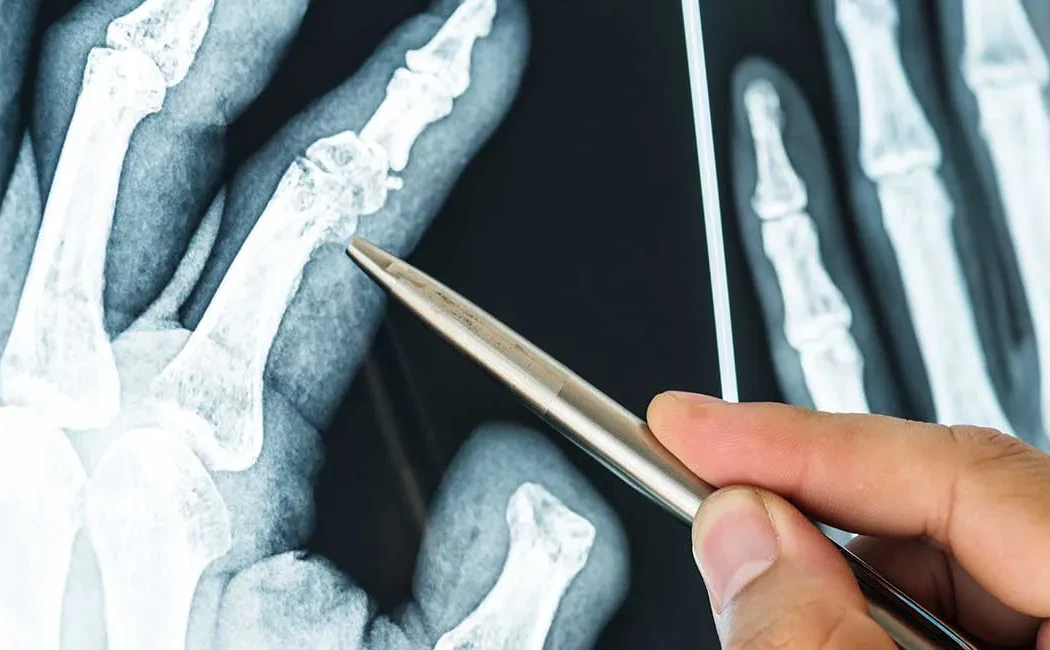
Diagnosis of non-union involves a thorough physical examination and advanced imaging techniques. Patients typically present with ongoing pain at the fracture site, abnormal motion, and inability to bear weight. The first diagnostic step is standard X-rays showing unclosed fracture lines, implant failure, or sclerosis at bone ends.
Computed Tomography (CT) is used for detailed evaluation, providing three-dimensional views of the bone structure and helping to classify the non-union as atrophic, oligotrophic, or hypertrophic. If infection is suspected, Magnetic Resonance Imaging (MRI) and laboratory tests (CRP, Sedimentation rate, Leukocytes) are employed. Scintigraphy or leukocyte-labeled imaging play a crucial role in detecting occult infections.
Non-Union Treatment: Surgical and Non-Surgical Options
Treatment of non-union must be individualized to address the root cause. The main goals are to eliminate infection, achieve stable fixation, and stimulate biological healing.
Modern orthopedic non-union surgery combines biological and mechanical strategies. The approach depends on patient age, bone quality, and prior surgeries. Generally, treatment strategies are classified into biological and mechanical approaches.
Bone Grafting and Growth Factors
In atrophic non-unions with poor biological potential, bone grafting is applied to stimulate healing. Grafts are selected based on their osteoconductive (scaffold), osteoinductive (stimulative), and osteogenic (cellular) properties.
Autografts (bone harvested from the patient) are considered the gold standard as they contain living bone cells. Allografts (donor bone) and synthetic substitutes are alternatives when autografts are insufficient. Recently, biological agents such as Platelet-Rich Plasma (PRP) and Bone Morphogenetic Proteins (BMPs) have been included in treatments to accelerate healing.
External and Internal Fixation Techniques
Hypertrophic non-unions caused by mechanical instability require rigid fixation of the fracture site. Intramedullary nails, plate and screw systems, or external fixators are used for stabilization. For example, intramedullary nailing is commonly preferred in femoral non-union fractures to ensure load-bearing stability.
Ilizarov ring fixators provide both stability and enable bone transport techniques to address bone loss. This method is particularly effective in infected non-unions and cases complicated by limb shortening.
Electromagnetic Stimulation and Other Innovative Methods
Non-surgical options are usually chosen for patients with high surgical risk or as adjuncts to surgery. Low-intensity pulsed ultrasound (LIPUS) and electromagnetic field stimulation enhance bone cell activity and may accelerate recovery. Scientific studies demonstrate increased success rates in selected cases with these methods. The latest non-union treatment techniques provide non-invasive alternatives.
Non-Union with Infection: Complex Challenges
Infected pseudoarthrosis is one of the most difficult orthopedic conditions to treat. In cases of infection, thorough removal of infected tissue and biofilm-coated implants (debridement) is imperative. Bone healing cannot be achieved until infection is fully controlled. Antibiotic-impregnated cement spacers and prolonged antibiotic therapy are often required.
Bone defects and deformities following infection must sometimes be corrected following principles of revision non-union surgery. After confirming infection eradication, reconstructive surgery can proceed.
Recovery and Rehabilitation
Healing following non-union treatment takes longer and requires patience compared to standard fractures. Recovery time varies from 3 to 12 months depending on the surgical method and bone quality.
Rehabilitation is vital to maintain joint mobility and strengthen muscles. Similar to recovery after meniscus surgery, physical therapy is key to regaining function after non-union treatment. Smoking cessation and a protein- and calcium-rich diet also support healing.
Pediatric Cases and Non-Union
Non-unions are rare in children but may develop due to congenital causes or post-infection. Conditions like congenital tibial pseudoarthrosis are among the most challenging lower limb deformities to manage in children. Protecting growth plates is fundamental in these cases.
Treatment methods within pediatric lower extremity deformity surgery are planned considering the child’s growth potential. In limb-length discrepancies, bone lengthening surgery is used to address both non-union and unequal limb lengths. The same principles apply for upper extremity lengthening and deformity correction in arm and forearm cases.
In summary, non-union treatment is a prolonged, specialized process requiring accurate diagnosis, appropriate surgical technique, and disciplined rehabilitation. Most patients can regain bone integrity and functional capacity with these measures.
All information provided is for general informational purposes only and does not constitute medical advice. The content is not a substitute for professional diagnosis, treatment, or guidance. Diagnosis and treatment should only be undertaken following an in-person consultation with a qualified healthcare provider. Since each patient's clinical condition is unique, surgical and non-surgical treatments may vary accordingly. The information presented is based on current scientific knowledge and up-to-date medical practices.