
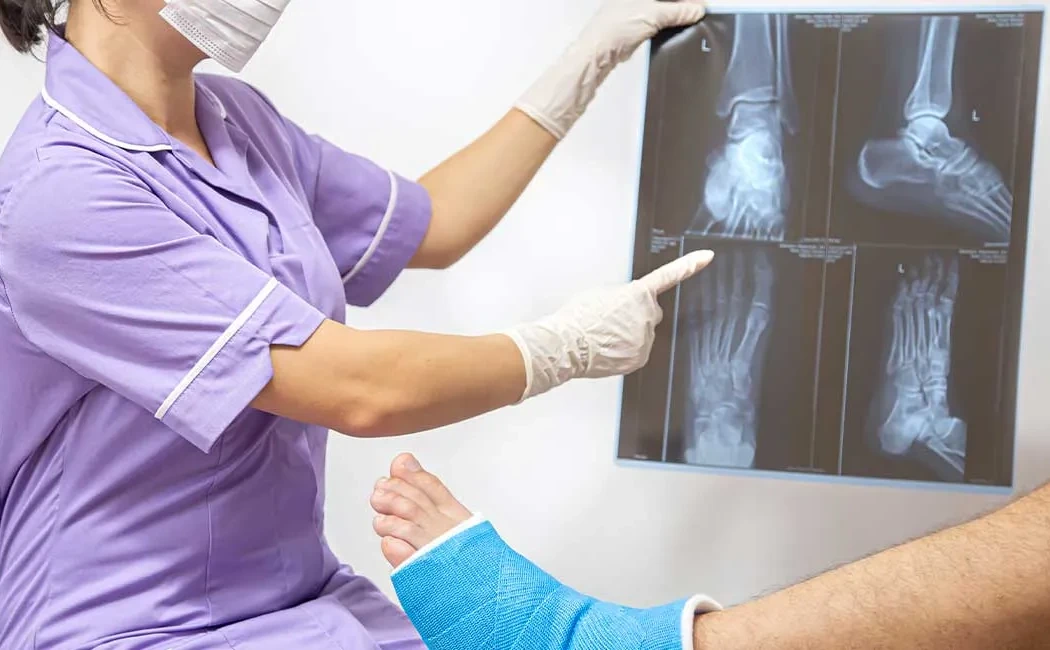
Successful healing of fractures is a fundamental goal in orthopedic treatment. However, occasionally fractures heal incorrectly or fail to heal entirely. Malunited fractures arise due to displacement of bone fragments from their anatomical positions, leading to functional impairments and pain. Therefore, identifying and applying appropriate treatment methods is crucial.
Why Does Malunion Occur?
Malunion occurs when the broken bone ends fail to properly align or make inadequate contact during healing. Factors contributing to malunion include inadequate immobilization during treatment, extensive soft tissue injury, infection development, compromised blood flow at the fracture site, and premature movement. Additionally, poor alignment or stabilization of bone fragments results in deformities.
Clinical Evaluation of Malunited Fractures
In clinical examination, deformity, pain, limited mobility, and joint dysfunction are commonly observed. Visible signs include angulation, shortening, and rotational abnormalities. Patients may report functional complaints that interfere with daily activities. Radiological assessment is essential for detailed evaluation of the fracture zones, often involving X-rays, computed tomography (CT), and magnetic resonance imaging (MRI).
Modern Surgical Treatment Options
Surgical interventions for malunited fractures are selected based on treatment goals. The fundamental objectives are restoring proper alignment, regaining function, and reducing pain.
Ilizarov Method and External Fixators
Supported by orthopedic specialists including Prof. Dr. Halil İbrahim Balcı, the Ilizarov technique is particularly effective for complex deformities and nonunions. Using circular external fixators, the fracture line can be gradually corrected with controlled adjustments, allowing bone lengthening or deformity correction. This minimally invasive technique promotes bone biology and stimulates new bone formation.
Osteotomies and Internal Fixation
Osteotomy, the surgical re-breaking of bone to achieve correct positioning, is stabilized with internal fixation devices such as plates, screws, or intramedullary nails. This method is critical to ensuring stability and facilitating rapid healing. Careful preoperative planning is necessary, especially in deformities caused by nonunion.
Bone Grafts and Biological Supports
When bone healing is compromised, bone grafting is employed to support recovery. Autografts (patient’s own bone) or allografts (donor bone) are used to enhance the healing process. Additionally, biological agents and growth factors may be incorporated to accelerate bone repair during surgery.
Infection Control
Infection is a significant factor that hinders healing in nonunion cases. Proper infection control before and after surgery is mandatory. Infected fractures require appropriate antibiotic therapy and surgical debridement, which are critical steps for achieving successful bone healing.
Treatment Approach in Children and Adolescents
Treatment of malunited fractures in pediatric patients requires special attention to avoid damage to growth plates. More conservative surgical methods may be preferred, taking into account the child’s growth and development potential.
Postoperative Rehabilitation
Following successful surgery, rehabilitation is essential to support the healing process. Physical therapy helps strengthen muscles, maintain joint mobility, and restore function through a multidisciplinary approach.
In summary, modern multidisciplinary surgical options are available for treating malunited fractures. The patient’s age, general health status, and the location and type of fracture play important roles in shaping the treatment plan. Advances in technology and surgical techniques provide significant advantages for achieving functional recovery.